10 High Protein Vegan Recipes Designed for Seniors Over 50: Easy Plant-Based Meals That Support Bone Health and Energy (25g+ Protein Per Serving)

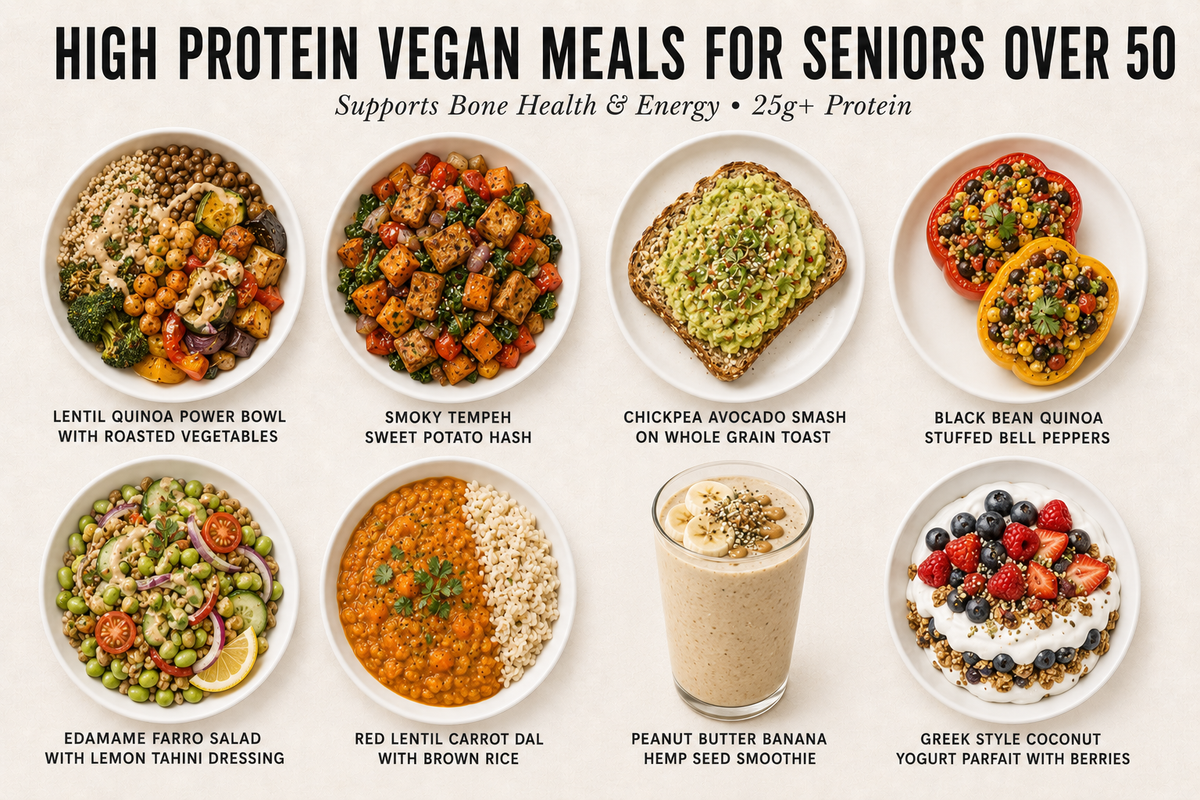
Getting enough protein on a vegan diet can feel challenging, especially as your body's needs change after age 50. Many people believe that plant-based eating doesn't provide enough protein for older adults, but that's simply not true.
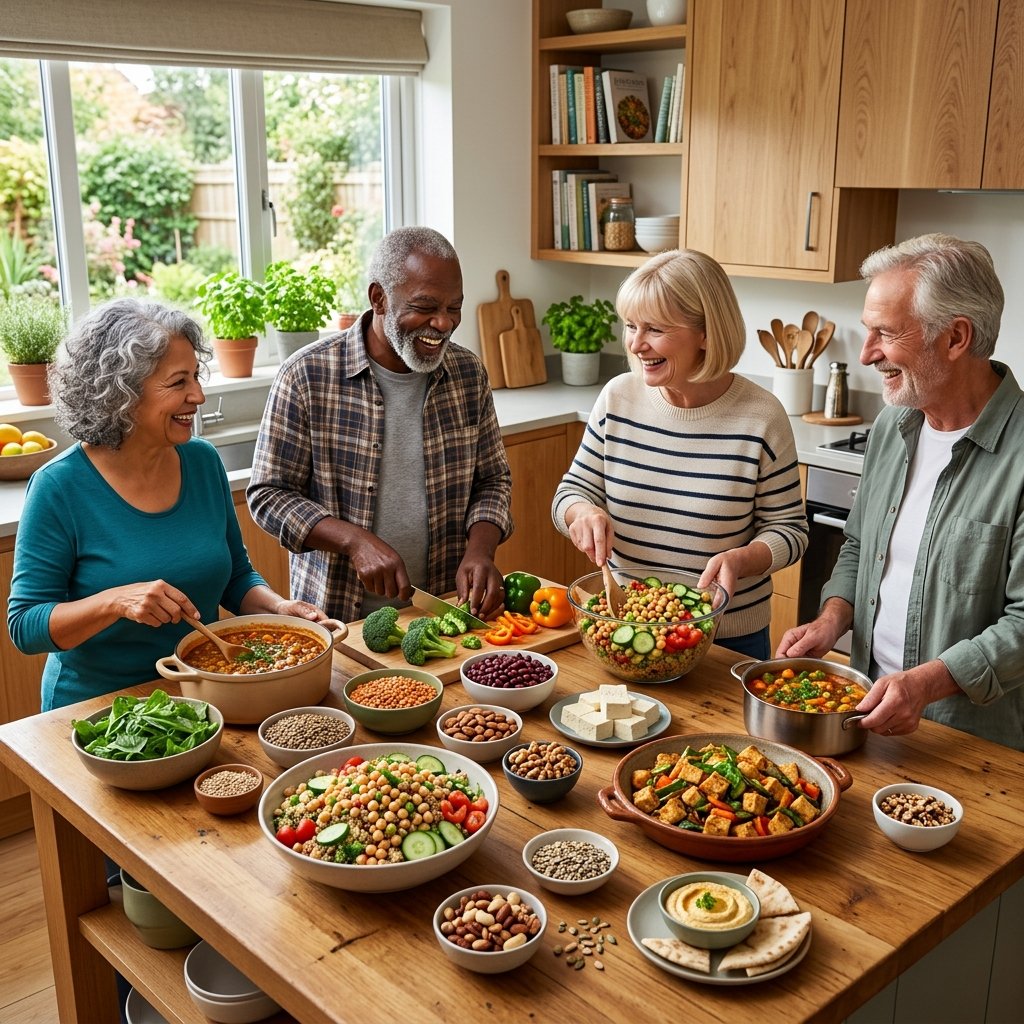
These ten recipes prove that vegan meals can deliver all the protein you need while being easy to prepare and delicious to eat. Each dish focuses on whole food ingredients that support muscle health, energy levels, and overall wellness.
You'll find everything from hearty breakfast scrambles to filling grain bowls and satisfying smoothies. The recipes also include helpful tips for meal planning and cooking techniques that work well for your lifestyle.
Lentil and Quinoa Power Bowl with Roasted Vegetables
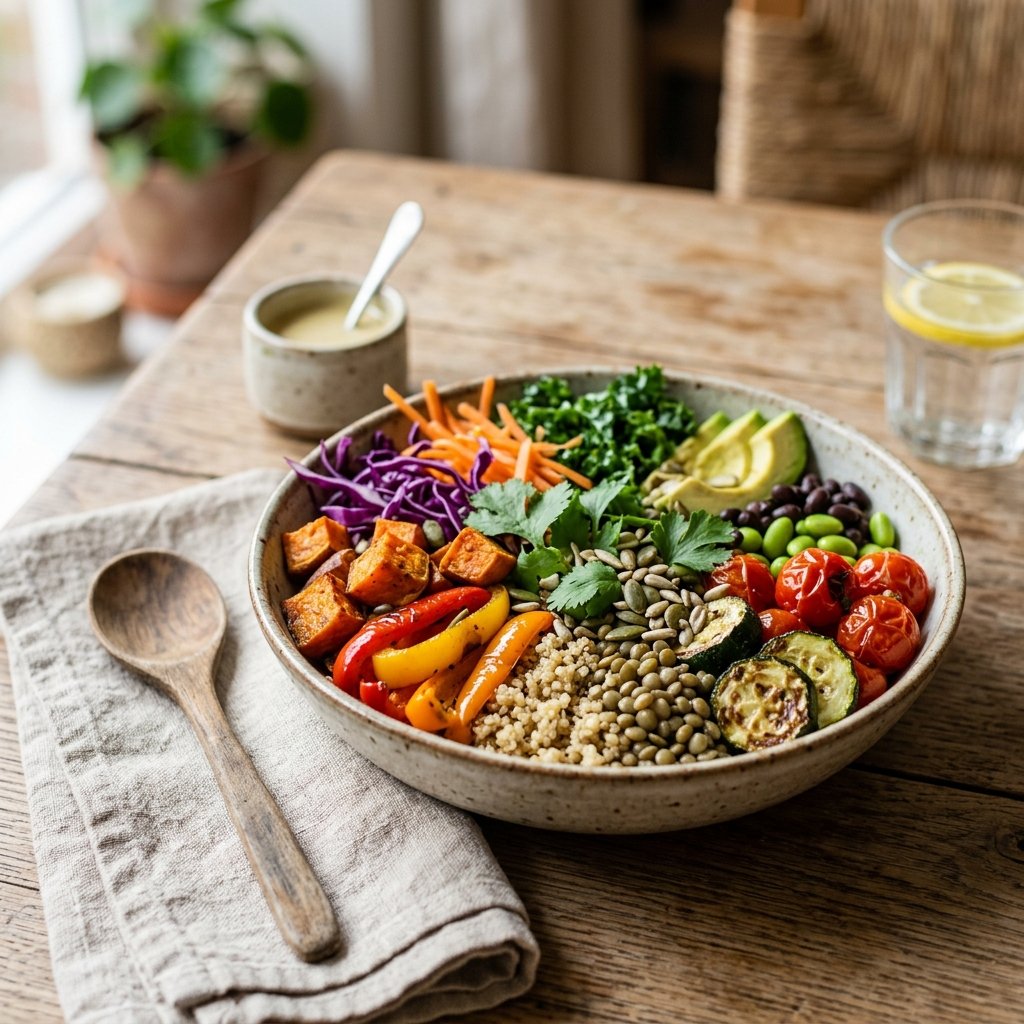
This colorful power bowl combines protein-rich lentils and quinoa with roasted vegetables for a complete meal. Each serving provides about 420 calories and 18g of protein. The mix of plant-based proteins makes this bowl perfect for seniors who want to build muscle and stay energized throughout the day.
Ingredients
- 1 cup dried green or brown lentils
- 3/4 cup quinoa
- 2 cups broccoli florets
- 1 large red bell pepper, chopped
- 1 medium sweet potato, cubed
- 2 tablespoons olive oil
- 1 teaspoon garlic powder
- 1/2 teaspoon paprika
- Salt and pepper to taste
- 2 tablespoons tahini
- 2 tablespoons lemon juice
- 1 tablespoon water
Instructions
- Preheat your oven to 400°F and line a baking sheet with parchment paper.
- Toss the broccoli, bell pepper, and sweet potato cubes with 1 tablespoon of olive oil, garlic powder, paprika, salt, and pepper on the baking sheet.
- Roast the vegetables for 25-30 minutes until tender and slightly browned, stirring halfway through.
- While the vegetables roast, rinse the lentils and cook them in 3 cups of water for 20-25 minutes until tender but not mushy.
- Rinse the quinoa and cook it in 1.5 cups of water for 15 minutes, then let it sit covered for 5 minutes.
- Mix the tahini, lemon juice, remaining olive oil, and water in a small bowl to make a simple dressing.
- Divide the cooked quinoa and lentils between two bowls and top with the roasted vegetables.
- Drizzle the tahini dressing over each bowl and serve warm.
Add a handful of chickpeas or white beans to boost the protein even higher, or swap sweet potato for butternut squash when it's in season.
Silken Tofu and Spinach Scramble
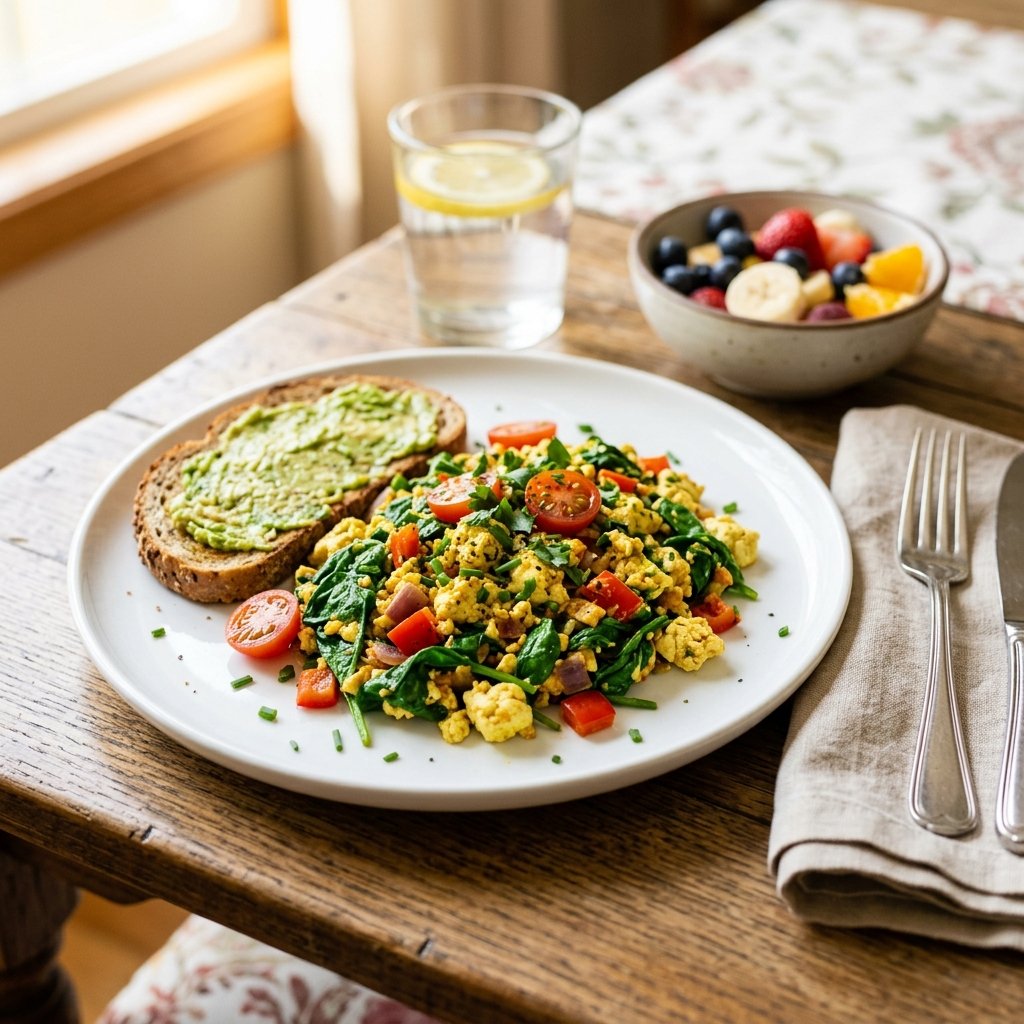
Silken Tofu and Spinach Scramble (180 calories | 14g protein per serving)
This scramble uses silken tofu as a soft, protein-rich substitute for eggs. It cooks quickly and provides a gentle texture that's easy to chew and digest. The spinach adds iron and vitamins, making this a nutritious breakfast option. You can season it to match your taste preferences while keeping prep time under 15 minutes.
Ingredients
- 8 oz silken tofu, drained
- 2 cups fresh spinach, chopped
- 1 tablespoon olive oil
- 1/4 teaspoon turmeric powder
- 1/4 teaspoon garlic powder
- 1/4 teaspoon onion powder
- 2 tablespoons nutritional yeast
- Salt and black pepper to taste
- 1 tablespoon water
Instructions
- Heat the olive oil in a non-stick skillet over medium heat for about 1 minute.
- Crumble the silken tofu into the skillet using your hands or a fork, breaking it into small, bite-sized pieces.
- Add the turmeric, garlic powder, and onion powder to the tofu and stir gently to combine.
- Cook for 3-4 minutes, stirring occasionally, until the tofu starts to firm up slightly.
- Add the chopped spinach and water to the pan and stir everything together.
- Cook for another 2-3 minutes until the spinach wilts completely.
- Sprinkle the nutritional yeast over the scramble and stir it in.
- Season with salt and black pepper according to your taste preferences.
- Remove from heat and serve warm on toast or alongside your favorite breakfast items.
Add diced tomatoes or mushrooms for extra vegetables and flavor variety.
Chickpea and Avocado Smash on Whole Grain Toast
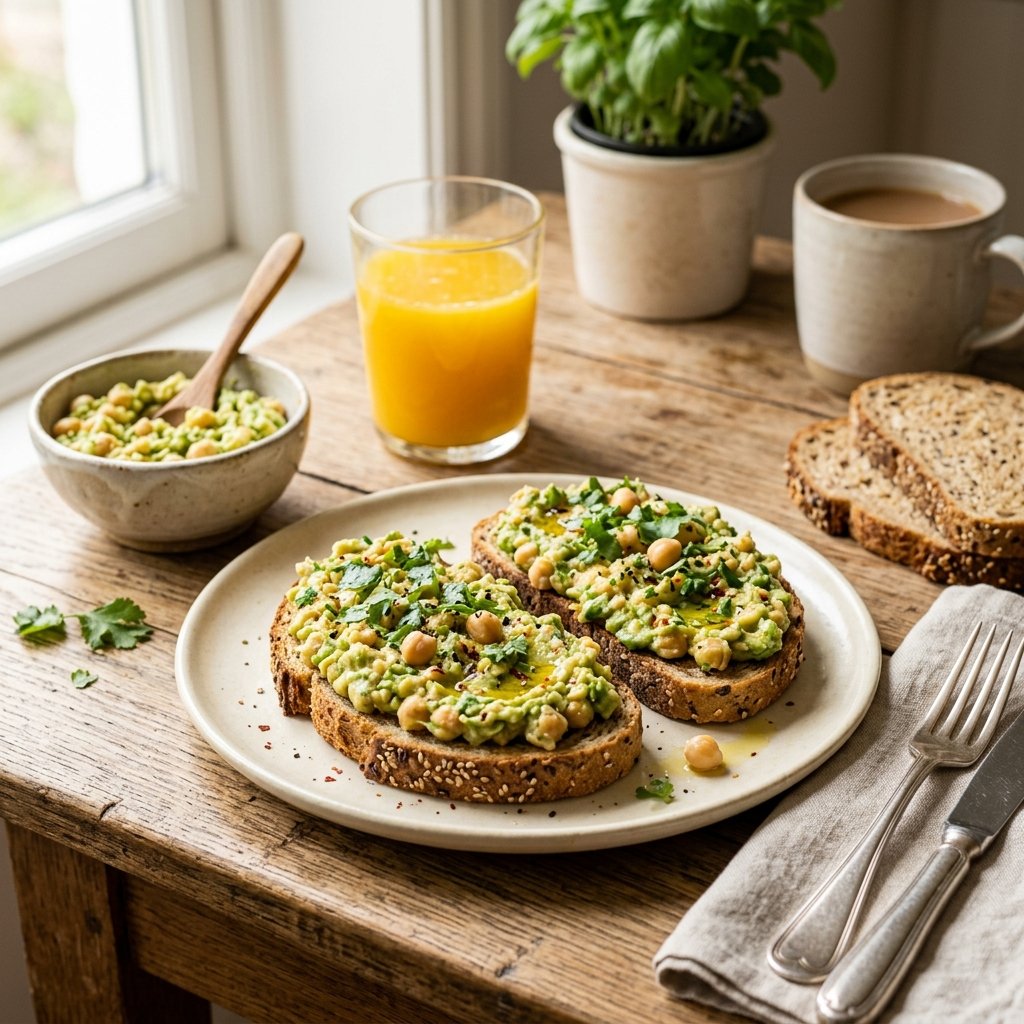
Chickpea and Avocado Smash on Whole Grain Toast (320 calories | 14g protein per serving)
This simple recipe combines chickpeas and avocado to create a creamy, protein-packed spread. You get plant-based protein from the chickpeas and healthy fats from the avocado. It takes less than 10 minutes to make and works great for breakfast or lunch.
This meal is easy to digest and doesn't require any cooking skills. The whole grain toast adds extra fiber to keep you full longer.
Ingredients
- 1 cup canned chickpeas, drained and rinsed
- 1 ripe avocado
- 2 slices whole grain bread
- 1 tablespoon lemon juice
- 1/4 teaspoon garlic powder
- 1/4 teaspoon salt
- 1/8 teaspoon black pepper
- 1 tablespoon chopped fresh parsley (optional)
Instructions
- Toast your bread slices until they reach your preferred level of crispness.
- While the bread toasts, add the chickpeas to a medium bowl and mash them with a fork until about half are broken down.
- Cut the avocado in half, remove the pit, and scoop the flesh into the bowl with the chickpeas.
- Add the lemon juice, garlic powder, salt, and black pepper to the bowl.
- Mash everything together until you get a chunky spread, leaving some texture for better mouth feel.
- Divide the chickpea and avocado mixture evenly between your two toast slices.
- Sprinkle with fresh parsley if you're using it.
Add sliced tomatoes or cucumber on top for extra vitamins and crunch.
Smoky Tempeh and Sweet Potato Hash
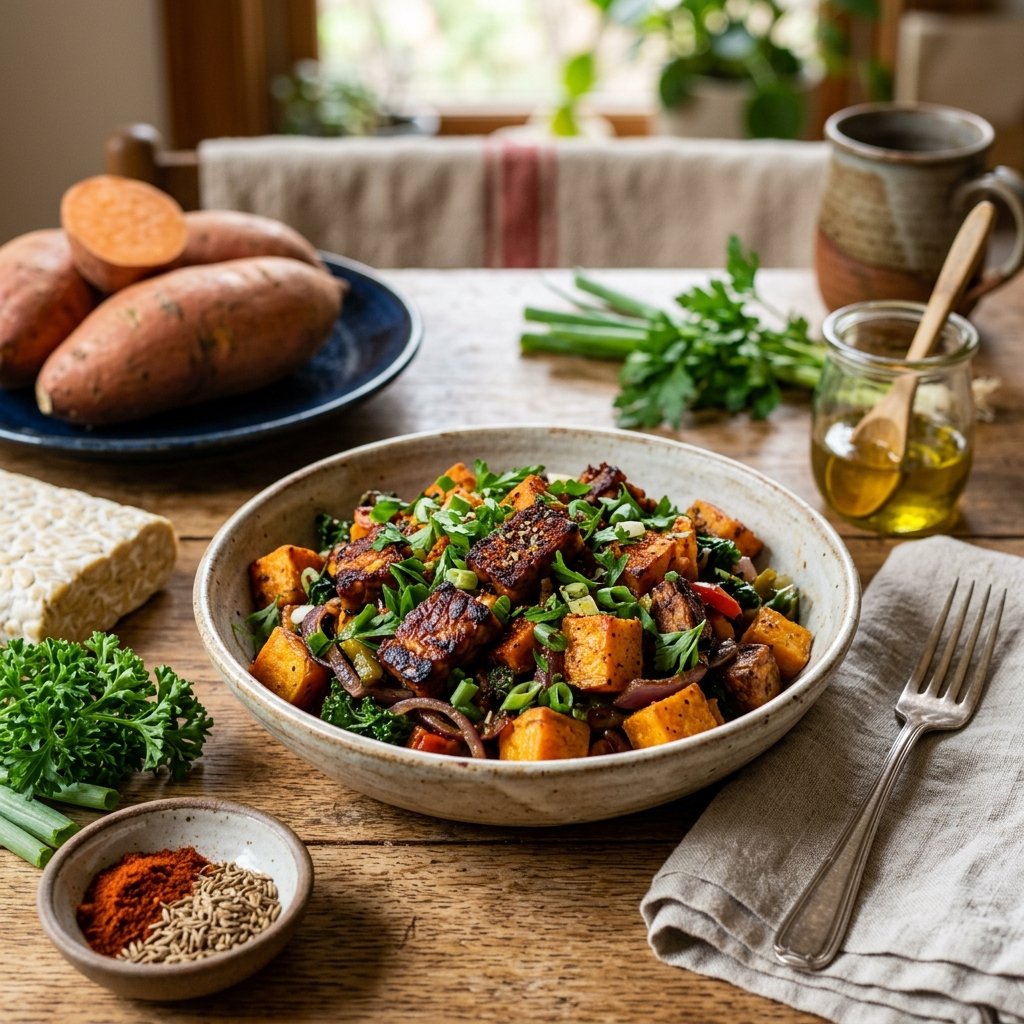
This filling breakfast or brunch dish packs 22 grams of protein per serving and comes in at around 380 calories. Tempeh is a fermented soy product that offers complete protein along with gut-friendly probiotics. The sweet potatoes add fiber and vitamins while keeping you full for hours.
Ingredients
- 8 ounces tempeh, crumbled
- 2 medium sweet potatoes, diced into 1/2-inch cubes
- 1 red bell pepper, diced
- 1 small yellow onion, diced
- 2 cloves garlic, minced
- 2 tablespoons olive oil
- 1 teaspoon smoked paprika
- 1/2 teaspoon cumin
- 1/4 teaspoon black pepper
- 1/2 teaspoon salt
- 2 cups fresh spinach
- 2 tablespoons nutritional yeast
Instructions
- Heat one tablespoon of olive oil in a large skillet over medium heat.
- Add the diced sweet potatoes and cook for 8-10 minutes, stirring occasionally, until they start to soften and brown.
- Push the sweet potatoes to one side of the pan and add the remaining tablespoon of oil to the empty side.
- Add the crumbled tempeh to the oil and cook for 3-4 minutes until it begins to brown.
- Toss in the onion, bell pepper, and garlic, stirring everything together. Cook for another 5 minutes.
- Sprinkle the smoked paprika, cumin, salt, and pepper over the mixture and stir well to coat everything evenly.
- Add the spinach and cook for 1-2 minutes until it wilts.
- Remove from heat and sprinkle nutritional yeast on top before serving.
Try topping this hash with sliced avocado or a handful of pumpkin seeds for extra healthy fats and crunch.
Edamame and Farro Salad with Lemon-Tahini Dressing
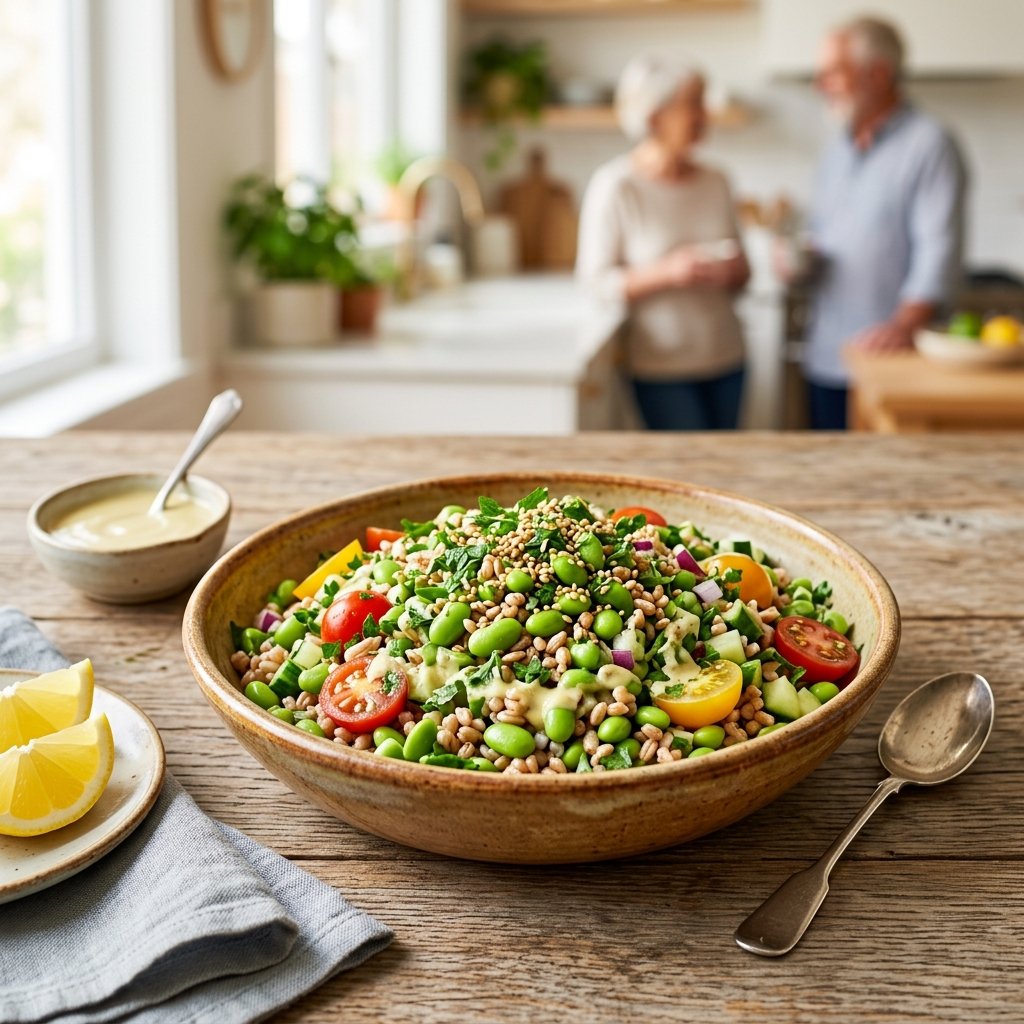
This hearty grain salad combines protein-rich edamame and nutty farro with a creamy tahini dressing. Each serving provides about 320 calories and 16 grams of protein. The mix of whole grains and plant protein makes this perfect for a light lunch or dinner side dish.
Ingredients
- 1 cup dry farro
- 2 cups shelled edamame (fresh or frozen)
- 3 tablespoons tahini
- 2 tablespoons fresh lemon juice
- 1 tablespoon olive oil
- 1 clove garlic, minced
- 2 tablespoons water
- 1/2 teaspoon salt
- 1/4 teaspoon black pepper
- 1 cup cherry tomatoes, halved
- 1/4 cup fresh parsley, chopped
- 2 tablespoons pumpkin seeds
Instructions
- Cook the farro according to package directions, usually about 25-30 minutes in boiling water. Drain and let it cool.
- If using frozen edamame, cook according to package directions and drain. If using fresh, boil for 3-4 minutes until tender.
- Make the dressing by whisking together tahini, lemon juice, olive oil, minced garlic, water, salt, and pepper in a small bowl. Add more water if you want a thinner consistency.
- Combine the cooled farro and edamame in a large bowl. Add the cherry tomatoes and parsley.
- Pour the lemon-tahini dressing over the salad and toss everything together until well coated.
- Sprinkle pumpkin seeds on top before serving.
You can prepare this salad ahead of time and store it in the fridge for up to three days. Add quinoa instead of farro for a gluten-free version.
Black Bean and Quinoa Stuffed Peppers
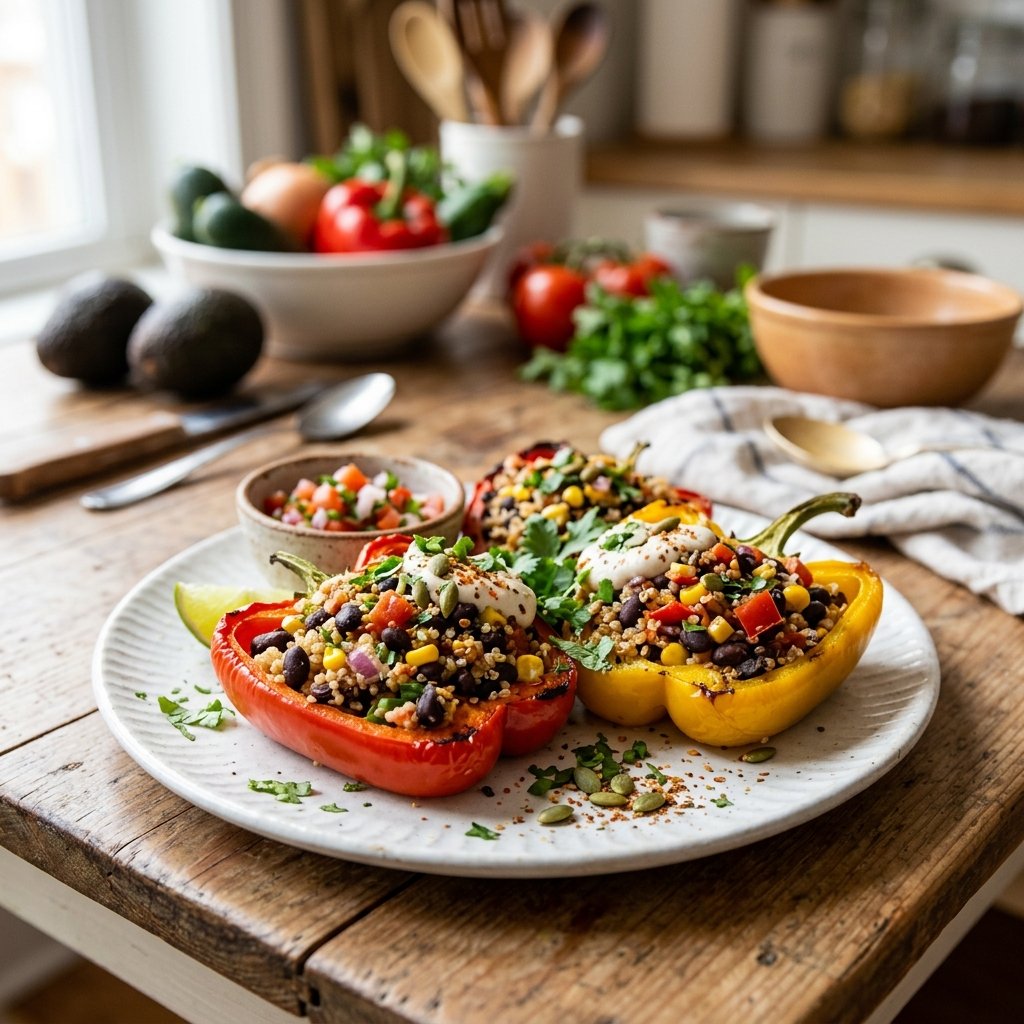
Black Bean and Quinoa Stuffed Peppers (320 calories | 14g protein per serving)
These colorful stuffed peppers combine black beans and quinoa to create a complete protein source. The black beans provide about 8g of protein while quinoa adds another 4g, plus the dish includes melted cheese on top for extra protein. This recipe works great for meal prep since you can make several peppers at once and reheat them throughout the week.
The peppers are easy to digest and packed with fiber to support healthy digestion. You'll get a satisfying meal that keeps you full for hours without feeling heavy.
Ingredients
- 4 large bell peppers, any color
- 1 cup cooked quinoa
- 1 can (15 oz) black beans, drained and rinsed
- 1 cup corn kernels, fresh or frozen
- 1 cup diced tomatoes
- 1 small onion, diced
- 2 cloves garlic, minced
- 1 teaspoon cumin
- 1 teaspoon chili powder
- 1/2 teaspoon salt
- 1/4 teaspoon black pepper
- 1 cup shredded vegan cheese
- 2 tablespoons olive oil
- Fresh cilantro for garnish
Instructions
- Preheat your oven to 375°F and lightly oil a baking dish.
- Cut the tops off the bell peppers and remove all seeds and membranes from inside.
- Heat olive oil in a large pan over medium heat and cook the onion for 3 minutes until soft.
- Add garlic and cook for another minute until fragrant.
- Stir in the black beans, quinoa, corn, diced tomatoes, cumin, chili powder, salt, and pepper.
- Cook the mixture for 5 minutes, stirring occasionally.
- Spoon the filling into each pepper until packed full.
- Place stuffed peppers in the baking dish and cover with foil.
- Bake for 30 minutes, then remove foil and sprinkle vegan cheese on top.
- Bake uncovered for another 10 minutes until cheese melts and peppers are tender.
- Let cool for 5 minutes before serving with fresh cilantro.
Try adding diced zucchini or mushrooms to the filling for extra vegetables and nutrients.
Peanut Butter, Banana and Hemp Seed Smoothie
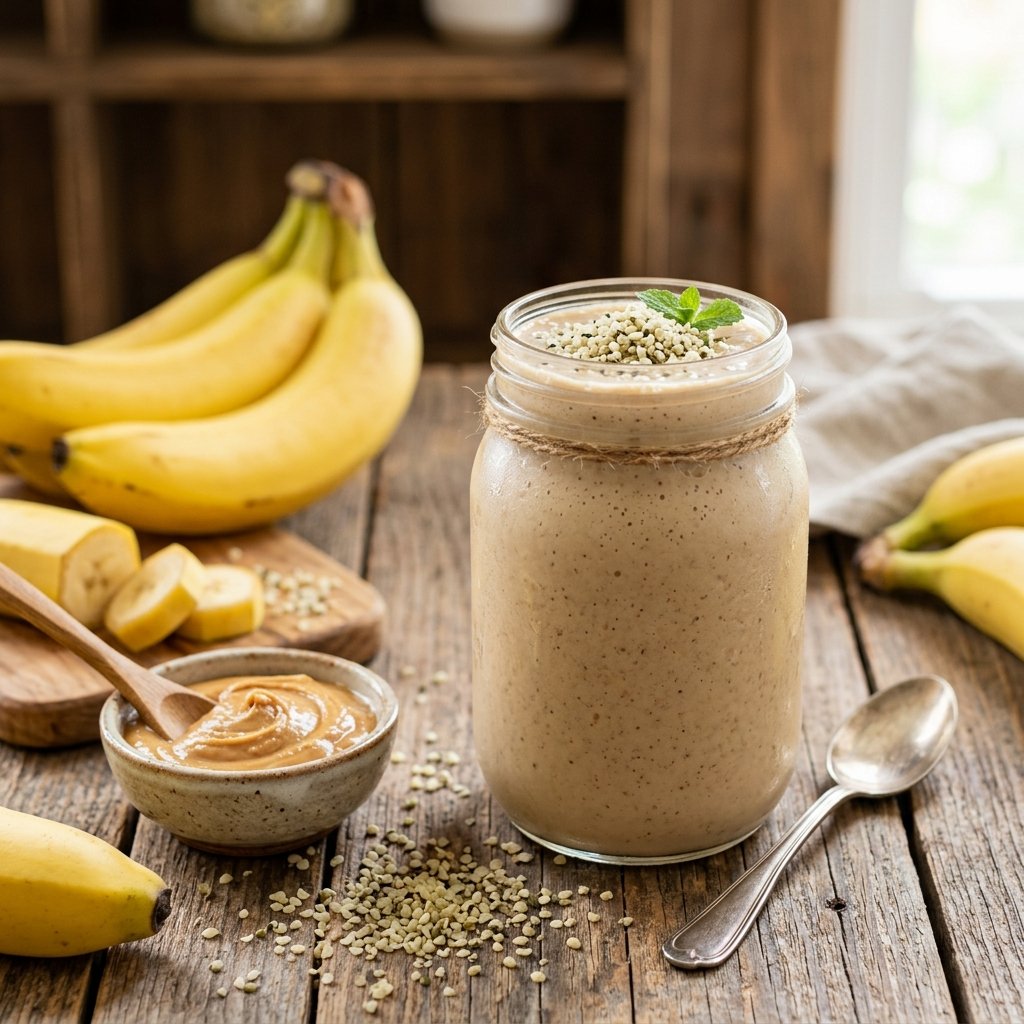
This creamy smoothie combines peanut butter and hemp seeds to deliver about 20 grams of protein per serving at roughly 380 calories. It's perfect for breakfast or a post-workout snack when you need quick energy and muscle support. The ingredients blend together in minutes, making this an easy choice for busy mornings.
Ingredients
- 1 cup unsweetened almond milk
- 2 tablespoons natural peanut butter
- 1 medium ripe banana
- 3 tablespoons hemp seeds
- 1 tablespoon ground flaxseed
- 1/2 teaspoon vanilla extract
- 1/2 cup ice cubes
- 1 teaspoon maple syrup (optional)
Instructions
- Add the almond milk to your blender first to prevent sticking.
- Drop in the banana, breaking it into chunks if needed.
- Add the peanut butter, hemp seeds, and ground flaxseed.
- Pour in the vanilla extract and add the ice cubes.
- Blend on high speed for 45 to 60 seconds until smooth and creamy.
- Taste and add maple syrup if you want extra sweetness, then blend again for 10 seconds.
- Pour into a glass and drink right away for the best texture.
Try using almond butter or sunflower seed butter instead of peanut butter if you want a different flavor.
Greek-Style Coconut Yogurt Parfait with Walnuts and Berries
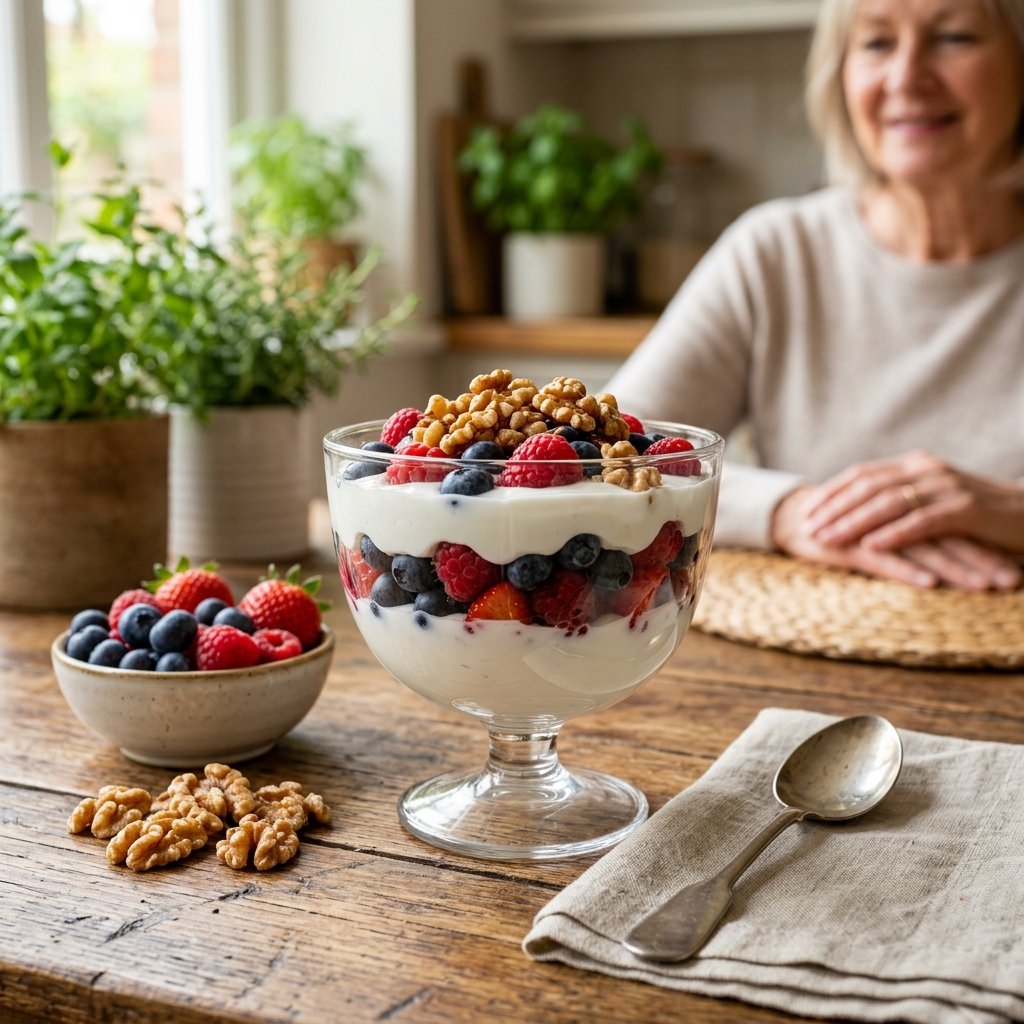
Greek-Style Coconut Yogurt Parfait with Walnuts and Berries (285 calories | 12g protein per serving)
This colorful parfait gives you a protein boost from coconut yogurt and walnuts. It takes just five minutes to put together and works great as a quick breakfast or snack. The berries add vitamins while the walnuts provide healthy fats and extra protein your body needs.
Ingredients
- 1 cup plain Greek-style coconut yogurt
- 1/4 cup raw walnuts, chopped
- 1/2 cup mixed berries (blueberries, strawberries, or raspberries)
- 1 tablespoon chia seeds
- 1 tablespoon hemp hearts
- 1 teaspoon maple syrup (optional)
- 1/4 teaspoon vanilla extract
Instructions
- Place half of the coconut yogurt at the bottom of a glass or bowl.
- Sprinkle half of the chia seeds and hemp hearts over the yogurt layer.
- Add half of the mixed berries on top of the seeds.
- Sprinkle half of the chopped walnuts over the berries.
- Repeat the layers with the remaining yogurt, seeds, berries, and walnuts.
- Drizzle with maple syrup if you want extra sweetness and add vanilla extract.
- Serve right away or cover and refrigerate for up to 2 hours.
You can prep the dry ingredients the night before and store them separately from the yogurt to save time in the morning.
Miso-Glazed Salmon-Style Roasted King Oyster Mushrooms
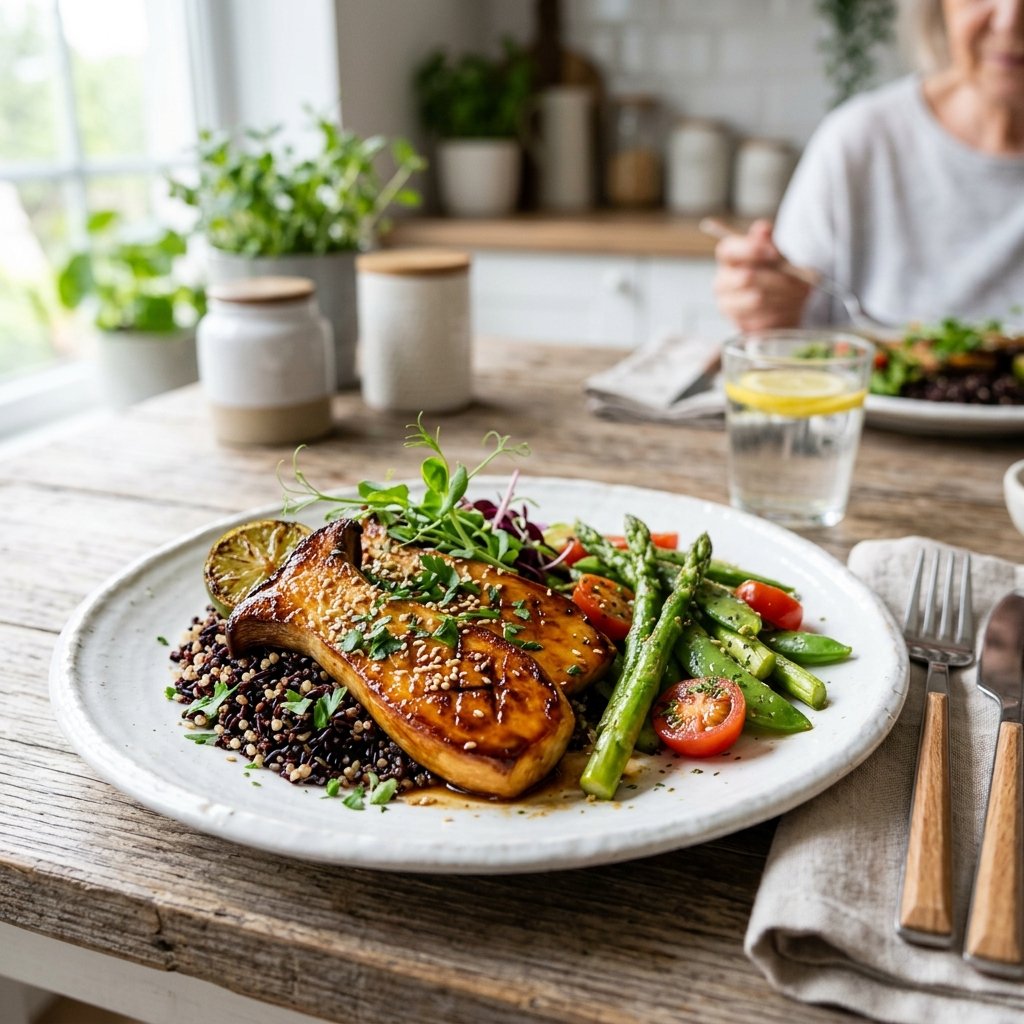
Miso-Glazed Salmon-Style Roasted King Oyster Mushrooms (220 calories | 12g protein per serving)
King oyster mushrooms have a meaty texture that makes them perfect for this recipe. The miso glaze adds umami flavor and extra protein to your meal. This dish works great as a main course or side dish for lunch or dinner.
The mushrooms get their salmon-like appearance from scoring the surface before roasting. You'll get a good amount of protein from both the mushrooms and the miso paste. This recipe takes about 30 minutes from start to finish.
Ingredients
- 1 pound king oyster mushrooms
- 3 tablespoons white miso paste
- 2 tablespoons maple syrup
- 1 tablespoon rice vinegar
- 1 tablespoon sesame oil
- 2 teaspoons soy sauce
- 1 teaspoon grated fresh ginger
- 2 cloves garlic, minced
- 1 tablespoon sesame seeds
- 2 green onions, sliced
Instructions
- Preheat your oven to 400°F and line a baking sheet with parchment paper.
- Cut the king oyster mushrooms in half lengthwise and score the flat side in a crosshatch pattern with a sharp knife.
- Mix the miso paste, maple syrup, rice vinegar, sesame oil, soy sauce, ginger, and garlic in a small bowl until smooth.
- Brush the miso mixture generously over the scored side of each mushroom half.
- Place the mushrooms scored-side up on the prepared baking sheet and roast for 20 minutes.
- Remove from the oven and brush with any remaining glaze, then roast for another 5 minutes until caramelized.
- Sprinkle with sesame seeds and green onions before serving.
Try serving these mushrooms over brown rice or quinoa to boost the protein content even more.
Red Lentil and Carrot Dal with Brown Rice
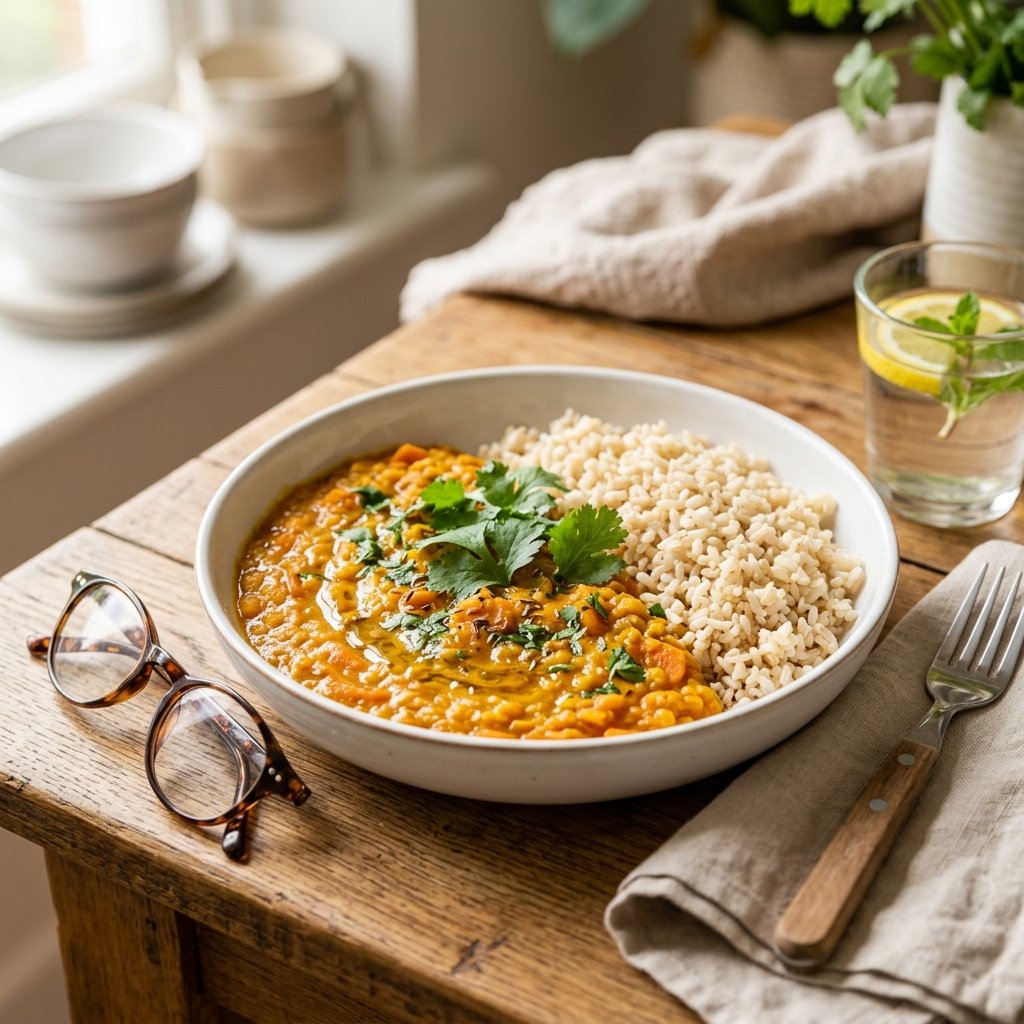
Red Lentil and Carrot Dal with Brown Rice (380 calories | 18g protein per serving)
This warming dal combines red lentils and carrots with fragrant spices to create a protein-rich meal. You get complete nutrition when you pair the lentils with brown rice. The soft texture makes this recipe easy to chew and digest. Red lentils cook faster than other types and break down into a creamy consistency that seniors often find more enjoyable.
Ingredients
- 1 cup dried red lentils, rinsed
- 2 medium carrots, peeled and diced
- 1 medium onion, chopped
- 3 cloves garlic, minced
- 1 tablespoon fresh ginger, grated
- 1 tablespoon coconut oil
- 1 teaspoon ground turmeric
- 1 teaspoon ground cumin
- 1/2 teaspoon ground coriander
- 3 cups vegetable broth
- 1 cup light coconut milk
- 1 cup dry brown rice
- 2 cups water (for rice)
- Salt to taste
- Fresh cilantro for garnish
Instructions
- Cook the brown rice by combining it with 2 cups of water in a pot, bringing to a boil, then covering and simmering for 45 minutes.
- Heat coconut oil in a large pot over medium heat and add the onion, cooking for 5 minutes until soft.
- Add garlic, ginger, turmeric, cumin, and coriander to the pot and stir for 1 minute until fragrant.
- Stir in the lentils, carrots, and vegetable broth, then bring everything to a boil.
- Reduce heat to low and simmer uncovered for 20 minutes, stirring occasionally until lentils are tender.
- Pour in the coconut milk and cook for 5 more minutes.
- Season with salt and serve the dal over brown rice, topped with fresh cilantro.
You can add a handful of spinach during the last few minutes of cooking for extra nutrients.
Understanding Senior Nutrition Needs
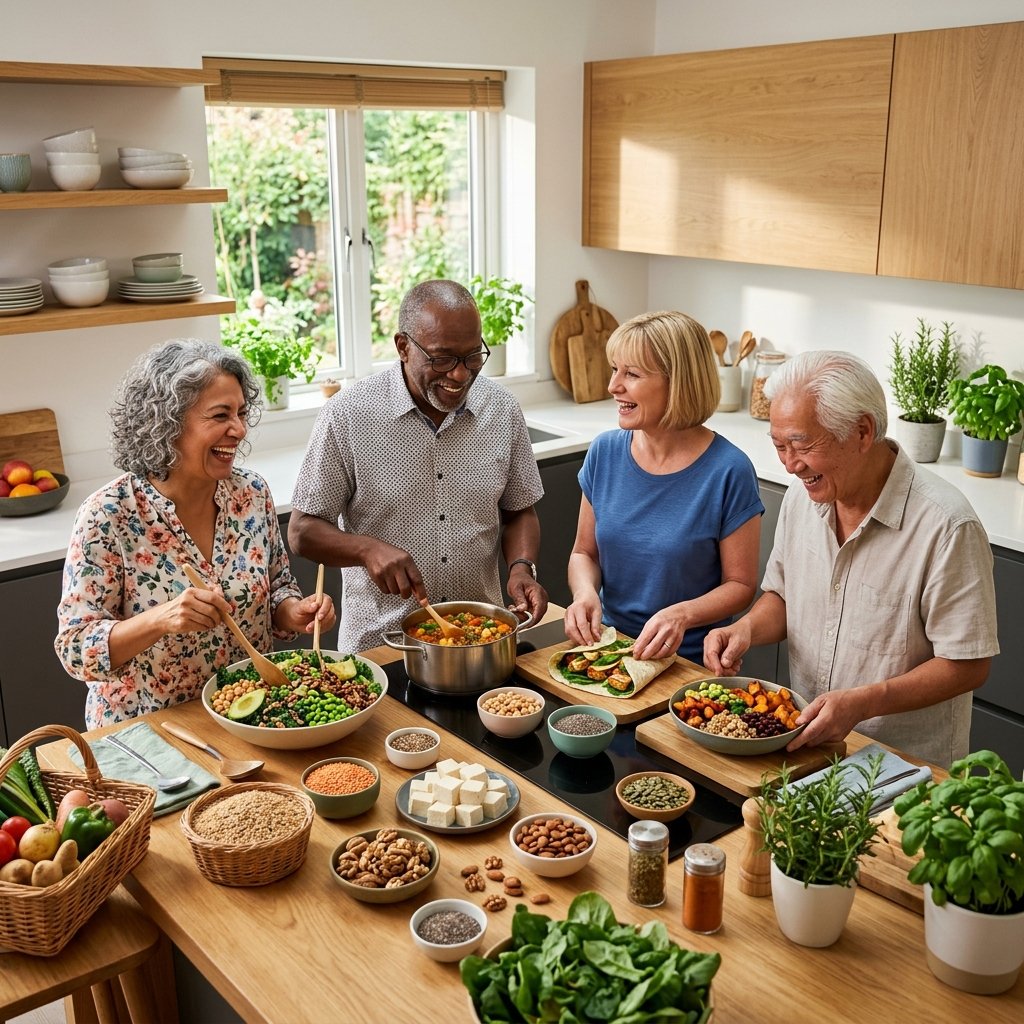
As you age past 50, your body requires fewer calories but more of certain nutrients, especially protein to maintain muscle mass and strength. Plant-based proteins can meet these needs while offering additional health benefits like improved heart health and easier digestion.
Benefits of Plant-Based Protein for Older Adults
Plant-based proteins help you maintain muscle mass without the saturated fats found in many animal products. This matters because your heart health becomes more important after 50, and plant proteins naturally support cardiovascular function.
Your digestive system also changes with age. Plant proteins are easier to digest than heavy meats and come with fiber that keeps your digestive tract healthy.
These protein sources fight inflammation in your body. Chronic inflammation increases as you get older, contributing to joint pain and other age-related conditions.
You'll also get antioxidants and phytonutrients from plant proteins that aren't available in animal sources. These compounds protect your cells and may reduce your risk of chronic diseases.
Key Nutrients to Focus on After 50
Protein becomes critical after 50 because you naturally lose muscle mass each year. You need about 1 to 1.2 grams of protein per kilogram of body weight daily to prevent this loss.
Vitamin B12 requires special attention since your body absorbs it less efficiently as you age. You'll need fortified foods or supplements because B12 doesn't occur naturally in plant foods.
Calcium and Vitamin D work together to keep your bones strong. Your bones lose density after 50, so you need 1,200 mg of calcium and 800-1,000 IU of vitamin D daily.
Omega-3 fatty acids support your brain health and reduce inflammation. You can get these from flaxseeds, chia seeds, and walnuts instead of fish.
Iron needs don't decrease with age, but plant-based iron absorbs differently than iron from meat. Pair iron-rich foods with vitamin C to boost absorption.
Practical Tips for Cooking Vegan Meals
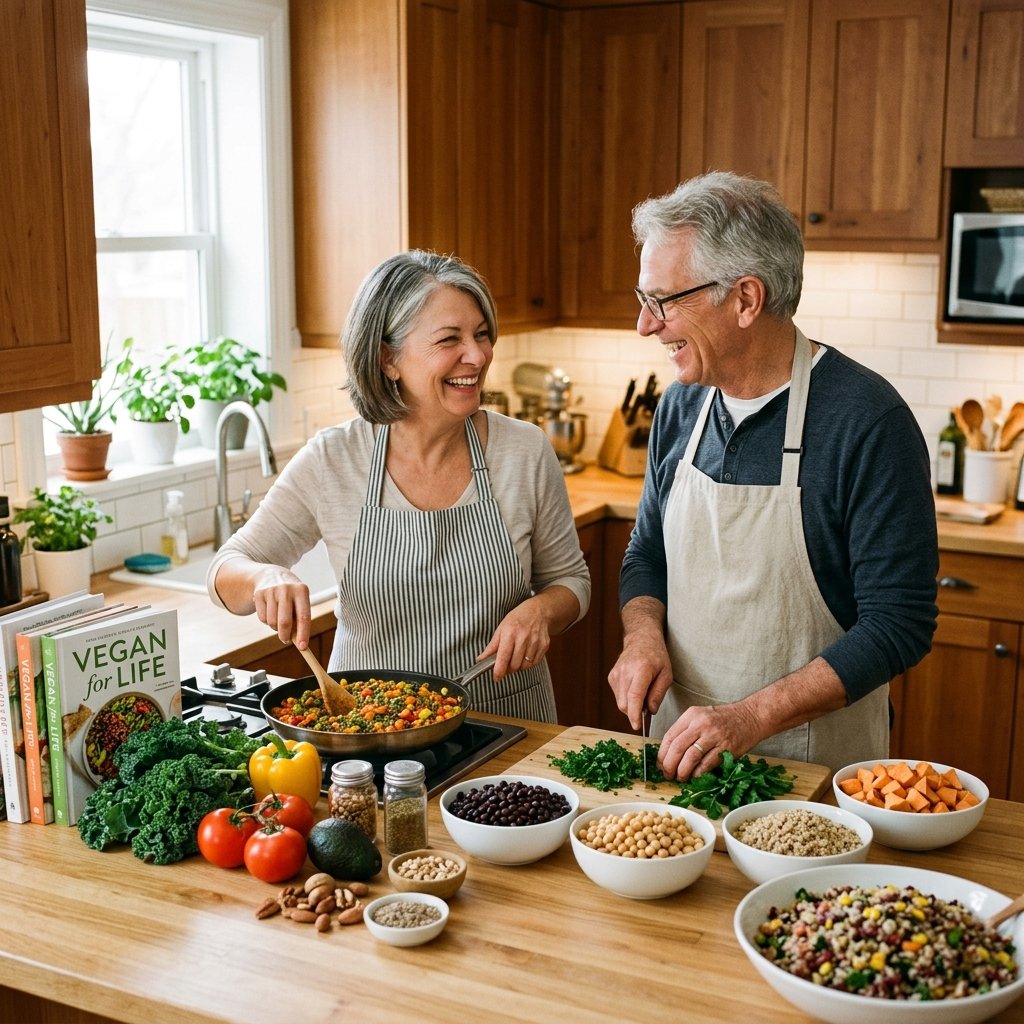
Cooking vegan meals for seniors requires special attention to digestion and taste preferences that change with age. Simple adjustments in how you prepare and season food can make meals more enjoyable and easier on your body.
Making Meals Easy to Digest
Your digestive system slows down as you age, so cooking methods matter more than ever. Steaming, roasting, and slow-cooking vegetables breaks down tough fibers and makes nutrients easier to absorb.
Soaking beans and lentils for at least 8 hours before cooking removes compounds that cause gas and bloating. You can also add a strip of kombu seaweed while cooking legumes to improve digestibility even more.
Blending soups and smoothies gives you protein-rich meals without putting stress on your digestive system. Pureeing cooked chickpeas, tofu, or white beans creates creamy textures that are gentle on your stomach.
Remove skins from beans after cooking if you have sensitive digestion. Cooking grains like quinoa and rice until they're softer than usual also helps your body process them more easily.
Flavor Enhancements for Changing Tastes
Your taste buds become less sensitive after age 50, which means you need bolder flavors to enjoy your meals. Adding fresh herbs like cilantro, basil, and parsley at the end of cooking brings bright flavors that wake up your palate.
Citrus juices and zests from lemons, limes, and oranges add tanginess without extra salt. Nutritional yeast provides a cheesy, savory taste while boosting your B-vitamin intake.
Roasting vegetables at 400°F caramelizes their natural sugars and creates deeper flavors. Toasting spices like cumin, coriander, and paprika in a dry pan for 30 seconds before adding them to dishes releases their essential oils.
Using umami-rich ingredients like miso paste, tamari, and sun-dried tomatoes adds satisfying depth to your cooking. A splash of balsamic vinegar or apple cider vinegar at the end of cooking brightens flavors and balances richness.