10 High Protein Vegan Smoothies for Elderly: Easy, Delicious Recipes to Boost Energy and Strength (15g+ Protein)

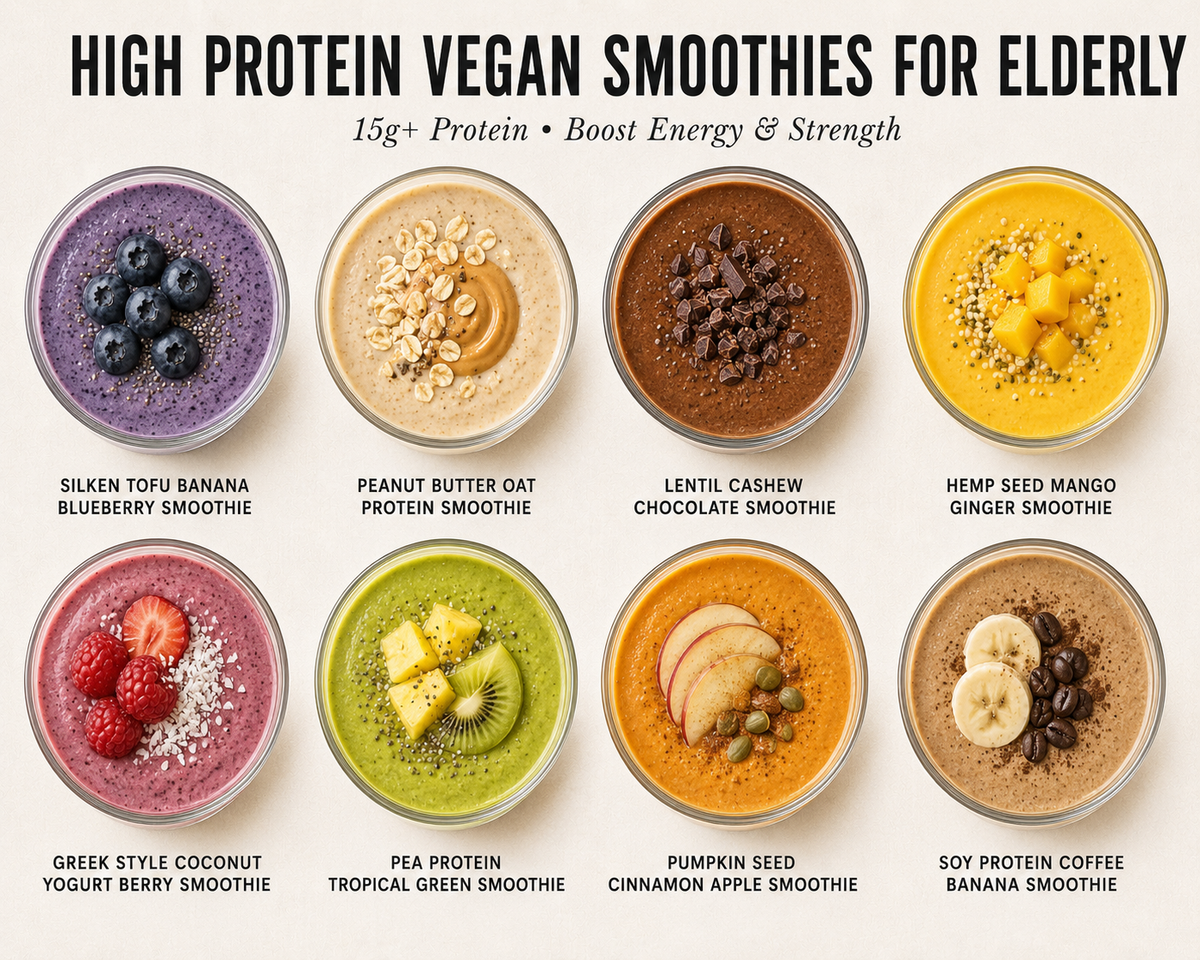
Getting enough protein becomes more important as you age. Many older adults struggle to meet their daily protein needs, which can affect muscle strength and overall health. Vegan smoothies offer a simple way to boost protein intake without relying on animal products.
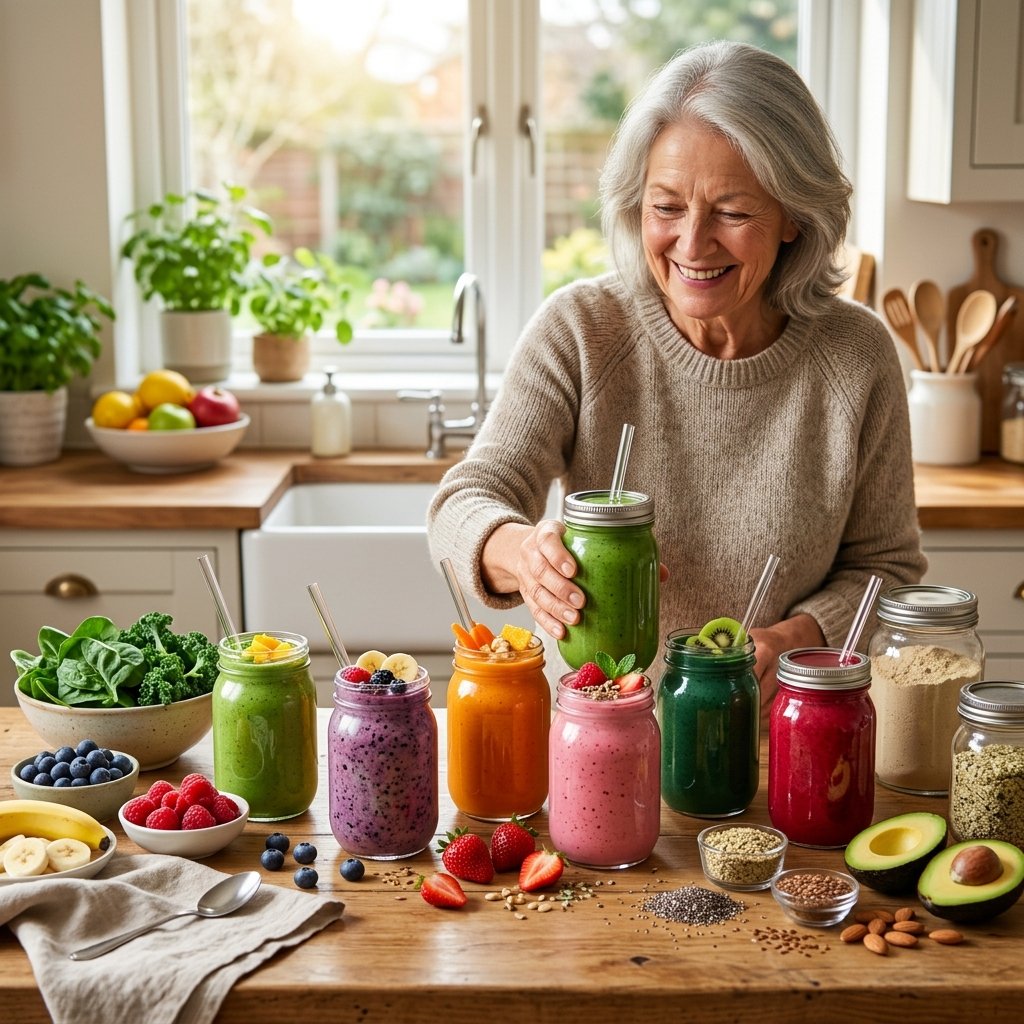
These ten smoothie recipes combine plant-based protein sources with delicious flavors to help you meet your nutritional needs. Each smoothie is designed to be easy to make and gentle on your digestive system. You'll find options using ingredients like tofu, nuts, seeds, and plant-based protein powders that pack plenty of protein into every glass.
The recipes ahead include detailed ingredient lists and simple instructions you can follow at home. You'll also learn about your protein requirements as an older adult and discover the best plant-based protein sources to keep in your kitchen.
Silken Tofu Banana Blueberry Smoothie
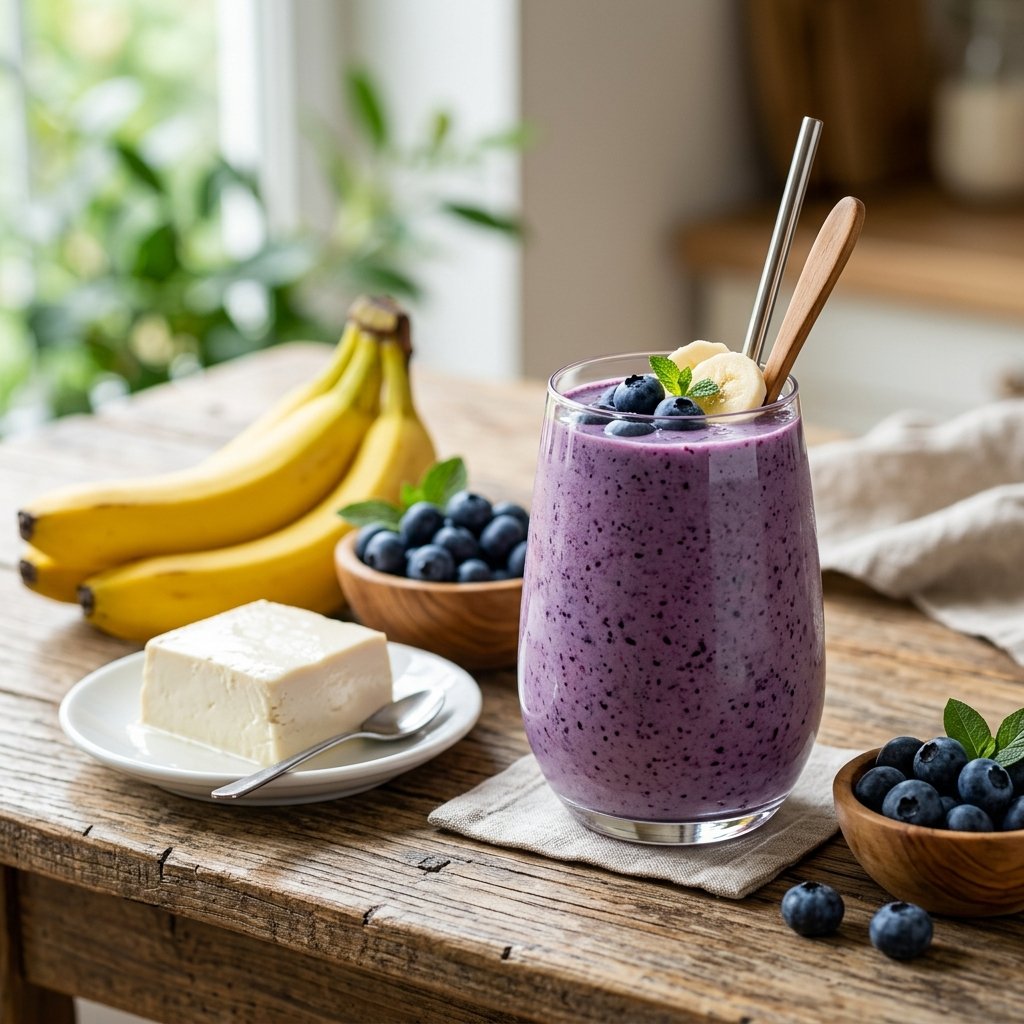
Silken Tofu Banana Blueberry Smoothie (240 calories | 12g protein per serving)
This smoothie uses silken tofu as its protein powerhouse, giving you a creamy texture without any dairy. The combination of banana and blueberries adds natural sweetness and important vitamins. Silken tofu blends smoothly and has a mild taste that won't overpower the fruit flavors. This recipe is perfect for seniors who need a gentle, easy-to-digest protein source that's also soft on the stomach.
Ingredients
- 1/2 cup silken tofu
- 1 medium banana (fresh or frozen)
- 1/2 cup blueberries (fresh or frozen)
- 1 cup unsweetened almond milk
- 1 tablespoon almond butter
- 1 tablespoon ground flaxseed
- 1/2 teaspoon vanilla extract
- 1 teaspoon maple syrup (optional)
- 3-4 ice cubes (if using fresh fruit)
Instructions
- Add the almond milk to your blender first to prevent ingredients from sticking to the bottom.
- Break the banana into chunks and add it to the blender along with the blueberries.
- Scoop the silken tofu into the blender, followed by the almond butter and ground flaxseed.
- Add the vanilla extract and maple syrup if you want extra sweetness.
- Toss in the ice cubes if you're using fresh fruit instead of frozen.
- Blend on high speed for 45-60 seconds until completely smooth and creamy.
- Pour into a glass and enjoy immediately for the best texture.
Try adding a handful of spinach for extra nutrients without changing the sweet berry flavor.
Peanut Butter Oat Protein Smoothie
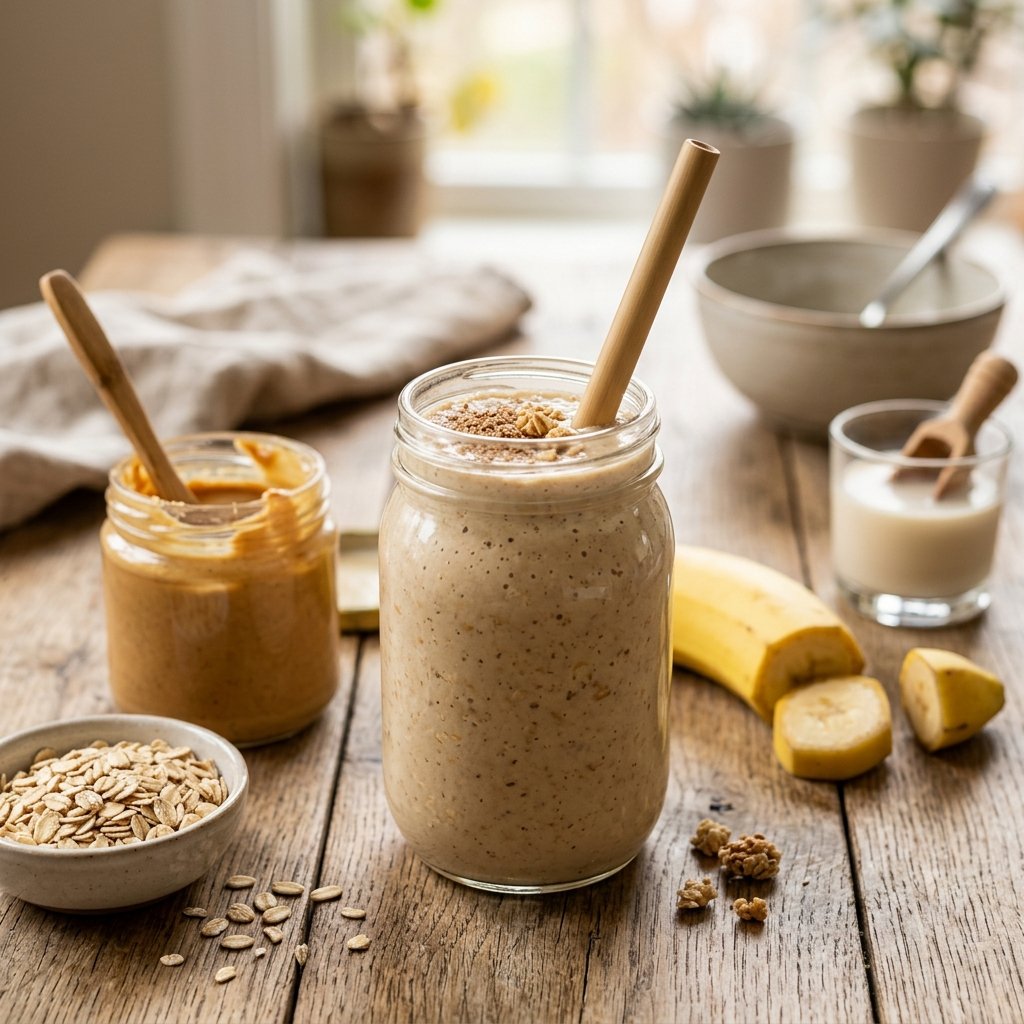
Peanut Butter Oat Protein Smoothie (380 calories | 18g protein per serving)
This smoothie combines creamy peanut butter with fiber-rich oats to create a filling breakfast or snack. The protein comes from both the peanut butter and optional protein powder, making it perfect for seniors who need easy-to-digest nutrition. It's thick, satisfying, and tastes like a peanut butter cookie in a glass.
The oats add extra fiber to support digestive health while keeping you full for hours.
Ingredients
- 1 cup unsweetened almond milk
- 2 tablespoons natural peanut butter
- 1/4 cup rolled oats
- 1 frozen banana
- 1 scoop vanilla protein powder (optional)
- 1 tablespoon ground flaxseed
- 1/2 teaspoon cinnamon
- 1 teaspoon maple syrup
- 3-4 ice cubes
Instructions
- Add the almond milk to your blender first to prevent sticking.
- Drop in the peanut butter, rolled oats, and frozen banana.
- Add the protein powder, ground flaxseed, and cinnamon to the blender.
- Pour in the maple syrup for a touch of sweetness.
- Toss in the ice cubes and blend on high for 45-60 seconds until completely smooth.
- Check the thickness and add more almond milk if you prefer a thinner consistency.
- Pour into a tall glass and drink right away for the best texture.
Use almond butter instead of peanut butter if you prefer a milder flavor or have peanut allergies.
Lentil-Cashew Chocolate Smoothie
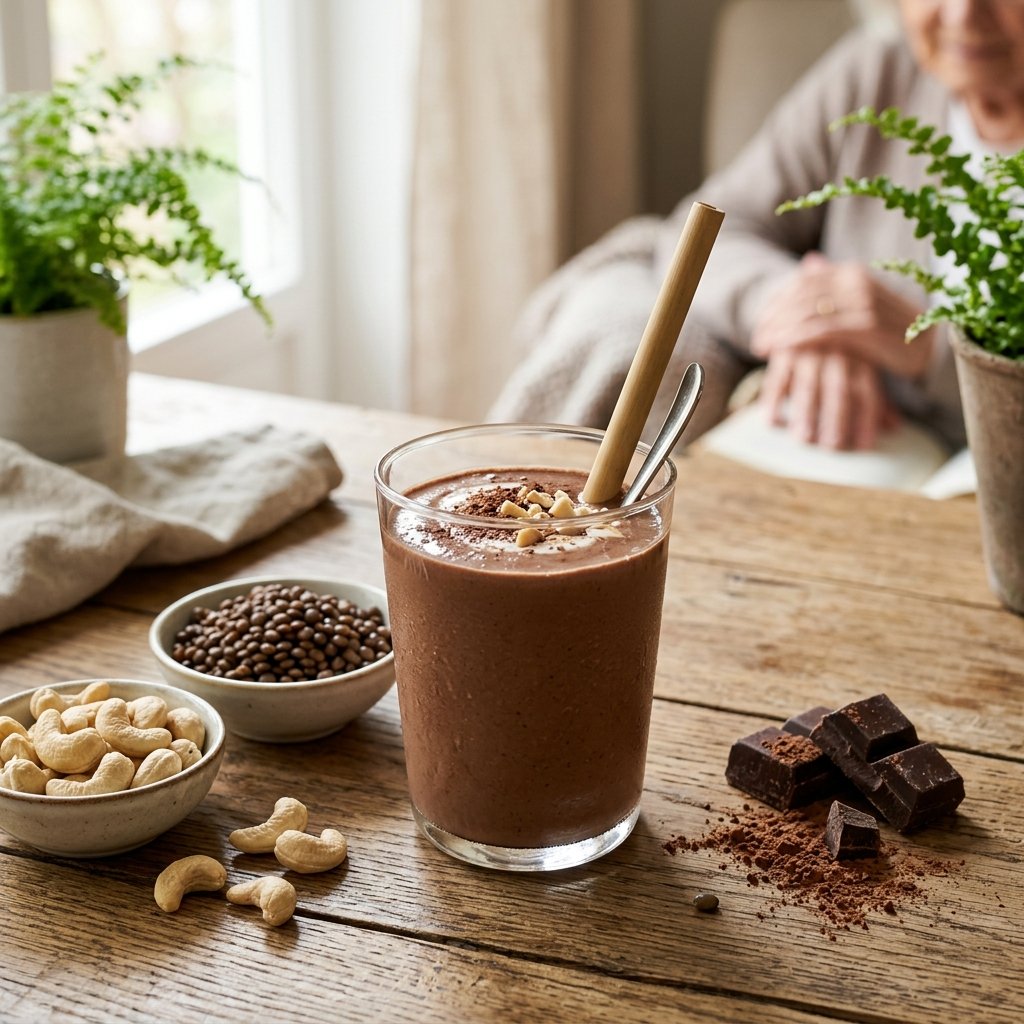
Lentil-Cashew Chocolate Smoothie (320 calories | 18g protein per serving)
This creamy chocolate smoothie uses cooked red lentils and cashews as its protein base. Red lentils blend smoothly and don't add a strong flavor, making them perfect for sweet recipes. The cashews add healthy fats and extra protein while creating a rich, thick texture.
This smoothie works great as a filling breakfast or afternoon snack for seniors who need more protein.
Ingredients
- 1/2 cup cooked red lentils, cooled
- 1/4 cup raw cashews, soaked for 2 hours
- 2 tablespoons unsweetened cocoa powder
- 1 ripe banana, frozen
- 1 cup unsweetened almond milk
- 1 tablespoon maple syrup
- 1/2 teaspoon vanilla extract
- 1/4 teaspoon cinnamon
- 4 ice cubes
Instructions
- Cook the red lentils according to package directions and let them cool completely in the fridge.
- Drain the soaked cashews and rinse them with cold water.
- Add the cooled lentils, cashews, cocoa powder, frozen banana, and almond milk to your blender.
- Pour in the maple syrup, vanilla extract, and cinnamon.
- Add the ice cubes on top.
- Blend on high speed for 60-90 seconds until completely smooth and creamy.
- Check the thickness and add more almond milk if you want it thinner.
- Pour into a glass and drink right away.
Add a tablespoon of peanut butter for extra protein and a richer taste.
Hemp Seed Mango Ginger Smoothie
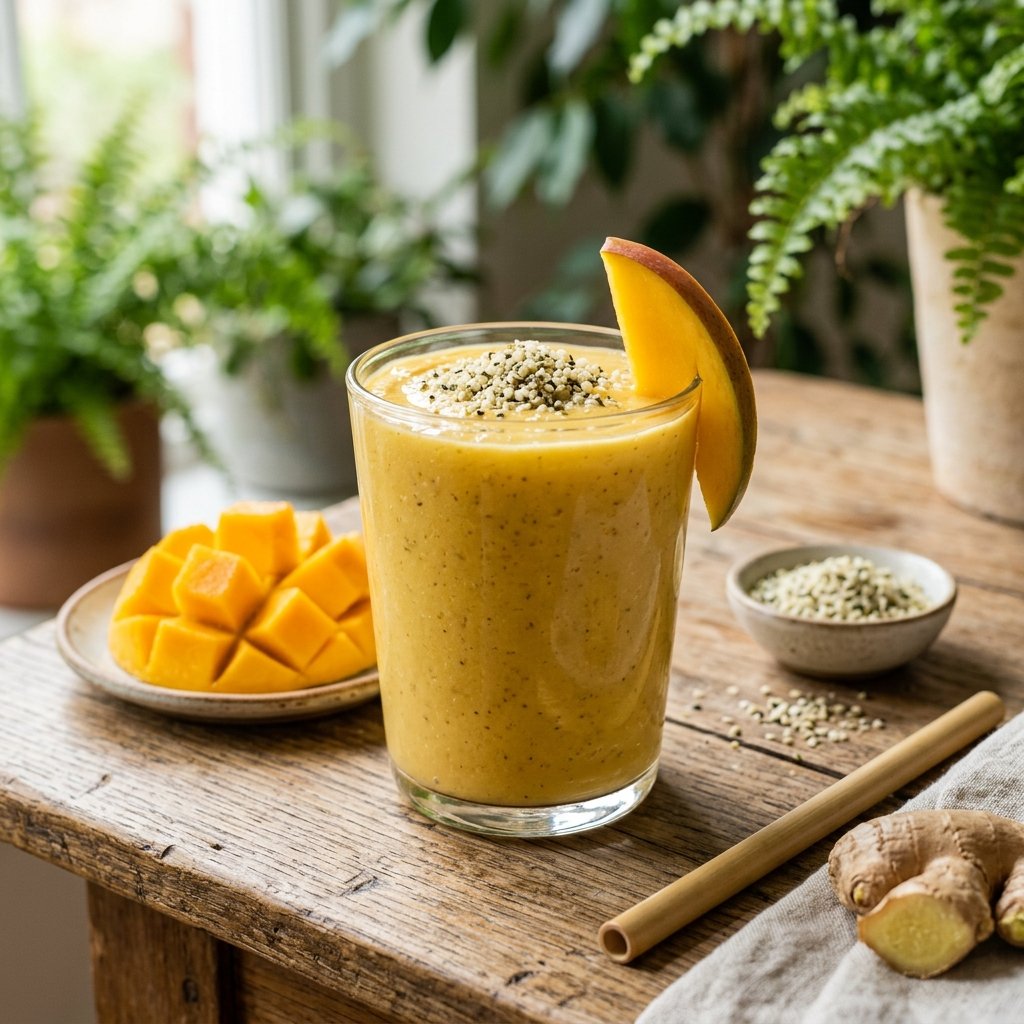
Hemp Seed Mango Ginger Smoothie (285 calories | 12g protein per serving)
This tropical smoothie uses hemp seeds as its main protein source. The mango adds natural sweetness while ginger gives it a warming kick. Hemp seeds are complete proteins, which means they have all the essential amino acids your body needs. This drink works great as a breakfast option or afternoon snack for older adults who want something light but filling.
Ingredients
- 3 tablespoons hemp seeds
- 1 cup frozen mango chunks
- 1/2 inch fresh ginger root, peeled
- 1 cup unsweetened almond milk
- 1/2 cup orange juice
- 1 tablespoon maple syrup
- 1/2 teaspoon vanilla extract
- 3 ice cubes
Instructions
- Add the almond milk and orange juice to your blender first.
- Drop in the hemp seeds, frozen mango chunks, and peeled ginger root.
- Pour in the maple syrup and vanilla extract.
- Add the ice cubes on top.
- Blend on high speed for 45 to 60 seconds until the mixture is smooth and creamy.
- Check the texture and blend for another 15 seconds if you see any chunks.
- Pour into a glass and drink right away for the best taste.
Add a handful of spinach to boost the nutrients without changing the fruity flavor.
Greek-Style Coconut Yogurt Berry Smoothie
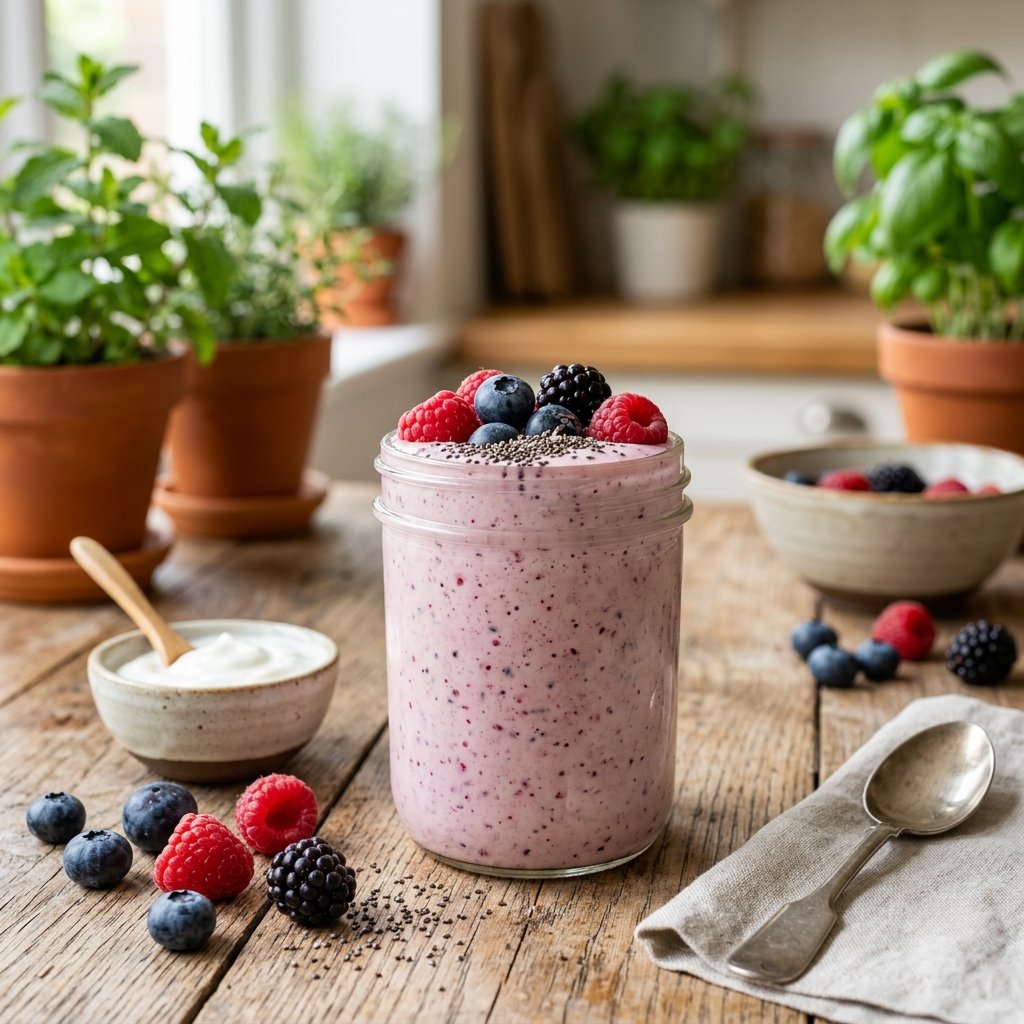
Greek-Style Coconut Yogurt Berry Smoothie (280 calories | 18g protein per serving)
This creamy smoothie combines protein-rich coconut yogurt with colorful berries for a refreshing treat. The Greek-style coconut yogurt provides a thick texture and plenty of plant-based protein. Berries add antioxidants and natural sweetness without extra sugar.
This recipe works great for breakfast or as an afternoon snack. The smooth consistency makes it easy to drink for seniors who prefer softer foods.
Ingredients
- 1 cup Greek-style coconut yogurt
- 1/2 cup frozen mixed berries
- 1 scoop vanilla plant-based protein powder
- 1/2 cup unsweetened almond milk
- 1 tablespoon ground flaxseed
- 1 teaspoon vanilla extract
- 1/2 frozen banana
- 3-4 ice cubes
Instructions
- Add the almond milk to your blender first to prevent sticking.
- Place the Greek-style coconut yogurt, frozen berries, and banana into the blender.
- Add the protein powder, ground flaxseed, and vanilla extract on top.
- Blend on high speed for 45-60 seconds until completely smooth.
- Add ice cubes and blend for another 15 seconds if you want a thicker texture.
- Pour into a glass and serve immediately.
Add a handful of fresh spinach for extra nutrients without changing the berry flavor.
Chickpea Vanilla Date Smoothie
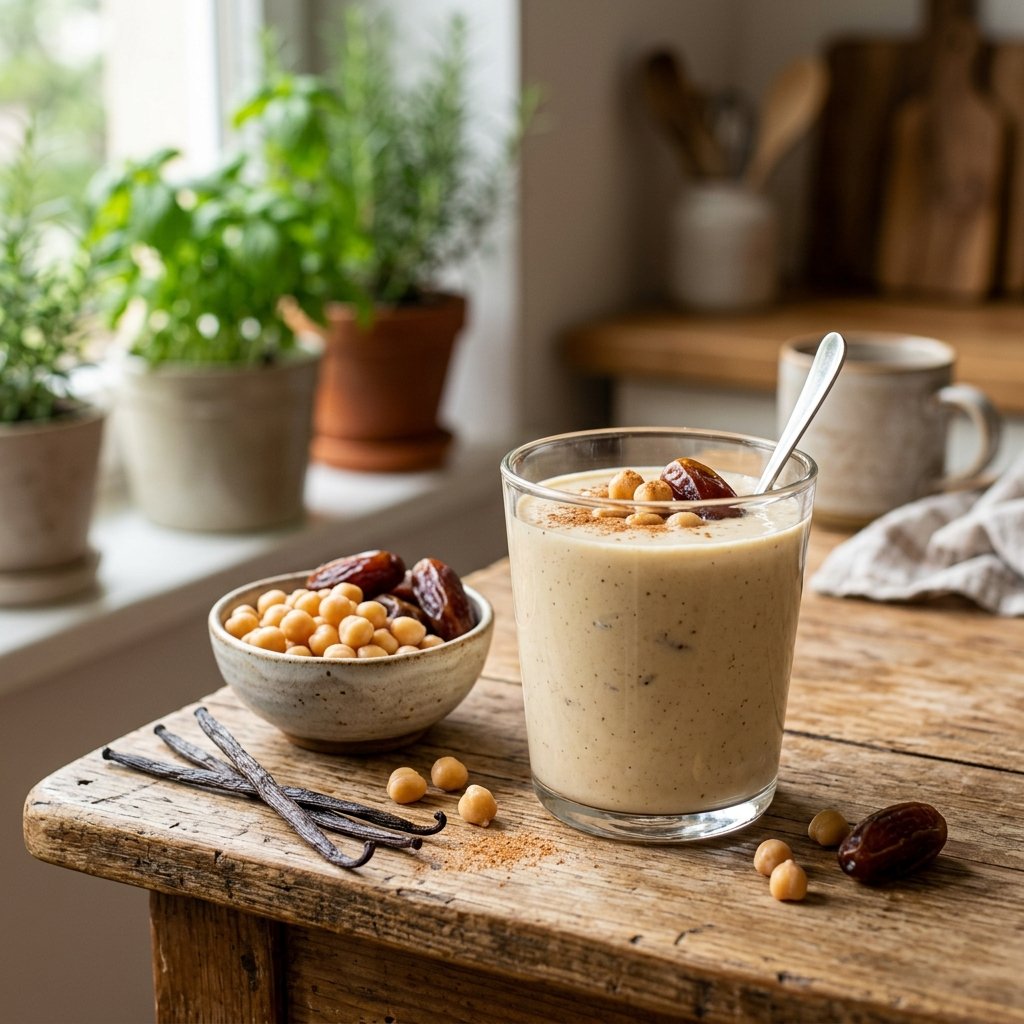
Chickpea Vanilla Date Smoothie (280 calories | 12g protein per serving)
This smoothie uses chickpeas as its main protein source, which might sound unusual but creates a creamy texture you'll love. The natural sweetness from dates means you won't need added sugar. It's perfect for elderly people who want a gentle, digestible protein boost without dairy or protein powder.
Ingredients
- 1/2 cup cooked chickpeas, drained and rinsed
- 3 Medjool dates, pitted
- 1 cup unsweetened almond milk
- 1 teaspoon vanilla extract
- 1/2 teaspoon ground cinnamon
- 1/4 teaspoon ground nutmeg
- 1 cup ice cubes
- 1 tablespoon almond butter
Instructions
- Add the cooked chickpeas to your blender first, followed by the pitted dates.
- Pour in the almond milk and add the vanilla extract.
- Sprinkle in the cinnamon and nutmeg for warmth and flavor.
- Add the almond butter and ice cubes to the blender.
- Blend on high speed for 60-90 seconds until completely smooth and creamy.
- Check the consistency and add more almond milk if you prefer a thinner texture.
- Pour into a glass and serve immediately.
You can soak the dates in warm water for 10 minutes before blending if they're too firm, which makes them blend more easily.
Almond Butter Pear Spinach Smoothie
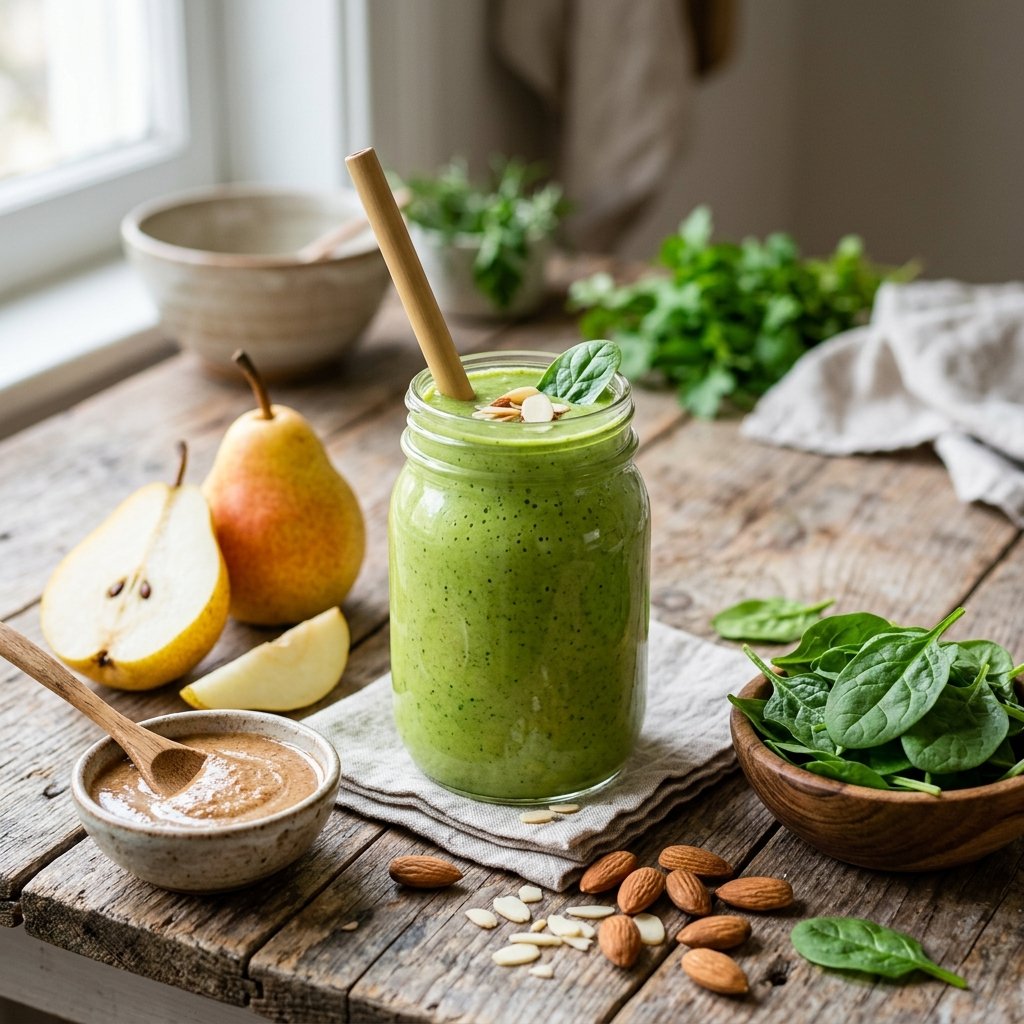
Almond Butter Pear Spinach Smoothie (280 calories | 12g protein per serving)
This creamy smoothie combines almond butter and Greek yogurt to deliver a solid protein boost. The sweet pear balances the earthy spinach perfectly. It's gentle on your stomach and easy to digest, making it ideal for seniors who want something nutritious but not too heavy.
Ingredients
- 1 medium ripe pear, cored and chopped
- 2 tablespoons almond butter
- 1 cup fresh spinach, packed
- 1/2 cup plain Greek yogurt
- 1/2 cup unsweetened almond milk
- 1 tablespoon ground flaxseed
- 1/2 teaspoon vanilla extract
- 1/2 teaspoon cinnamon
- 4 ice cubes
Instructions
- Add the almond milk and spinach to your blender first. This helps the greens blend more smoothly.
- Add the chopped pear, almond butter, and Greek yogurt on top of the spinach.
- Sprinkle in the ground flaxseed, vanilla extract, and cinnamon.
- Drop in the ice cubes and secure the blender lid tightly.
- Blend on high speed for 45-60 seconds until the mixture is completely smooth and creamy.
- Pour into a glass and drink right away for the best texture and temperature.
Try using frozen pear chunks instead of fresh pear and skip the ice cubes for an even thicker, milkshake-like texture.
Pumpkin Seed Cinnamon Apple Smoothie
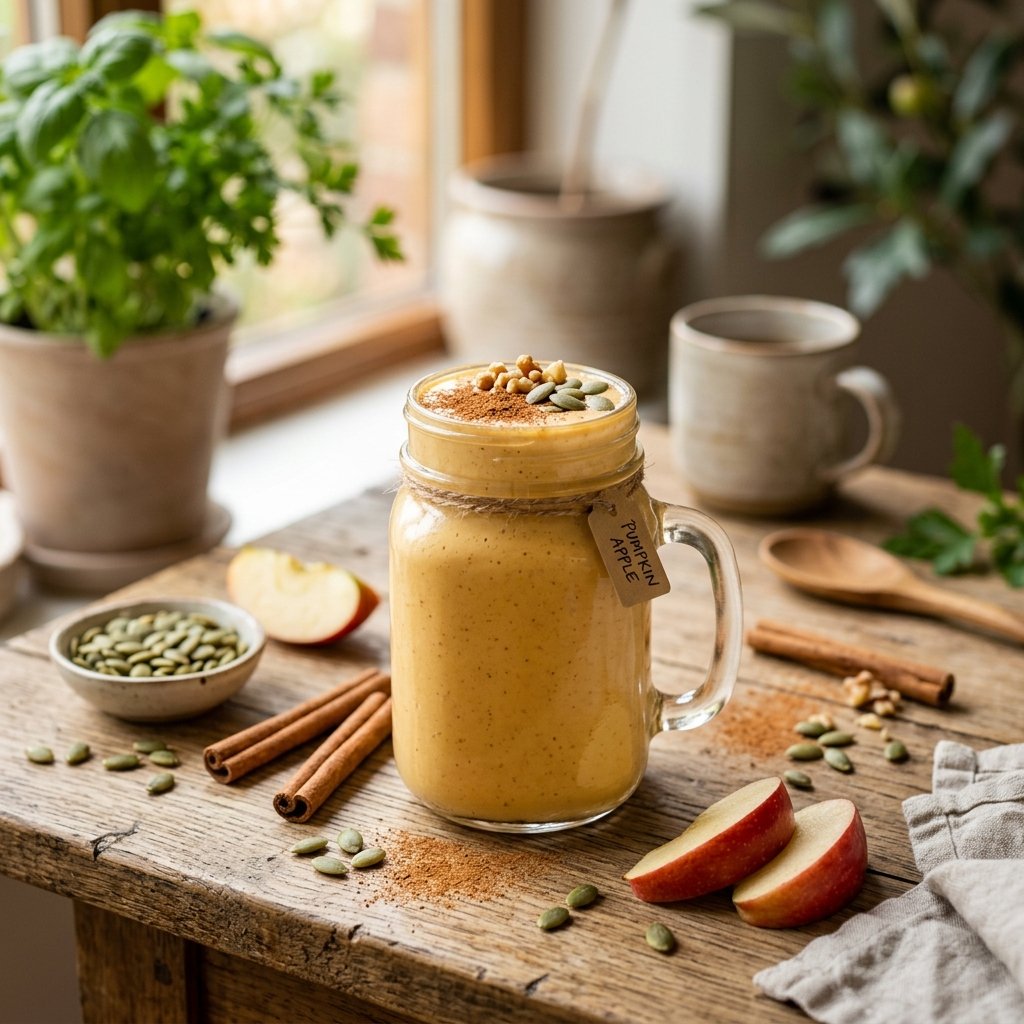
This smoothie combines the nutty flavor of pumpkin seeds with sweet apples and warm cinnamon. Pumpkin seeds deliver about 12 grams of protein per serving, making this a great choice for your morning routine. At around 280 calories, it gives you energy without feeling too heavy.
The creamy texture comes from both the seeds and a banana. This recipe is perfect if you want something that tastes like fall but works any time of year.
Ingredients
- 3 tablespoons raw pumpkin seeds
- 1 medium apple, cored and chopped
- 1 frozen banana
- 1/2 teaspoon ground cinnamon
- 1 cup unsweetened almond milk
- 1 tablespoon maple syrup
- 1/2 cup ice cubes
- 1 scoop vanilla plant-based protein powder
Instructions
- Soak the pumpkin seeds in warm water for 10 minutes, then drain them well.
- Add the soaked pumpkin seeds, chopped apple, frozen banana, and cinnamon to your blender.
- Pour in the almond milk and add the maple syrup.
- Add the protein powder and ice cubes.
- Blend on high speed for 60 to 90 seconds until completely smooth.
- Check the thickness and add more almond milk if you want it thinner.
- Pour into a glass and enjoy right away.
Try adding a pinch of nutmeg or ginger for extra warmth and flavor.
Pea Protein Tropical Green Smoothie
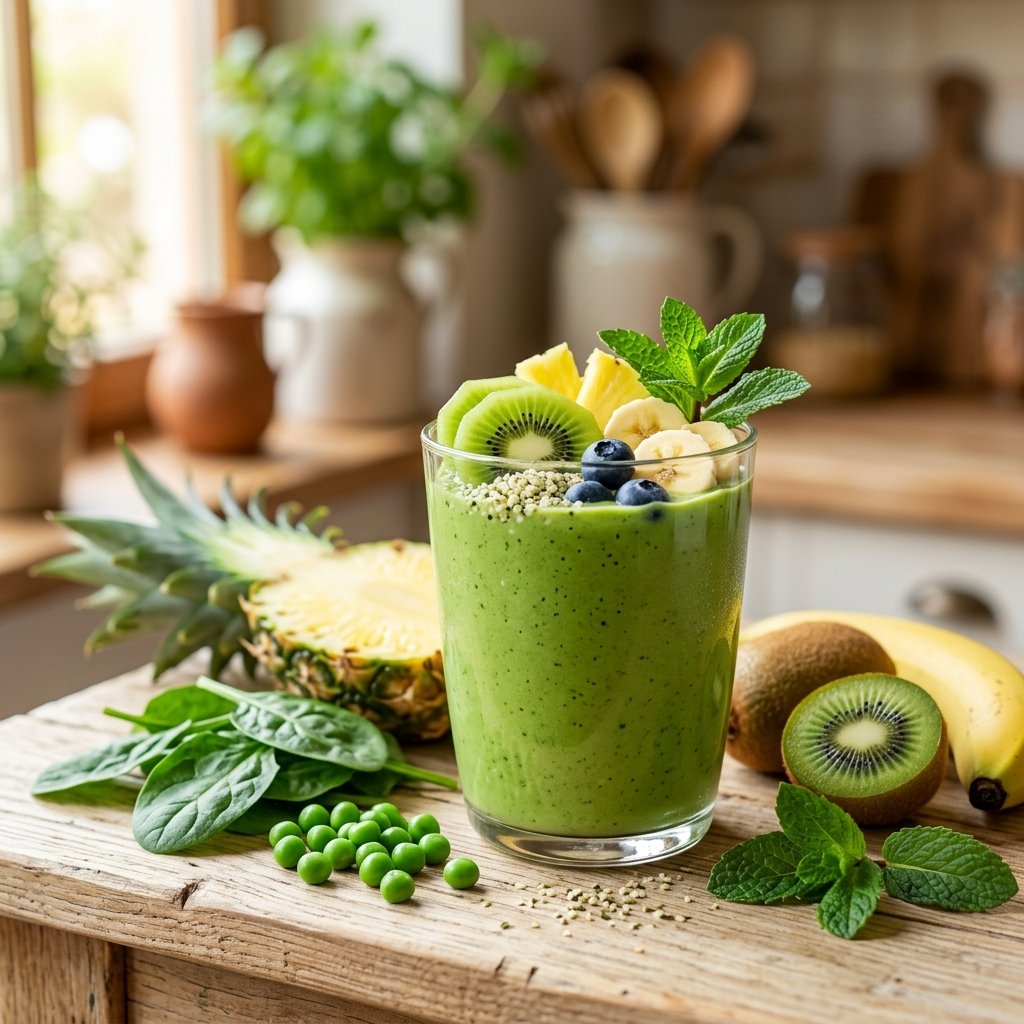
This bright green smoothie packs about 20 grams of protein per serving and comes in around 280 calories. Pea protein powder is the star here, giving you a complete amino acid profile that's easy on your stomach. The tropical fruits mask the earthy taste of spinach while keeping the blend refreshing and sweet.
Ingredients
- 1 cup fresh spinach, packed
- 1 scoop vanilla pea protein powder (about 20g protein)
- 1/2 cup frozen mango chunks
- 1/2 cup frozen pineapple chunks
- 1/2 medium banana
- 1 cup unsweetened coconut milk
- 1/2 cup water
- 1 tablespoon ground flaxseed
- 3-4 ice cubes
Instructions
- Add the spinach and coconut milk to your blender first. This helps the greens break down smoothly.
- Toss in the frozen mango, pineapple, and banana.
- Add the pea protein powder and ground flaxseed on top of the fruit.
- Pour in the water and drop in your ice cubes.
- Blend on high speed for 45-60 seconds until everything is completely smooth. Stop and scrape down the sides if needed.
- Check the thickness and add more water if you want it thinner.
- Pour into a large glass and drink right away for the best texture.
Try adding a handful of frozen cauliflower rice for extra creaminess without changing the taste.
Soy Protein Coffee Banana Smoothie
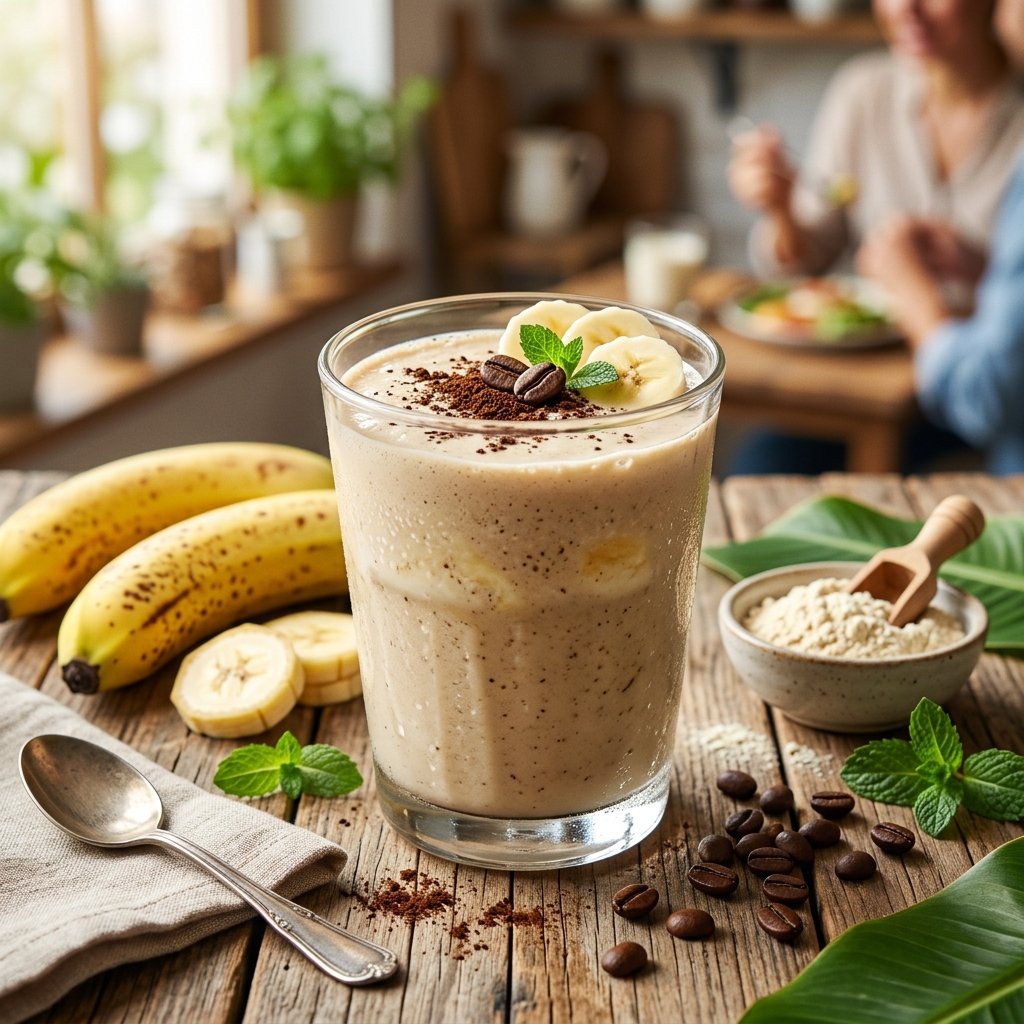
This smoothie combines soy milk and silken tofu to deliver around 15 grams of protein per serving at approximately 280 calories. The coffee adds a nice energy boost while the banana provides natural sweetness and potassium. It's perfect for your morning routine when you need something quick and filling.
Ingredients
- 1 cup unsweetened soy milk
- 1/2 cup silken tofu
- 1 medium banana, frozen
- 1/2 cup brewed coffee, cooled
- 1 tablespoon almond butter
- 1 tablespoon maple syrup
- 1/2 teaspoon vanilla extract
- 3-4 ice cubes
Instructions
- Brew your coffee ahead of time and let it cool in the refrigerator for at least 30 minutes.
- Add the soy milk and silken tofu to your blender first.
- Break the frozen banana into chunks and add it to the blender.
- Pour in the cooled coffee, almond butter, maple syrup, and vanilla extract.
- Add the ice cubes on top of everything.
- Blend on high speed for 45-60 seconds until the mixture is completely smooth and creamy.
- Pour into a glass and enjoy immediately.
You can use decaf coffee if you're sensitive to caffeine or prefer to drink this smoothie in the evening.
Protein Needs in Older Adults
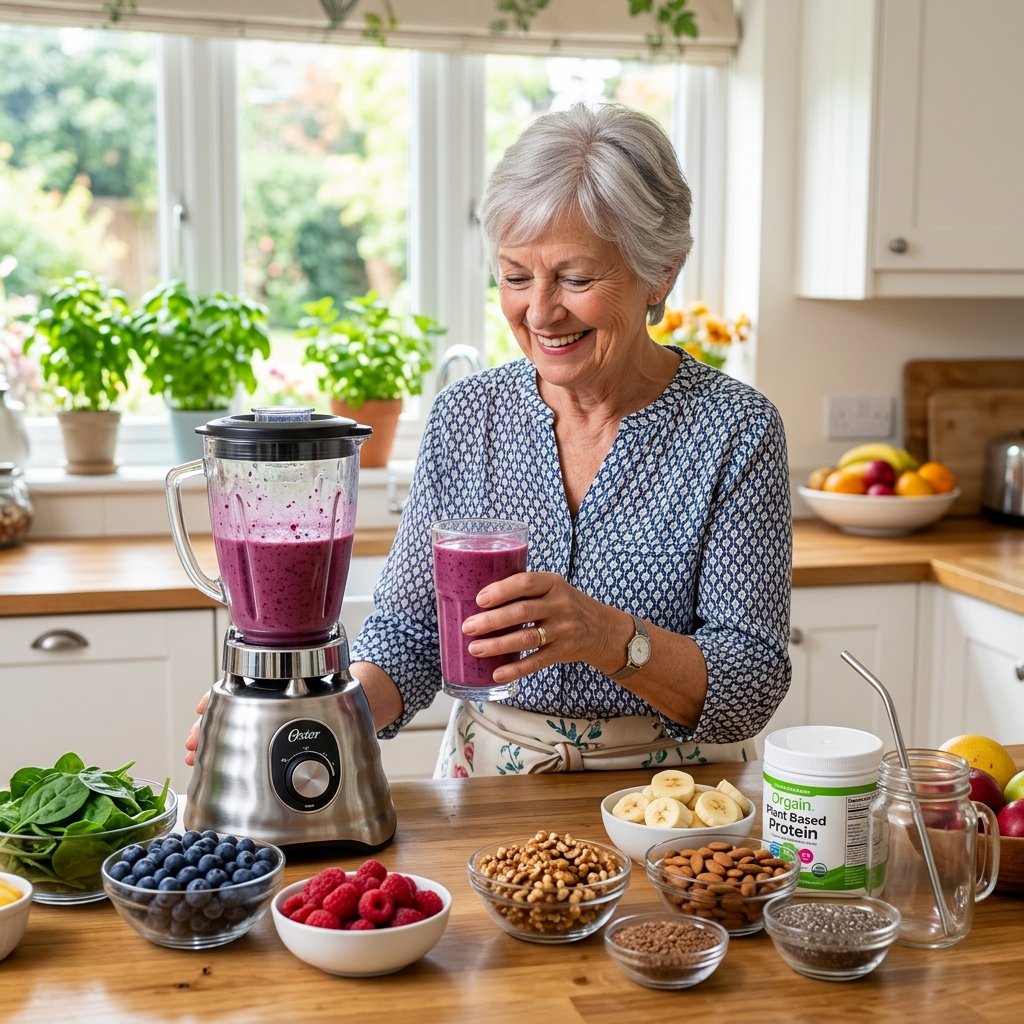
Your body needs more protein as you age to maintain muscle mass and stay strong. Older adults often need higher amounts of protein per pound of body weight than younger people.
How Protein Supports Aging Bodies
Protein helps protect your muscles from breaking down as you get older. After age 30, adults can lose 3-8% of their muscle mass each decade. This loss speeds up after age 60.
Getting enough protein helps you stay independent and active. It supports muscle strength, which makes daily tasks like climbing stairs and carrying groceries easier. Protein also helps your body heal wounds faster and keeps your immune system working properly.
Your body doesn't store protein the way it stores fat or carbohydrates. You need to eat protein throughout the day to give your muscles a steady supply. Spreading protein across all your meals works better than eating most of it at dinner.
Recommended Daily Protein Intake
Most older adults need 1.0 to 1.2 grams of protein per kilogram of body weight each day. That's about 25-30% more than younger adults need.
For a 150-pound person, this means eating 68-82 grams of protein daily. If you weigh 200 pounds, aim for 91-109 grams.
Some situations call for even more protein:
- Recovering from illness or surgery: 1.2-1.5 grams per kilogram
- Chronic health conditions: 1.2-1.5 grams per kilogram
- Very active lifestyle: 1.2-1.6 grams per kilogram
Try to include 25-30 grams of protein at each meal. This amount gives your muscles the best chance to build and repair themselves.
Plant-Based Protein Sources for Smoothies
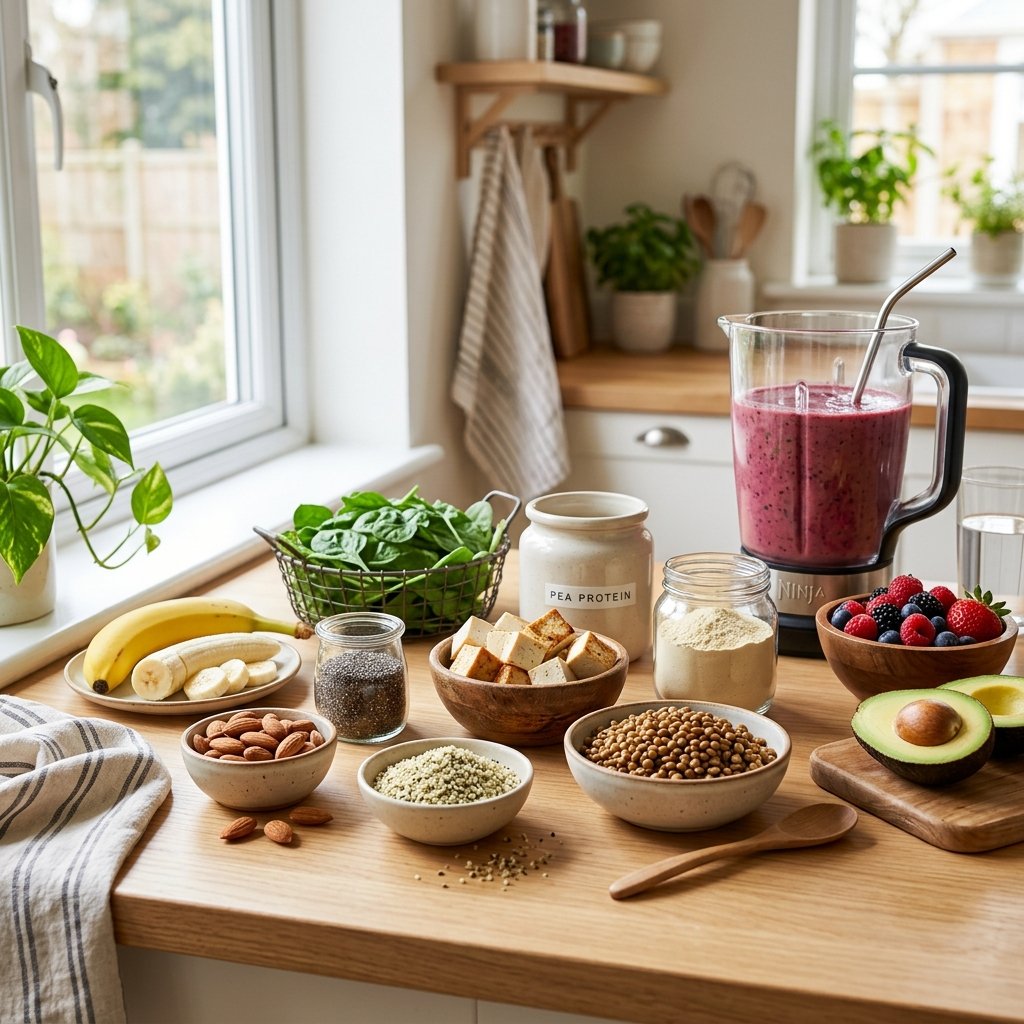
Legume and nut powders deliver concentrated protein without added sugar, while fortified plant milks boost nutrition and create a creamy texture. Picking ingredients that are easy to digest and gentle on sensitive stomachs makes smoothies more enjoyable for older adults.
Legume and Nut Powders
Pea protein powder is one of the most popular plant-based options. It contains about 15-20 grams of protein per scoop and has a mild taste that blends well with fruits. Your body can digest it easily, which is important for seniors with sensitive stomachs.
Hemp protein powder offers 10-15 grams of protein per serving. It also provides omega-3 fatty acids that support heart and brain health. The nutty flavor works well in chocolate or berry smoothies.
Almond butter and peanut butter add both protein and healthy fats. Two tablespoons give you about 7-8 grams of protein. They make your smoothies thicker and more filling.
Soy protein powder is another solid choice with 20-25 grams per scoop. Look for non-GMO organic versions. Just make sure to check with your doctor if you take certain medications, as soy can interact with some prescriptions.
Fortified Non-Dairy Milks
Soy milk leads the pack with 7-9 grams of protein per cup. Most brands fortify it with calcium and vitamin D, which help maintain bone strength. Choose unsweetened versions to avoid extra sugar.
Pea milk is newer but provides 8 grams of protein per cup. It has a neutral taste and contains the same amount of calcium as dairy milk. The creamy texture works perfectly in smoothies.
Oat milk usually has only 3-4 grams of protein per cup. However, some brands now make protein-enriched versions with 8-10 grams. Check the labels carefully when shopping.
Almond milk is low in protein at just 1-2 grams per cup. It works better as a mixing liquid when you're already adding protein powder or nut butter.
Choosing Senior-Friendly Ingredients
Your protein sources should be easy to blend and swallow. Fine-textured powders mix better than chunky ingredients. This creates a smooth consistency that's safer and more pleasant to drink.
Look for options with added vitamins B12, D, and calcium. Many seniors don't get enough of these nutrients. Fortified plant milks and protein powders can help fill these gaps.
Avoid ingredients with hard pieces or thick textures. Whole nuts and seeds can be hard to chew and might cause choking. Ground flaxseed and smooth nut butters are safer alternatives.
Consider the sodium content in your protein sources. Some protein powders contain high amounts of salt. Aim for products with less than 200mg of sodium per serving to protect heart health.