12 Anti-Aging High Protein Recipes for Older Women You'll Actually Love Making (Science-Backed for Longevity)

Getting older doesn't mean giving up on feeling strong and healthy. Eating enough protein is one of the most important things you can do to support your muscles, bones, and energy as you age.
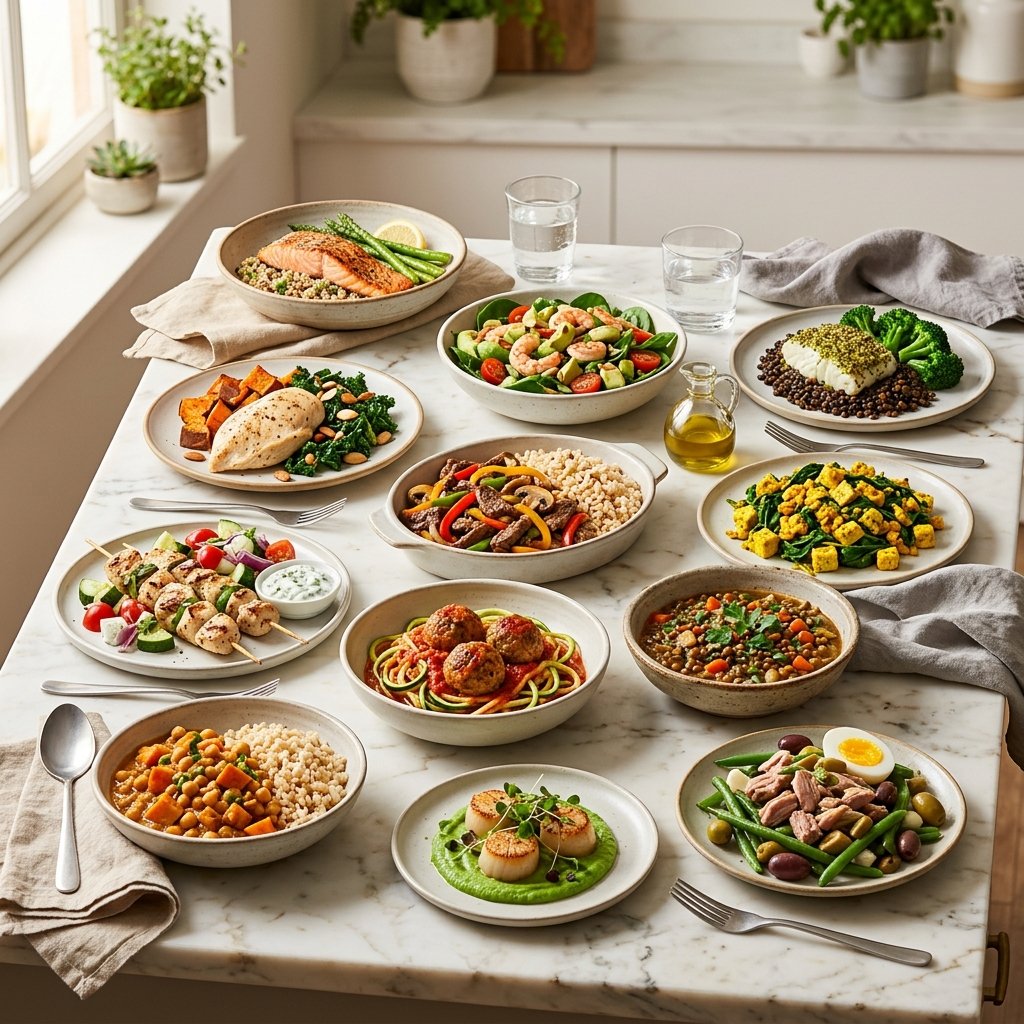
This collection of 12 recipes makes it easy to get the protein your body needs while also including nutrients that support healthy aging.
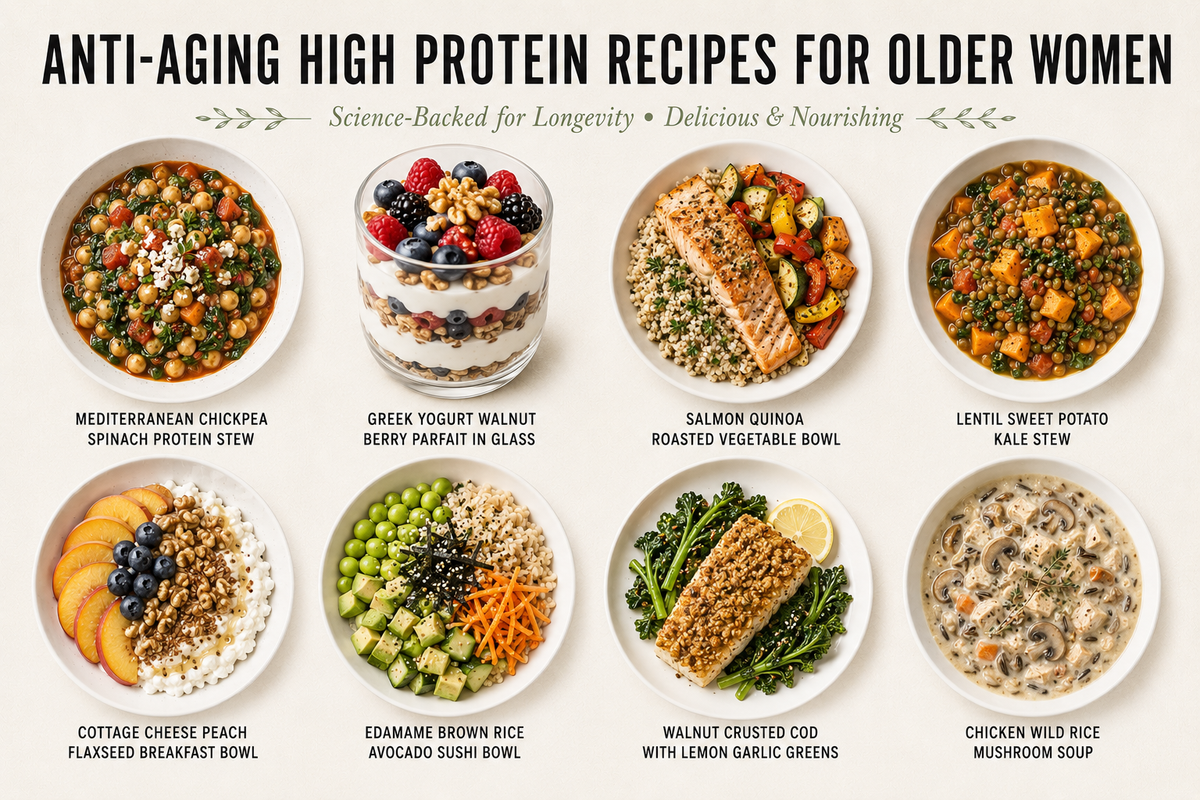
You'll find dishes inspired by Mediterranean flavors, hearty stews, fresh salads, and simple breakfast options. Each recipe is designed to be tasty, filling, and packed with ingredients that work together to help you feel your best.
Mediterranean Chickpea & Spinach Protein Stew
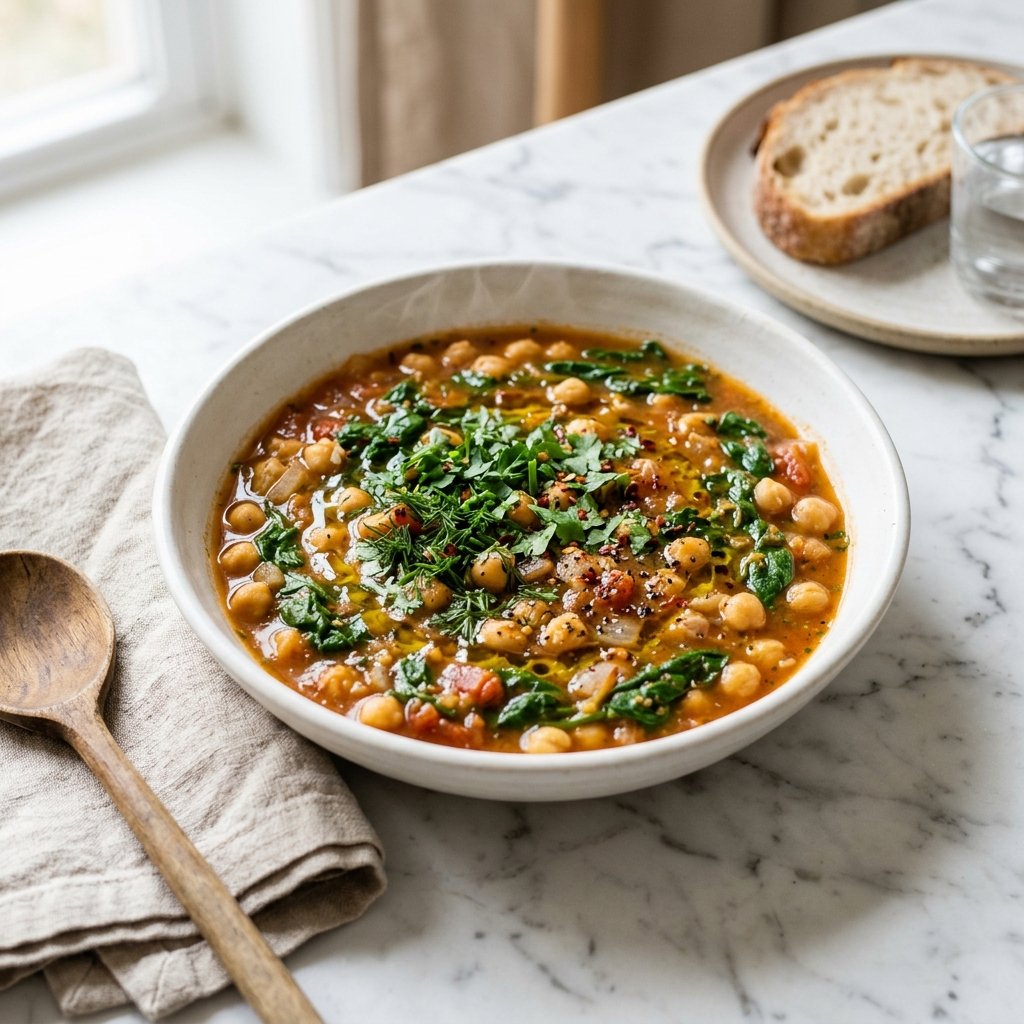
This hearty stew packs 18g of protein per serving and comes in at around 320 calories. Chickpeas serve as the main protein source while fresh spinach adds iron and vitamins. The Mediterranean-style seasonings make this dish both nutritious and flavorful for your anti-aging goals.
Ingredients
- 2 cans (15 oz each) chickpeas, drained and rinsed
- 4 cups fresh spinach, roughly chopped
- 1 can (14 oz) diced tomatoes
- 1 medium onion, diced
- 3 cloves garlic, minced
- 2 tablespoons olive oil
- 1 teaspoon cumin
- 1 teaspoon paprika
- 1/2 teaspoon turmeric
- 3 cups vegetable broth
- 1/2 cup plain Greek yogurt
- Salt and pepper to taste
- Fresh lemon juice from 1/2 lemon
Instructions
- Heat olive oil in a large pot over medium heat and add the diced onion. Cook for 4-5 minutes until the onion becomes soft and translucent.
- Add minced garlic, cumin, paprika, and turmeric to the pot. Stir for 30 seconds until the spices smell fragrant.
- Pour in the chickpeas, diced tomatoes, and vegetable broth. Bring the mixture to a boil, then lower the heat to a simmer.
- Let the stew simmer for 15 minutes so the flavors blend together. The liquid should reduce slightly during this time.
- Stir in the fresh spinach and cook for 2-3 minutes until it wilts down. Remove the pot from heat.
- Add salt and pepper to your taste, then squeeze fresh lemon juice over the stew. Serve each bowl topped with a dollop of Greek yogurt for extra protein.
Add a can of white beans or lentils to boost the protein content to over 22g per serving.
Greek yogurt, walnut & berry parfait
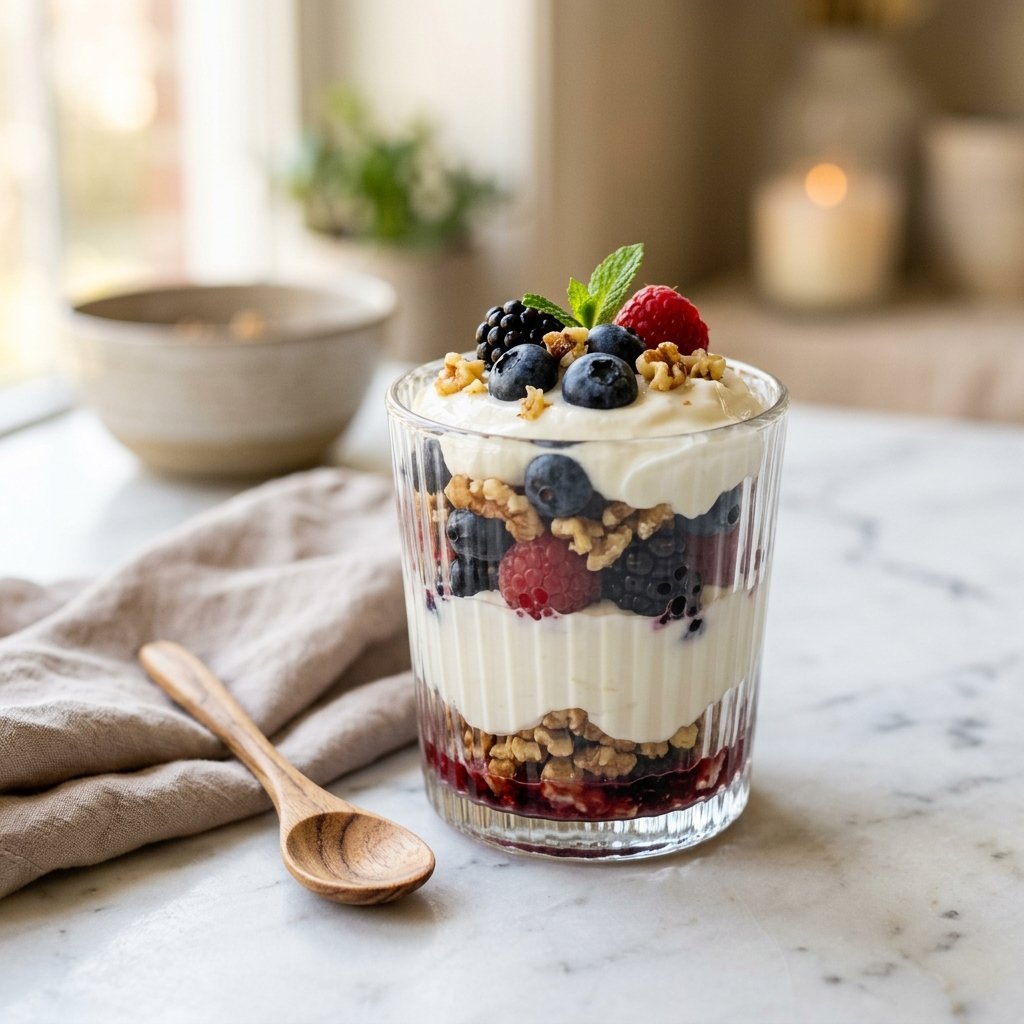
Greek yogurt, walnut & berry parfait (280 calories | 22g protein per serving)
This simple parfait takes just five minutes to make and delivers a solid protein boost from Greek yogurt. The walnuts add healthy fats and extra protein while berries provide antioxidants that support skin health. You can eat this for breakfast or as a satisfying snack between meals. It's perfect when you want something sweet but nutritious.
Ingredients
- 1 cup plain Greek yogurt (nonfat or 2%)
- ¼ cup walnuts, chopped
- ½ cup mixed berries (blueberries, strawberries, or raspberries)
- 1 tablespoon honey
- ½ teaspoon vanilla extract
- 1 tablespoon ground flaxseed (optional)
Instructions
- Add the vanilla extract to your Greek yogurt and stir until combined.
- Spoon half of the yogurt mixture into a glass or bowl.
- Add half of the berries on top of the yogurt layer.
- Sprinkle half of the chopped walnuts over the berries.
- Repeat the layers with the remaining yogurt, berries, and walnuts.
- Drizzle honey on top and add flaxseed if you're using it.
- Serve right away or cover and refrigerate for up to 24 hours.
Use frozen berries when fresh ones aren't available, or swap walnuts for almonds or pecans if you prefer.
Salmon, quinoa & roasted vegetable bowl
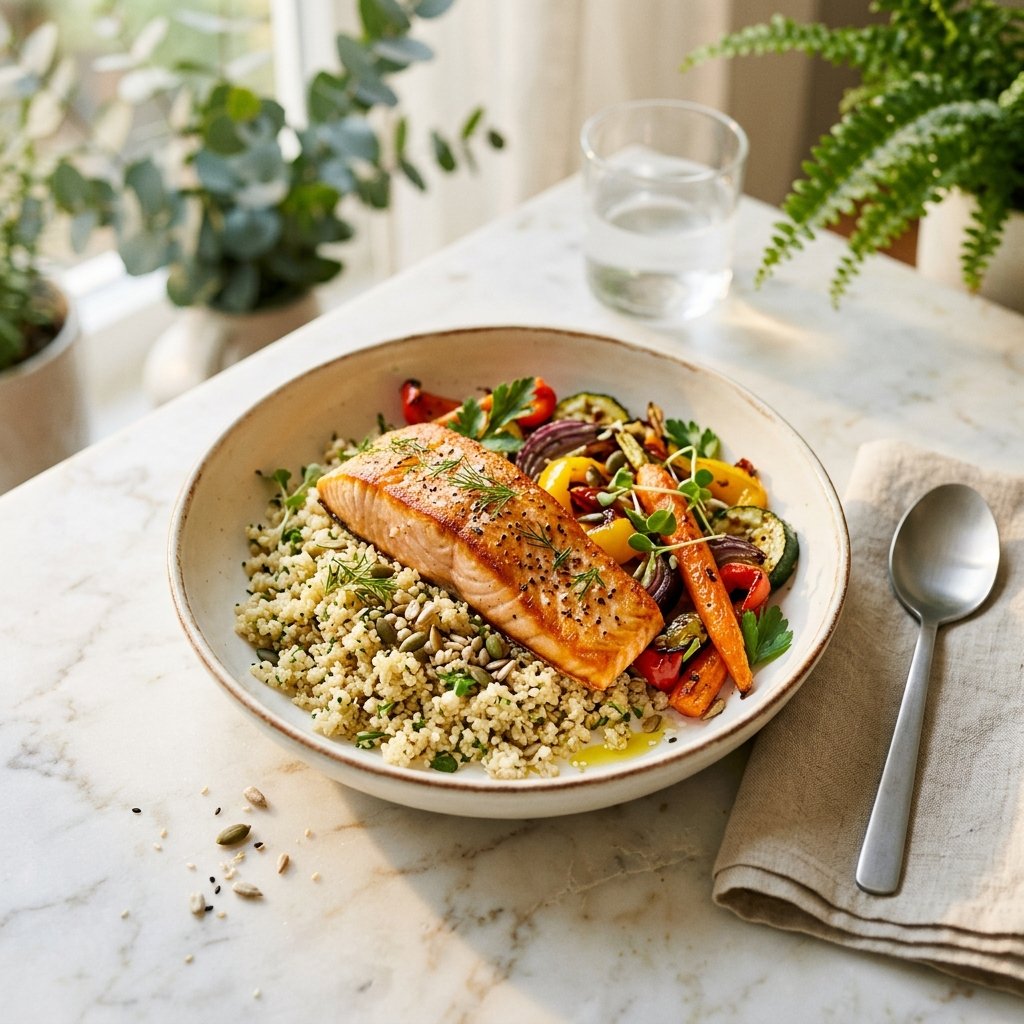
This bowl combines omega-3-rich salmon with complete protein from quinoa for a filling meal that delivers around 480 calories and 38g of protein per serving. The colorful roasted vegetables add fiber and antioxidants that support healthy aging. It's perfect for meal prep since you can make the components ahead and assemble them throughout the week.
Ingredients
- 5 oz salmon fillet
- 1/2 cup uncooked quinoa
- 1 cup broccoli florets
- 1 cup diced bell peppers
- 1/2 cup sliced zucchini
- 2 tablespoons olive oil
- 1 teaspoon garlic powder
- 1/2 teaspoon paprika
- Salt and pepper to taste
- 1 tablespoon lemon juice
- 2 cups fresh spinach
Instructions
- Preheat your oven to 400°F and line a baking sheet with parchment paper.
- Cook the quinoa according to package directions, which usually takes about 15 minutes in boiling water.
- Toss the broccoli, bell peppers, and zucchini with 1 tablespoon of olive oil, garlic powder, salt, and pepper on the baking sheet.
- Roast the vegetables for 20 minutes, stirring once halfway through.
- While the vegetables roast, brush the salmon with the remaining olive oil and season with paprika, salt, and pepper.
- Place the salmon on a separate baking sheet and bake for 12-15 minutes until it flakes easily with a fork.
- Divide the fresh spinach between bowls and top with cooked quinoa, roasted vegetables, and salmon.
- Drizzle lemon juice over everything before serving.
Swap salmon for chicken thighs or tofu if you want to change up the protein source while keeping the same nutrient-dense base.
Lentil, sweet potato & kale stew
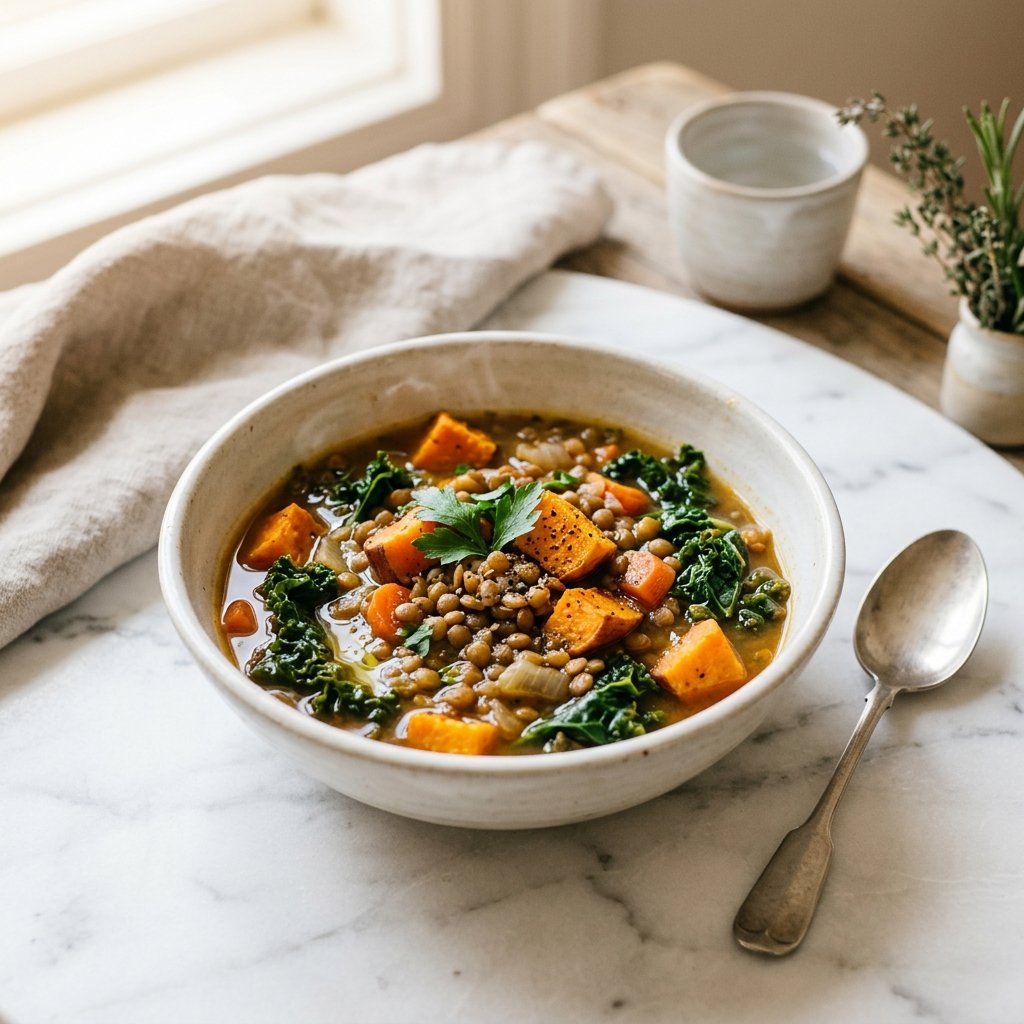
This hearty stew delivers around 320 calories and 18g of protein per serving, mostly from fiber-rich lentils. Sweet potatoes add beta-carotene for skin health, while kale provides vitamin K for bone strength. It's perfect for meal prep since the flavors get better after a day in the fridge.
Ingredients
- 1 cup dried green or brown lentils, rinsed
- 2 medium sweet potatoes, peeled and diced
- 3 cups chopped kale, stems removed
- 1 medium onion, diced
- 3 cloves garlic, minced
- 1 tablespoon olive oil
- 4 cups vegetable broth
- 1 can (14 oz) diced tomatoes
- 1 teaspoon cumin
- 1/2 teaspoon smoked paprika
- Salt and pepper to taste
Instructions
- Heat olive oil in a large pot over medium heat and cook the onion for 3-4 minutes until soft.
- Add garlic, cumin, and smoked paprika, stirring for 30 seconds until fragrant.
- Pour in the lentils, sweet potatoes, diced tomatoes, and vegetable broth.
- Bring the mixture to a boil, then reduce heat and simmer for 25 minutes until lentils are tender.
- Stir in the kale and cook for another 5 minutes until wilted.
- Season with salt and pepper to your taste.
Add a squeeze of lemon juice before serving to brighten the flavors and boost vitamin C absorption.
Tofu scramble with turmeric, peas & spinach
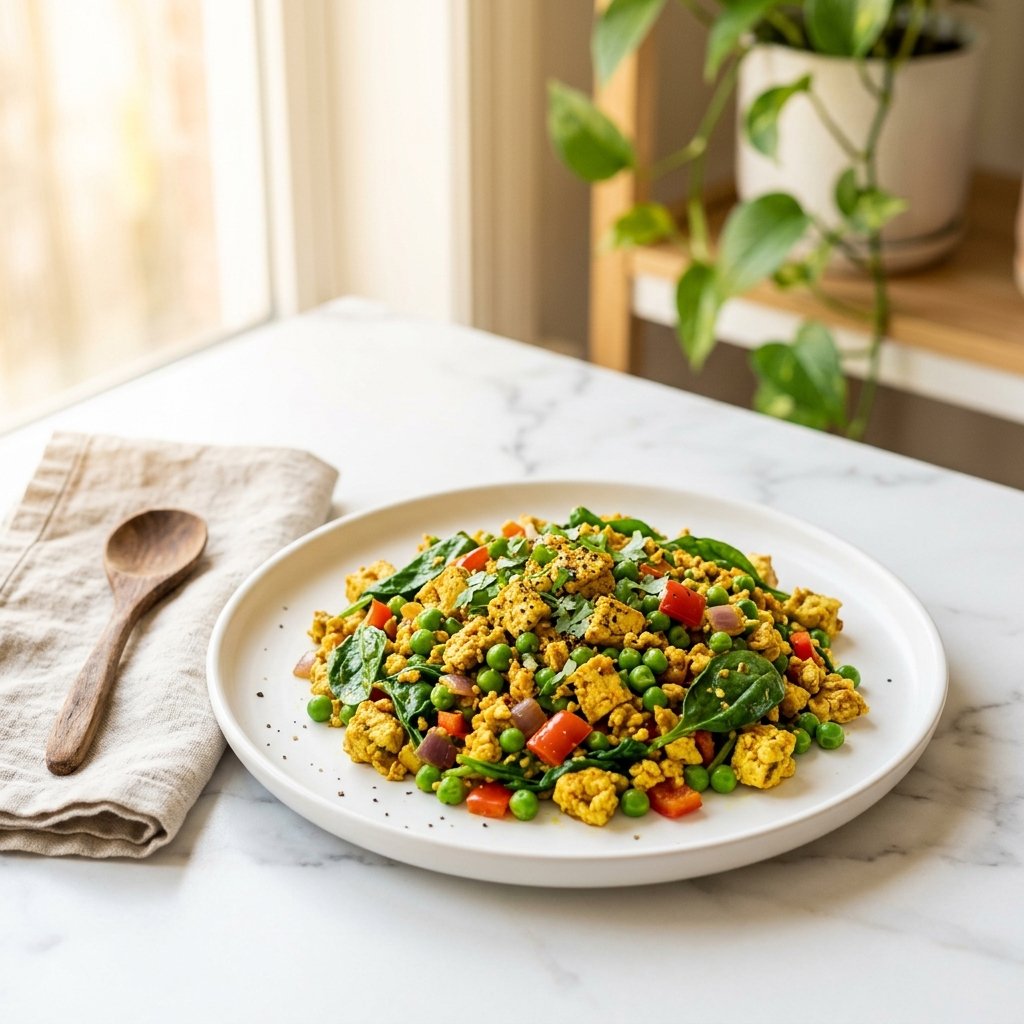
Tofu scramble with turmeric, peas & spinach (220 calories | 18g protein per serving)
This plant-based breakfast scramble uses firm tofu as a protein-packed substitute for eggs. The turmeric adds anti-inflammatory benefits while giving the dish a golden color. It's perfect for women who want a quick, savory breakfast that supports muscle maintenance and skin health. You can make this in under 15 minutes on busy mornings.
Ingredients
- 14 oz firm tofu, drained and crumbled
- 1 tablespoon olive oil
- 1/2 teaspoon ground turmeric
- 1/4 teaspoon garlic powder
- 1/4 teaspoon black pepper
- 1/2 cup frozen peas
- 2 cups fresh spinach
- 1/4 teaspoon salt
- 2 tablespoons nutritional yeast (optional)
Instructions
- Heat olive oil in a large skillet over medium heat.
- Add the crumbled tofu to the pan and cook for 3-4 minutes, stirring occasionally.
- Sprinkle turmeric, garlic powder, black pepper, and salt over the tofu and mix well.
- Add the frozen peas and cook for 2 minutes until they're heated through.
- Toss in the fresh spinach and stir until it wilts, about 1-2 minutes.
- If using nutritional yeast, sprinkle it on top and stir to combine.
- Remove from heat and serve warm.
Add diced tomatoes or bell peppers for extra vegetables and flavor.
Turkey, farro & roasted Brussels sprouts salad
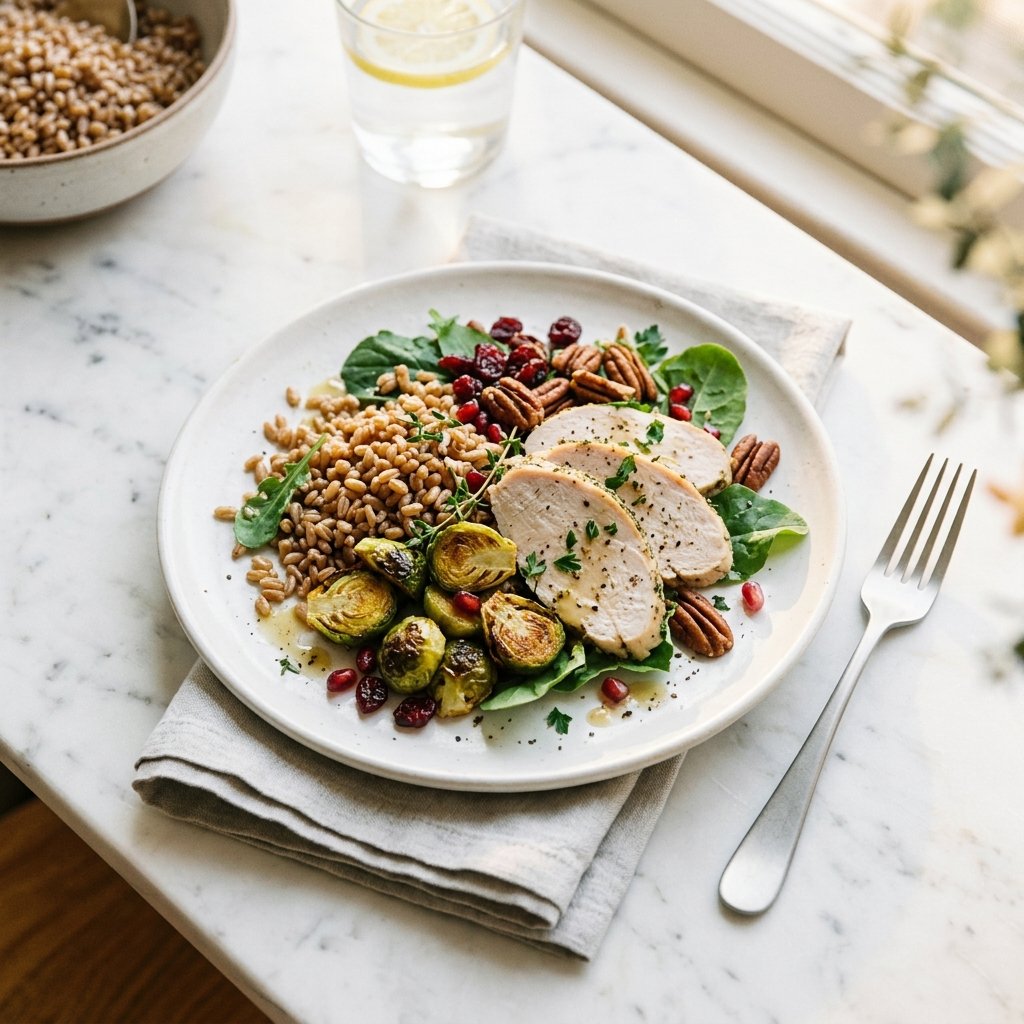
This hearty salad brings together lean ground turkey, nutty farro, and roasted Brussels sprouts for a filling meal. Each serving delivers around 420 calories and 32g of protein. The combination of protein and fiber keeps you satisfied for hours while supporting muscle maintenance.
Ingredients
- 8 oz ground turkey (93% lean)
- 1 cup dry farro
- 3 cups Brussels sprouts, halved
- 2 tablespoons olive oil, divided
- 1 teaspoon garlic powder
- 1/2 teaspoon salt
- 1/4 teaspoon black pepper
- 2 tablespoons balsamic vinegar
- 1 tablespoon Dijon mustard
- 2 cups mixed greens
- 1/4 cup dried cranberries
- 1/4 cup chopped walnuts
Instructions
- Preheat your oven to 400°F and cook the farro according to package directions, then drain and set aside.
- Toss the halved Brussels sprouts with 1 tablespoon olive oil, salt, and pepper on a baking sheet.
- Roast the Brussels sprouts for 20-25 minutes until they're golden and crispy on the edges.
- While the Brussels sprouts roast, heat the remaining tablespoon of olive oil in a large skillet over medium heat.
- Add the ground turkey and garlic powder to the skillet, breaking it up with a spoon as it cooks for 6-8 minutes until browned.
- Mix the balsamic vinegar and Dijon mustard in a small bowl to make your dressing.
- Combine the cooked farro, roasted Brussels sprouts, turkey, and mixed greens in a large bowl.
- Drizzle the dressing over everything and toss to coat evenly.
- Top with dried cranberries and chopped walnuts before serving.
You can swap ground turkey for ground chicken or even crumbled tempeh if you prefer a plant-based option.
Cottage cheese, peach & flaxseed breakfast
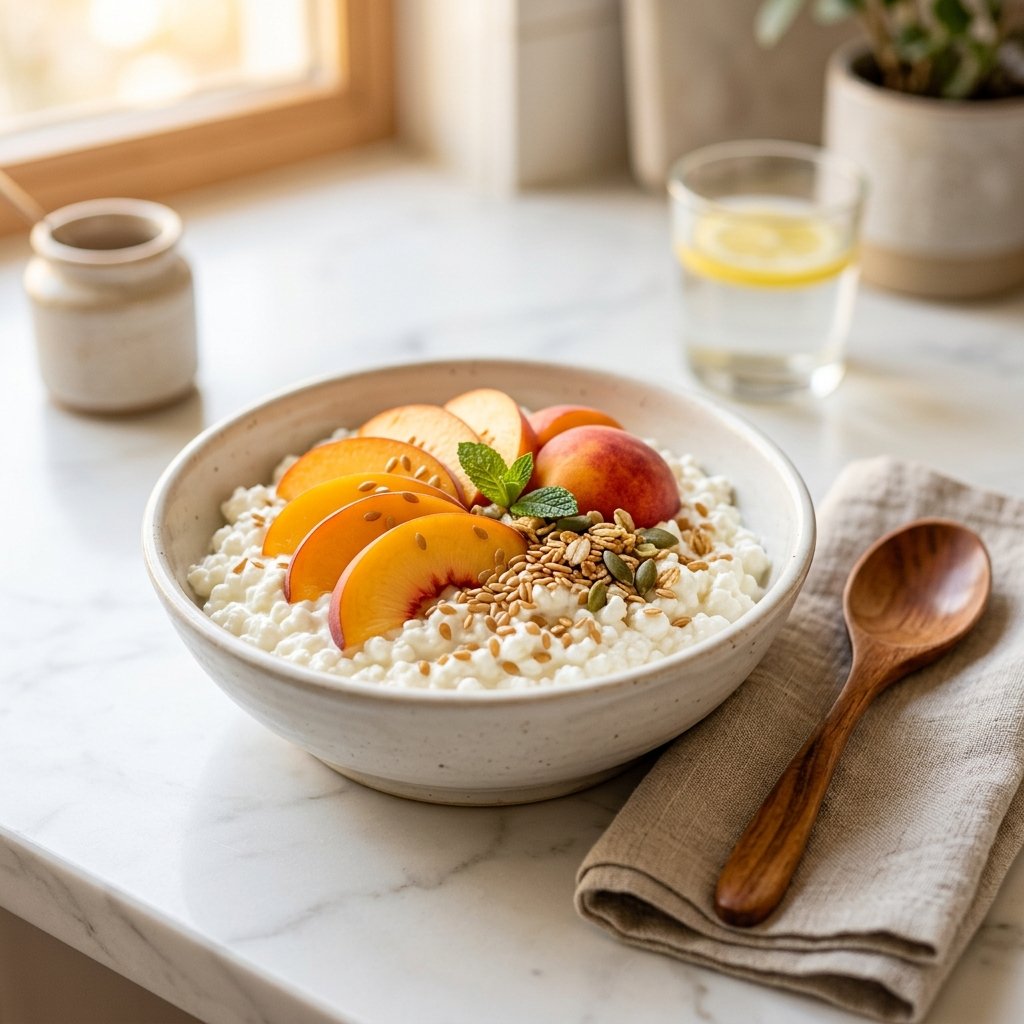
Cottage cheese, peach & flaxseed breakfast (240 calories | 24g protein per serving)
This simple breakfast bowl takes just three minutes to prepare and delivers nearly half your morning protein needs. Cottage cheese provides slow-digesting casein protein that keeps you full for hours. The flaxseeds add omega-3 fatty acids that support brain health and reduce inflammation, while fresh peaches offer vitamin C and natural sweetness without added sugar.
Ingredients
- 1 cup low-fat cottage cheese
- 1 medium peach, sliced
- 1 tablespoon ground flaxseed
- 1/2 teaspoon cinnamon
- 1 teaspoon honey (optional)
Instructions
- Scoop the cottage cheese into a breakfast bowl.
- Wash and slice the peach into thin wedges, then arrange them on top of the cottage cheese.
- Sprinkle the ground flaxseed and cinnamon evenly over the bowl.
- Drizzle with honey if you want extra sweetness.
- Mix everything together or eat in layers.
Use frozen peach slices during winter months when fresh peaches aren't available.
Edamame, brown rice & avocado sushi bowl
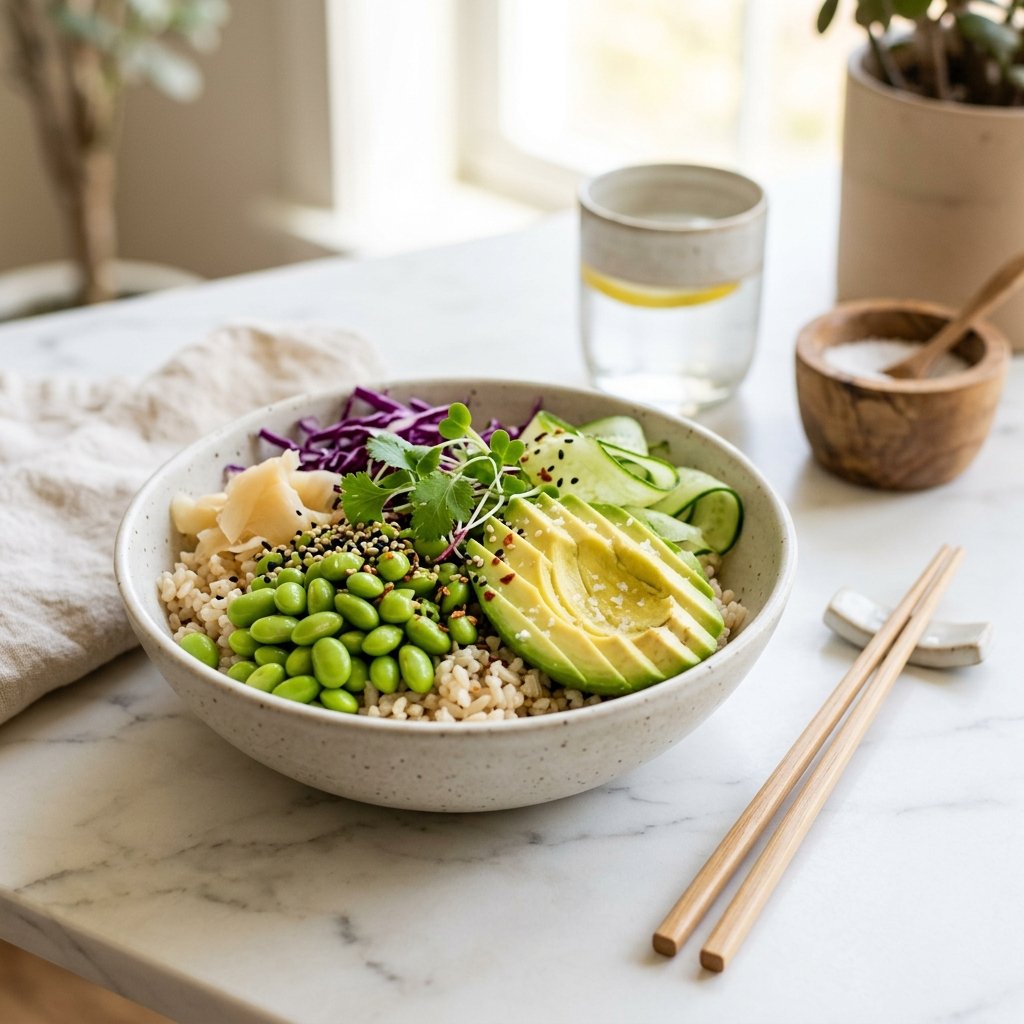
This colorful bowl gives you about 380 calories and 18g of protein per serving. Edamame provides complete plant protein with all nine essential amino acids your body needs. The combination of fiber-rich brown rice and healthy fats from avocado helps keep you full for hours.
Ingredients
- 1 cup cooked brown rice
- ½ cup shelled edamame
- ½ avocado, sliced
- ¼ cup shredded carrots
- ¼ cup sliced cucumber
- 2 tablespoons rice vinegar
- 1 tablespoon low-sodium soy sauce
- 1 teaspoon sesame oil
- 1 teaspoon sesame seeds
- 1 sheet nori seaweed, cut into strips
Instructions
- Cook brown rice according to package directions and let it cool slightly.
- Steam edamame for 5 minutes until tender, then drain.
- Mix rice vinegar, soy sauce, and sesame oil in a small bowl.
- Place warm brown rice in your serving bowl and drizzle half the dressing over it.
- Arrange edamame, avocado slices, carrots, and cucumber on top of the rice.
- Drizzle remaining dressing over the vegetables.
- Sprinkle sesame seeds and nori strips on top before serving.
Add a soft-boiled egg on top for an extra 6g of protein and more vitamin D.
Black bean, corn & roasted pepper enchiladas
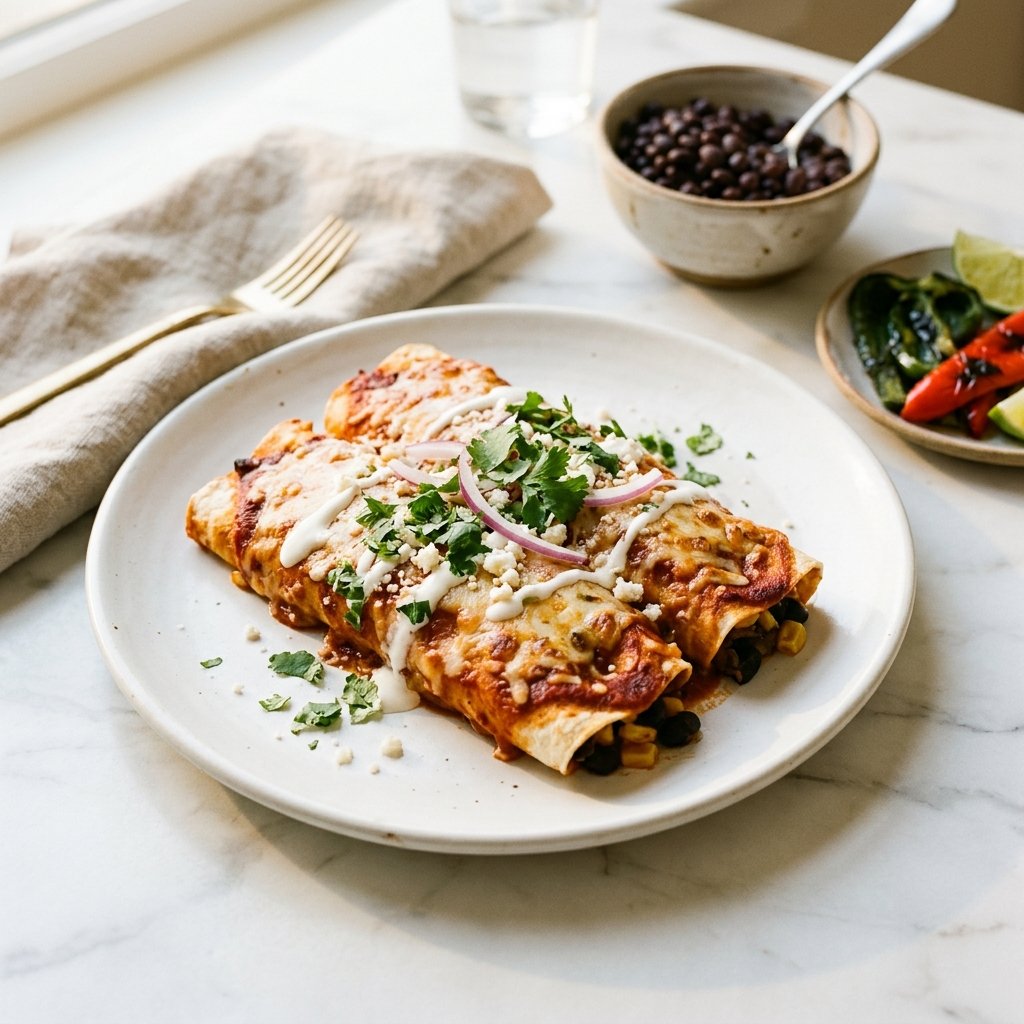
Black Bean, Corn & Roasted Pepper Enchiladas (320 calories | 14g protein per serving)
These vegetarian enchiladas pack plenty of protein from black beans and cheese while delivering anti-inflammatory benefits from colorful peppers. The combination of fiber and protein helps keep you full for hours, making this recipe perfect for meal prep. You can make a batch on Sunday and enjoy healthy lunches all week long. The roasted peppers add vitamin C, which supports collagen production for healthier skin.
Ingredients
- 1 can (15 oz) black beans, drained and rinsed
- 1 cup corn kernels (fresh or frozen)
- 1 cup roasted red peppers, diced
- 1 cup shredded Mexican cheese blend
- 8 whole wheat tortillas (6-inch)
- 1 cup enchilada sauce
- 1/2 cup Greek yogurt
- 1/2 teaspoon cumin
- 1/4 teaspoon garlic powder
- Salt and pepper to taste
- 2 tablespoons chopped cilantro
Instructions
- Preheat your oven to 375°F and spray a 9x13-inch baking dish with cooking spray.
- Mix black beans, corn, roasted peppers, half the cheese, Greek yogurt, cumin, and garlic powder in a large bowl.
- Season the mixture with salt and pepper to taste, then stir in the cilantro.
- Spread 1/4 cup of enchilada sauce on the bottom of your prepared baking dish.
- Spoon about 1/3 cup of the bean mixture down the center of each tortilla, then roll tightly and place seam-side down in the dish.
- Pour the remaining enchilada sauce over the rolled tortillas and sprinkle with the remaining cheese.
- Cover with foil and bake for 20 minutes, then remove foil and bake 5 more minutes until cheese melts.
- Let the enchiladas rest for 5 minutes before serving.
Add a dollop of Greek yogurt and fresh avocado on top for extra protein and healthy fats.
Walnut-crusted cod with lemon-garlic greens
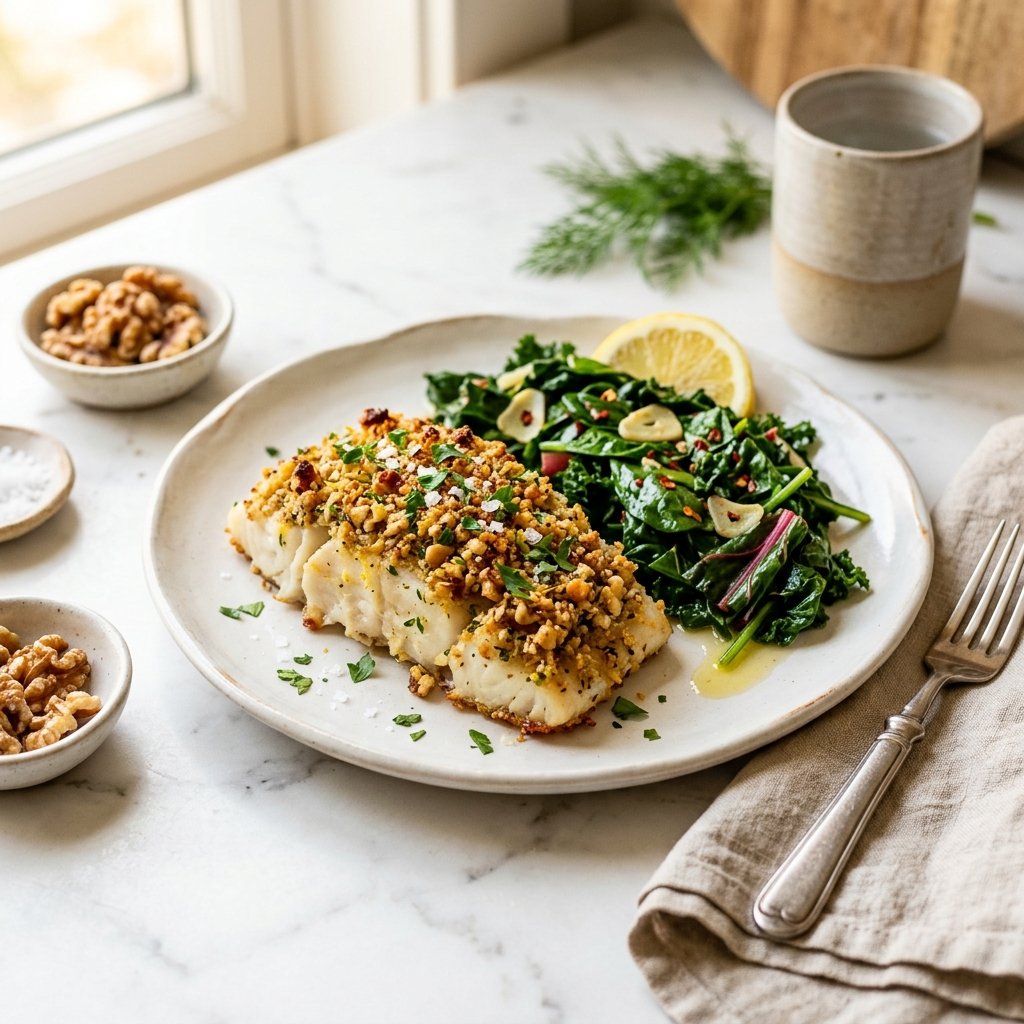
Walnut-crusted cod with lemon-garlic greens (320 calories | 38g protein per serving)
This recipe pairs flaky cod with a crunchy walnut coating that adds healthy omega-3 fats and extra protein. Cod is one of the leanest fish options, giving you lots of protein without added fat. The lemon-garlic greens on the side boost your vitamin intake while keeping calories low. This meal works great for weeknight dinners when you want something fancy but simple.
Ingredients
- 6 oz cod fillet
- 1/4 cup crushed walnuts
- 1 tablespoon whole wheat breadcrumbs
- 1 tablespoon olive oil
- 2 cups spinach or kale
- 2 cloves garlic, minced
- 1/2 lemon, juiced
- 1/4 teaspoon black pepper
- 1/4 teaspoon salt
- 1 teaspoon Dijon mustard
Instructions
- Preheat your oven to 400°F and line a baking sheet with parchment paper.
- Mix the crushed walnuts and breadcrumbs together in a small bowl.
- Brush the cod fillet with Dijon mustard, then press the walnut mixture onto the top of the fish to coat it.
- Place the coated cod on your baking sheet and bake for 12-15 minutes until the fish flakes easily with a fork.
- While the fish bakes, heat olive oil in a pan over medium heat and add minced garlic.
- Cook the garlic for 30 seconds until it smells good, then add your greens to the pan.
- Sauté the greens for 2-3 minutes until they wilt, then add lemon juice, salt, and pepper.
- Serve the baked cod on top of the greens right away.
Swap cod for salmon if you want even more omega-3 fats in your meal.
Chicken, Wild Rice & Mushroom Soup
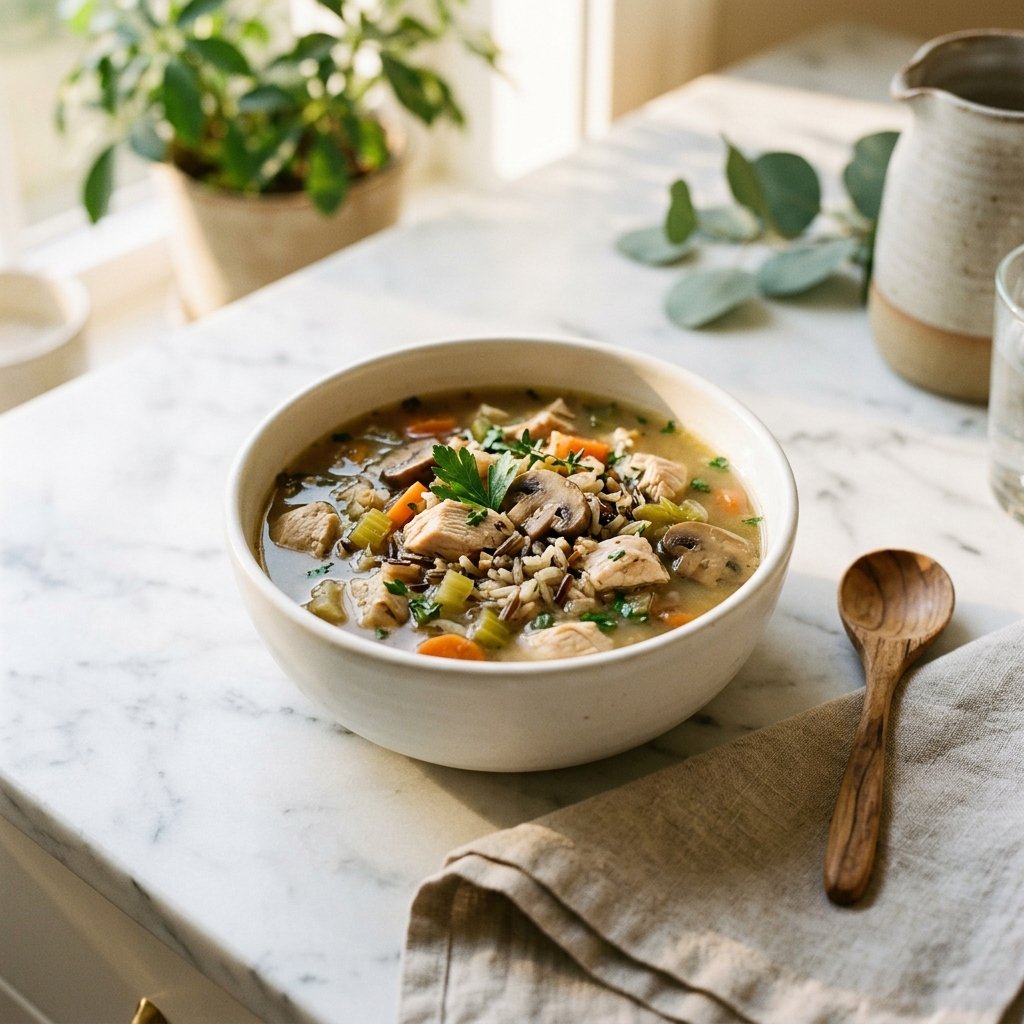
Chicken, wild rice & mushroom soup (280 calories | 28g protein per serving)
This warm soup combines lean chicken breast with wild rice and mushrooms for a protein-packed meal. Each bowl gives you almost 30 grams of protein to help maintain your muscle mass as you age. The mushrooms add vitamin D, which supports bone health.
Wild rice cooks slower than white rice but offers more fiber and nutrients. This recipe works great for meal prep since you can store it in your fridge for up to four days.
Ingredients
- 1 pound boneless, skinless chicken breast, cut into bite-sized pieces
- 1 cup uncooked wild rice
- 8 ounces mushrooms, sliced
- 1 medium onion, diced
- 3 cloves garlic, minced
- 2 carrots, diced
- 2 celery stalks, diced
- 6 cups low-sodium chicken broth
- 2 tablespoons olive oil
- 1 teaspoon dried thyme
- 1/2 teaspoon black pepper
- 1/4 teaspoon salt
- 2 bay leaves
- 1/4 cup fresh parsley, chopped
Instructions
- Heat the olive oil in a large pot over medium heat.
- Add the diced onion, carrots, and celery, then cook for 5 minutes until they start to soften.
- Add the garlic and mushrooms, cooking for another 3 minutes.
- Pour in the chicken broth and add the wild rice, thyme, pepper, salt, and bay leaves.
- Bring the soup to a boil, then reduce heat to low and simmer for 30 minutes.
- Add the chicken pieces and cook for 20 more minutes until the rice is tender and chicken is cooked through.
- Remove the bay leaves and stir in the fresh parsley before serving.
Swap the chicken for turkey breast to keep the same protein content with a different flavor.
Smoked mackerel, arugula & beet salad
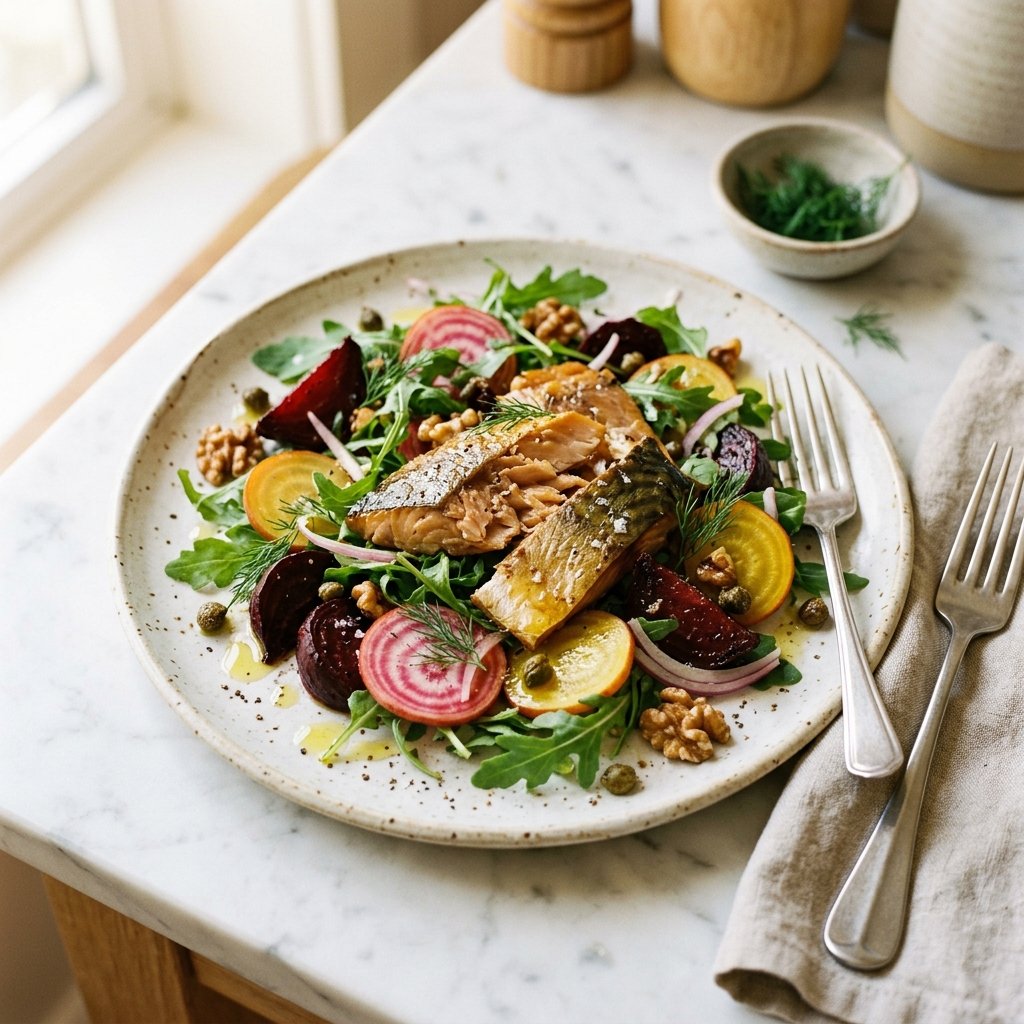
Smoked mackerel, arugula & beet salad (380 calories | 28g protein per serving)
This colorful salad brings together smoked mackerel's omega-3 fatty acids with the protein punch you need to maintain muscle mass as you age. The beets provide natural nitrates that support healthy blood flow, while arugula adds a peppery kick and extra nutrients. Smoked mackerel is pre-cooked, making this a quick 10-minute meal that's perfect for lunch or a light dinner.
Ingredients
- 4 oz smoked mackerel fillets, skin removed and flaked
- 3 cups fresh arugula
- 1 medium cooked beet, peeled and sliced
- 2 tablespoons extra virgin olive oil
- 1 tablespoon lemon juice
- 1 teaspoon Dijon mustard
- 1 tablespoon capers, drained
- 2 tablespoons chopped walnuts
- Salt and black pepper to taste
Instructions
- Arrange the arugula on a large plate or shallow bowl as your base.
- Place the sliced beets on top of the arugula, spreading them out evenly.
- Flake the smoked mackerel into large chunks and distribute them over the salad.
- In a small bowl, whisk together olive oil, lemon juice, and Dijon mustard until well combined.
- Drizzle the dressing over your salad.
- Sprinkle capers and walnuts on top, then season with salt and pepper to your liking.
Swap smoked mackerel for smoked trout if you prefer a milder fish flavor.
How High Protein Supports Healthy Aging
Protein becomes more important as you age because your body doesn't process it as efficiently as it once did. Getting enough protein helps you maintain muscle mass, supports your bones and joints, and keeps your immune system strong.
Benefits of Protein in Muscle Maintenance
Your body naturally loses muscle mass as you get older, a condition called sarcopenia. This loss can start as early as your 30s and speeds up after age 60.
Eating enough protein helps slow down this muscle loss. Your muscles need protein to repair and rebuild themselves after daily activities. Without adequate protein, you might notice weakness, slower movement, and difficulty doing tasks that used to feel easy.
Research shows that older women need more protein per pound of body weight than younger adults. You should aim for 25-30 grams of protein per meal instead of spreading small amounts throughout the day. This higher amount per meal triggers better muscle protein synthesis.
Combining protein intake with light resistance exercise makes the effects even stronger. You don't need heavy weights—bodyweight exercises or resistance bands work well.
Impact on Bone Density and Joint Health
Protein plays a direct role in maintaining bone strength and density. Your bones are made up of about 50% protein by volume, and they need consistent protein intake to stay healthy.
Higher protein intake is linked to better bone mineral density in postmenopausal women. This matters because lower estrogen levels after menopause increase bone loss. Getting enough protein helps protect against fractures and osteoporosis.
Protein also supports the connective tissues around your joints, including cartilage and tendons. These tissues need amino acids from protein to stay flexible and strong. When combined with calcium and vitamin D, protein creates a better foundation for bone health than calcium alone.
Role in Immune System Function
Your immune system relies on protein to function properly. Antibodies, which fight off infections and viruses, are made entirely of protein.
When you don't get enough protein, your body can't produce enough immune cells. This makes you more vulnerable to infections, and it takes longer to recover when you do get sick. Studies show that older adults with low protein intake have weaker immune responses to vaccines.
Protein also helps wounds heal faster and reduces recovery time after illness or surgery. Your body needs extra protein during these times to repair damaged tissue and fight infection. Aim for protein sources that contain all essential amino acids, like fish, eggs, Greek yogurt, and lean poultry, to give your immune system the complete nutrition it needs.
Nutritional Tips for Older Women
Protein needs change as you age, and getting enough becomes more important for maintaining muscle, bone health, and overall vitality. You'll also need to balance protein with other key nutrients and find simple ways to add more throughout your day.
Adapting Protein Intake by Age
Your protein needs increase after age 50 because your body doesn't use protein as efficiently as it once did. Most older women need about 1.0 to 1.2 grams of protein per kilogram of body weight each day.
If you weigh 150 pounds, that means you need roughly 68 to 82 grams of protein daily. This is higher than the standard recommendation for younger adults.
Your muscles break down faster as you age, which makes protein even more critical. Without enough protein, you risk losing muscle mass and strength. This can affect your balance, mobility, and independence.
Balancing Protein With Other Nutrients
Protein works best when paired with other essential nutrients your body needs. Calcium and vitamin D support bone health and help your body use protein effectively for muscle maintenance.
You should eat plenty of fiber-rich foods alongside your protein sources. Fruits, vegetables, and whole grains aid digestion and prevent constipation, which becomes more common with age.
Don't forget healthy fats from sources like olive oil, avocados, and nuts. These fats help your body absorb vitamins A, D, E, and K. They also support brain health and reduce inflammation.
Drink enough water throughout the day since protein metabolism requires adequate hydration. Aim for about 8 cups of water daily, or more if you're active.
Easy Ways to Increase Daily Protein
Start your morning with protein-rich breakfast options like Greek yogurt, eggs, or a protein smoothie. This jumpstarts your metabolism and helps maintain steady energy.
Add protein powder to your coffee, oatmeal, or baked goods for an extra boost without changing your routine. Keep convenient protein snacks on hand like string cheese, hard-boiled eggs, or roasted chickpeas.
Include a palm-sized portion of protein at every meal. This might be chicken, fish, tofu, beans, or lean beef.
High-Protein Snack Ideas:
- Cottage cheese with berries (14g protein per half cup)
- Almonds (6g protein per ounce)
- Tuna packets (16g protein per packet)
- Edamame (17g protein per cup)
- Protein bars (10-20g protein depending on brand)
Double up on protein sources at meals when possible. Try adding nuts to your yogurt or beans to your salad.