12 Low Sodium High Protein Vegan Meals for Elderly: Easy, Nourishing Recipes That Support Heart Health and Muscle Strength

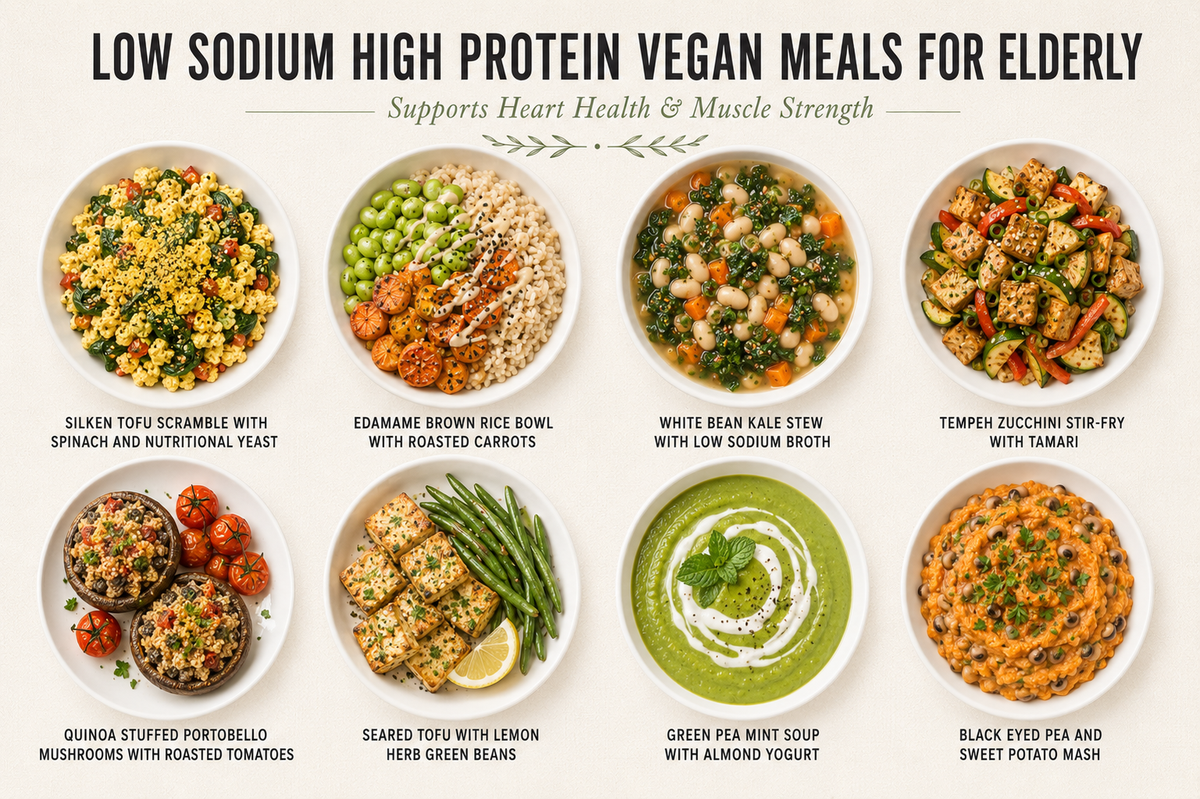
Eating well as you get older means finding meals that support your health without overloading on salt. Too much sodium can raise blood pressure and cause other problems, while protein helps keep muscles strong and supports overall wellness. This collection of vegan meals gives you plant-based options that are low in sodium and high in protein, making it easier to meet your nutritional needs.
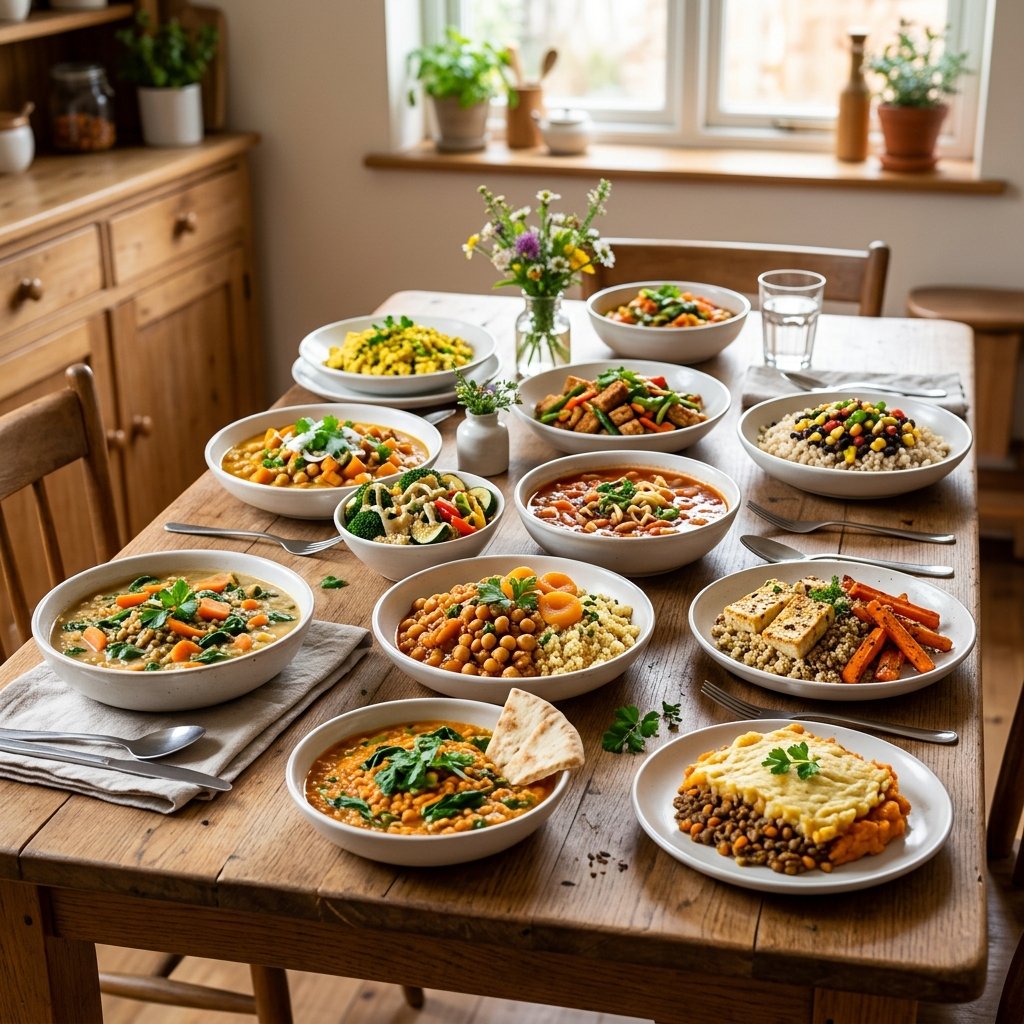
The recipes ahead include a variety of ingredients like tofu, beans, lentils, and quinoa. Each meal is designed to be simple to prepare and gentle on your body. You'll find everything from scrambles and salads to soups and stuffed vegetables.
These dishes can help you maintain your strength and energy throughout the day. They also offer tips on how to make meal preparation easier, so you can spend less time in the kitchen and more time enjoying your food.
Silken tofu scramble with spinach and nutritional yeast
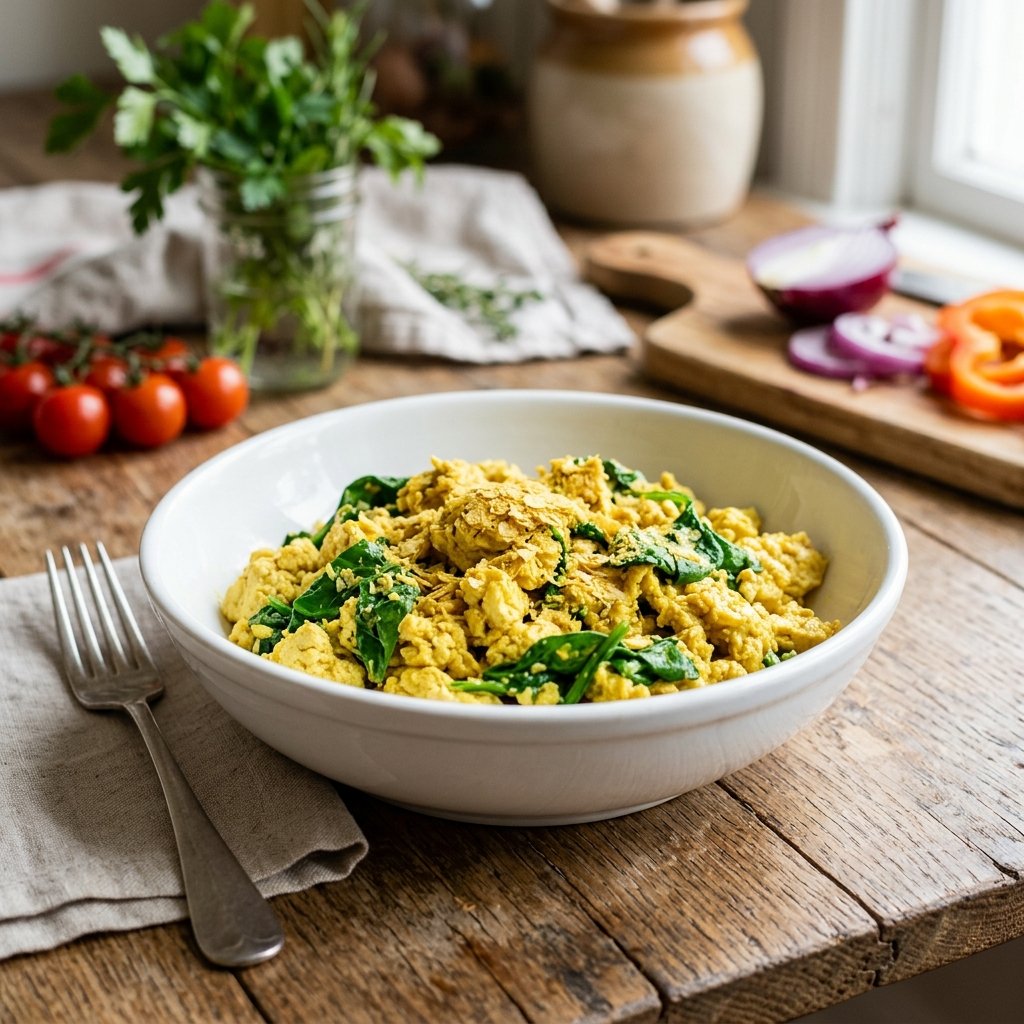
Silken tofu scramble with spinach and nutritional yeast (180 calories | 14g protein per serving)
This warm breakfast dish uses silken tofu as its protein base and gets extra nutrition from fresh spinach. Nutritional yeast adds a cheese-like flavor while boosting the protein content even more. The dish comes together in less than 10 minutes, making it perfect for busy mornings. You can adjust the seasonings to match your taste preferences.
Ingredients
- 8 oz silken tofu
- 2 cups fresh spinach
- 2 tablespoons nutritional yeast
- 1/4 teaspoon turmeric powder
- 1/4 teaspoon garlic powder
- 1/4 teaspoon black pepper
- 1 tablespoon olive oil
- 1 tablespoon water
Instructions
- Heat the olive oil in a non-stick pan over medium heat.
- Add the spinach and water to the pan, cooking until the spinach wilts (about 2 minutes).
- Crumble the silken tofu into the pan with your hands, breaking it into small pieces.
- Sprinkle the turmeric, garlic powder, and black pepper over the tofu. Stir everything together gently.
- Cook for 3-4 minutes, stirring occasionally, until the tofu is heated through.
- Add the nutritional yeast and stir well to combine. Cook for one more minute.
- Remove from heat and serve warm.
Add diced tomatoes or mushrooms to increase the vegetable content and add more flavor.
Lentil and quinoa salad with steamed broccoli
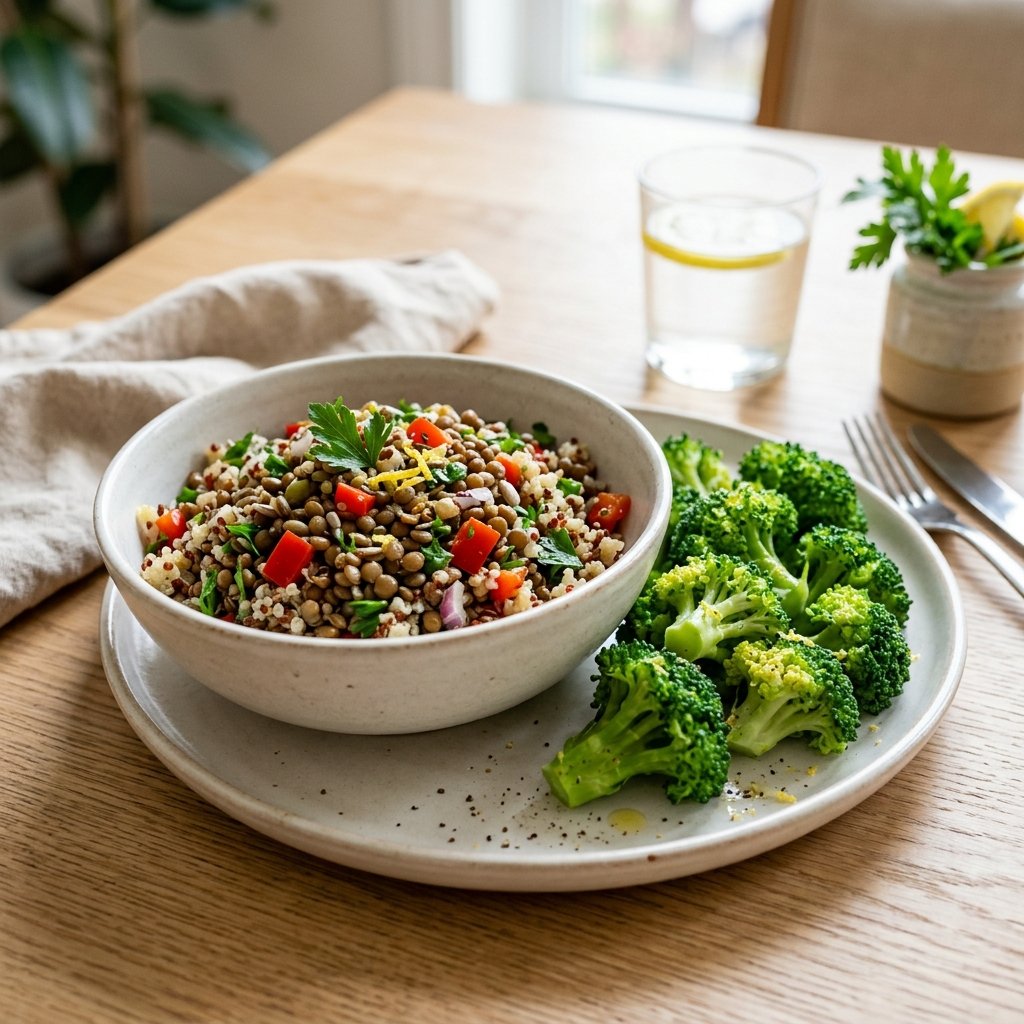
This protein-packed salad combines cooked lentils and fluffy quinoa with fresh steamed broccoli for a filling meal. One serving provides around 320 calories and 18 grams of protein. The dish is naturally low in sodium and works great for meal prep since you can store it in the fridge for up to four days.
Ingredients
- 1/2 cup dry green or brown lentils
- 1/2 cup dry quinoa
- 2 cups broccoli florets
- 2 tablespoons lemon juice
- 1 tablespoon olive oil
- 1/4 teaspoon black pepper
- 1/4 teaspoon garlic powder
- 2 tablespoons chopped fresh parsley
- 1 tablespoon sunflower seeds
Instructions
- Rinse the lentils and cook them in 2 cups of water for 20-25 minutes until tender, then drain.
- Rinse the quinoa and cook it in 1 cup of water for 15 minutes, then fluff with a fork.
- Steam the broccoli florets for 5-7 minutes until bright green and tender.
- Let the lentils, quinoa, and broccoli cool for 10 minutes.
- Mix the lemon juice, olive oil, black pepper, and garlic powder in a small bowl.
- Combine the cooked lentils, quinoa, and broccoli in a large bowl.
- Pour the dressing over the salad and toss everything together.
- Sprinkle the fresh parsley and sunflower seeds on top before serving.
Add diced cucumber or cherry tomatoes for extra crunch and vitamins.
Chickpea and avocado mash on whole-grain toast
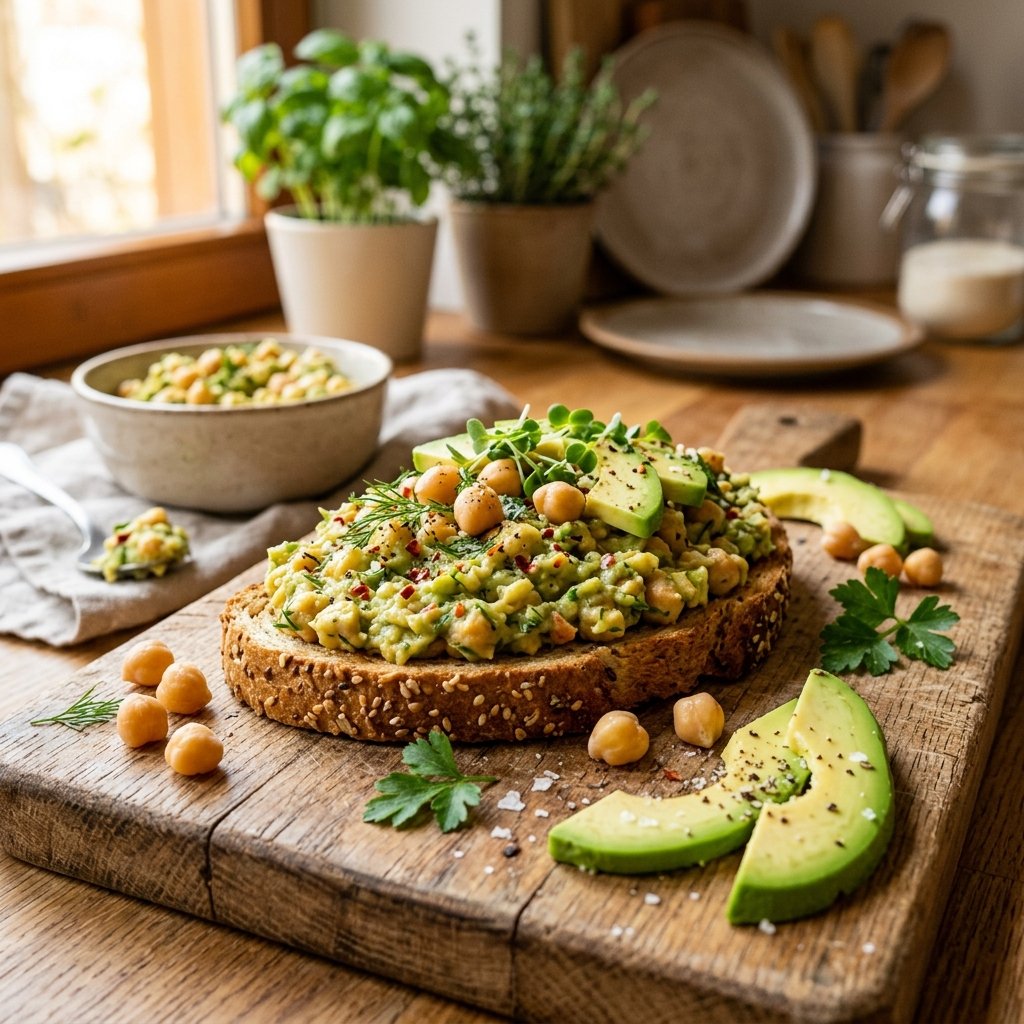
Chickpeas provide about 15 grams of protein per cup, making this mash a filling plant-based option. One serving of this recipe contains roughly 320 calories and 12 grams of protein. The creamy avocado adds healthy fats while keeping sodium low when you skip added salt.
This meal works great for breakfast or lunch. It takes less than 10 minutes to prepare and needs no cooking. The fiber from whole-grain toast and chickpeas helps you feel full longer.
Ingredients
- 1 cup cooked chickpeas (no salt added, rinsed and drained)
- 1 ripe avocado
- 1 tablespoon lemon juice
- 1/4 teaspoon garlic powder
- 1/4 teaspoon black pepper
- 2 slices whole-grain bread
- 1 tablespoon fresh parsley, chopped (optional)
- Pinch of red pepper flakes (optional)
Instructions
- Place the chickpeas in a medium bowl and mash them with a fork until mostly smooth with some chunks remaining.
- Cut the avocado in half, remove the pit, and scoop the flesh into the bowl with the chickpeas.
- Add lemon juice, garlic powder, and black pepper to the bowl.
- Mash everything together until well combined but still slightly chunky.
- Toast the bread slices in a toaster until golden brown.
- Spread half of the chickpea-avocado mixture on each slice of toast.
- Sprinkle with fresh parsley and red pepper flakes if using.
Add sliced tomatoes or cucumber on top for extra nutrients and crunch.
Edamame and brown rice bowl with roasted carrots
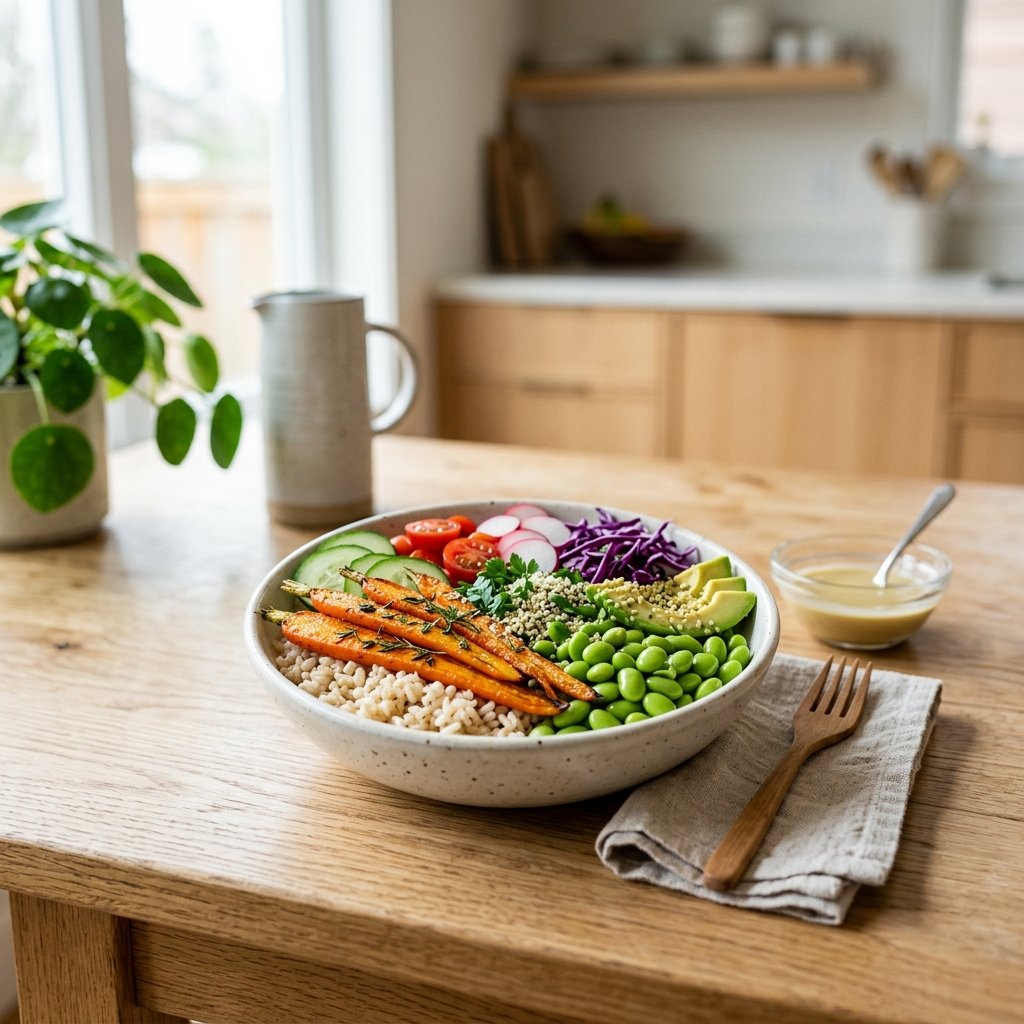
This bowl combines edamame and brown rice to deliver about 320 calories and 18g of protein per serving. The edamame provides complete plant protein while keeping sodium low. It's perfect for seniors who want a filling meal that's easy to chew and digest.
Ingredients
- 1 cup cooked brown rice
- 1 cup shelled edamame (frozen or fresh)
- 2 medium carrots, peeled and sliced
- 1 tablespoon olive oil
- 1/4 teaspoon garlic powder
- 1/4 teaspoon black pepper
- 1 teaspoon low-sodium soy sauce
- 1 teaspoon sesame seeds
- 1 tablespoon rice vinegar
- 1/2 teaspoon fresh ginger, minced
Instructions
- Preheat your oven to 400°F and line a baking sheet with parchment paper.
- Toss the sliced carrots with olive oil, garlic powder, and black pepper on the baking sheet.
- Roast the carrots for 20-25 minutes until they're tender and slightly caramelized.
- While the carrots roast, cook the edamame according to package directions, then drain.
- Cook the brown rice if you haven't already, following package instructions.
- Mix the rice vinegar, low-sodium soy sauce, and fresh ginger in a small bowl.
- Add the cooked brown rice to your serving bowl.
- Top the rice with edamame and roasted carrots.
- Drizzle the ginger-soy dressing over everything and sprinkle with sesame seeds.
Add sliced avocado or cucumber for extra texture and healthy fats.
White bean and kale stew with low-sodium vegetable broth
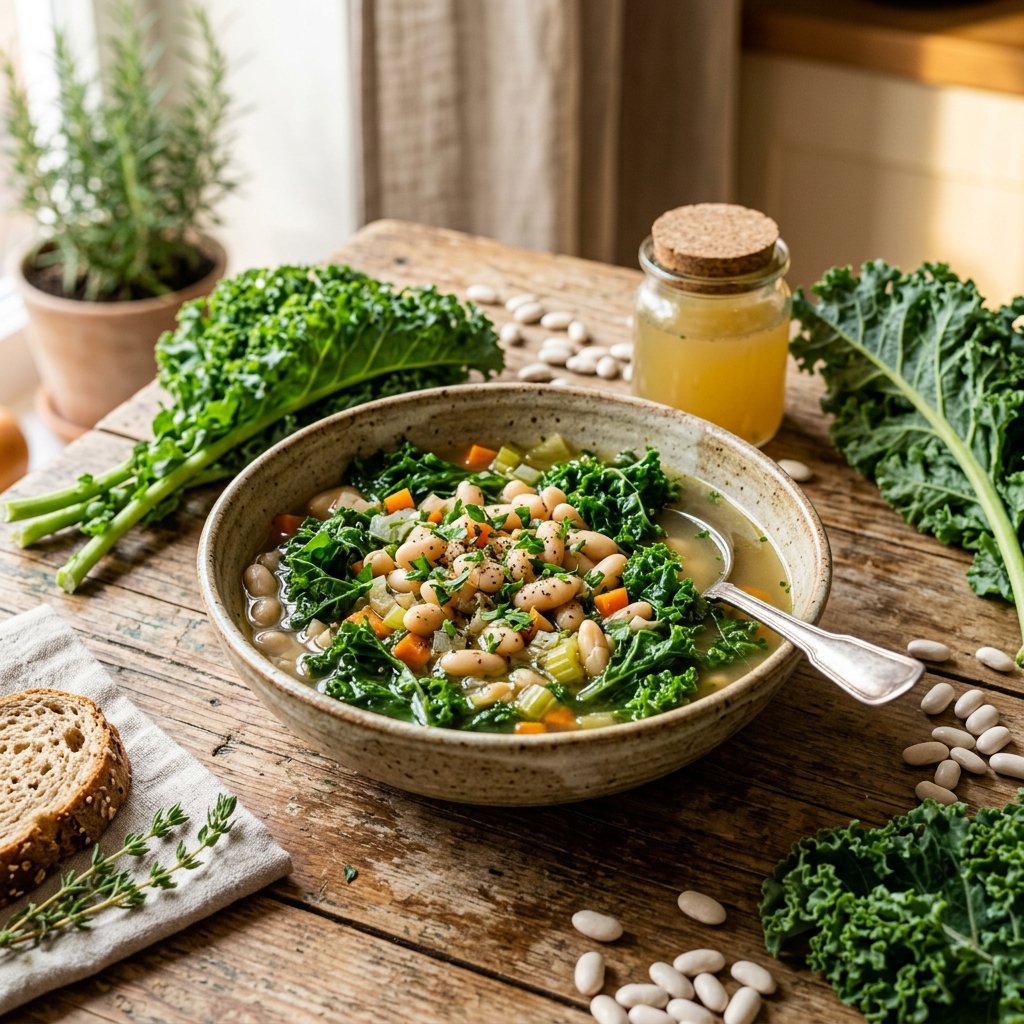
White bean and kale stew delivers a hearty, protein-packed meal with about 280 calories and 15g of protein per serving. The white beans provide the main protein source while also offering plenty of fiber. This stew works great for elderly adults who need easy-to-chew meals that are gentle on their digestive system.
Ingredients
- 2 cans (15 oz each) white beans, drained and rinsed
- 4 cups low-sodium vegetable broth
- 3 cups fresh kale, chopped and stems removed
- 1 medium onion, diced
- 3 cloves garlic, minced
- 2 medium carrots, diced
- 2 celery stalks, diced
- 1 tablespoon olive oil
- 1 teaspoon dried thyme
- 1/2 teaspoon black pepper
- 1/4 teaspoon smoked paprika
- 1 bay leaf
Instructions
- Heat olive oil in a large pot over medium heat and add the diced onion, carrots, and celery. Cook for 5 minutes until the vegetables start to soften.
- Add the minced garlic, thyme, black pepper, and smoked paprika to the pot. Stir everything together and cook for another minute until you smell the garlic.
- Pour in the low-sodium vegetable broth and add the bay leaf. Bring the mixture to a boil, then reduce heat to low.
- Add the white beans to the pot and let the stew simmer for 15 minutes. This helps all the flavors blend together.
- Stir in the chopped kale and cook for another 5 minutes until the kale wilts and becomes tender.
- Remove the bay leaf before serving and taste the stew to see if you want to add more pepper.
You can use any type of white beans like cannellini, navy, or great northern beans for this recipe.
Tempeh and zucchini stir-fry with low-sodium tamari
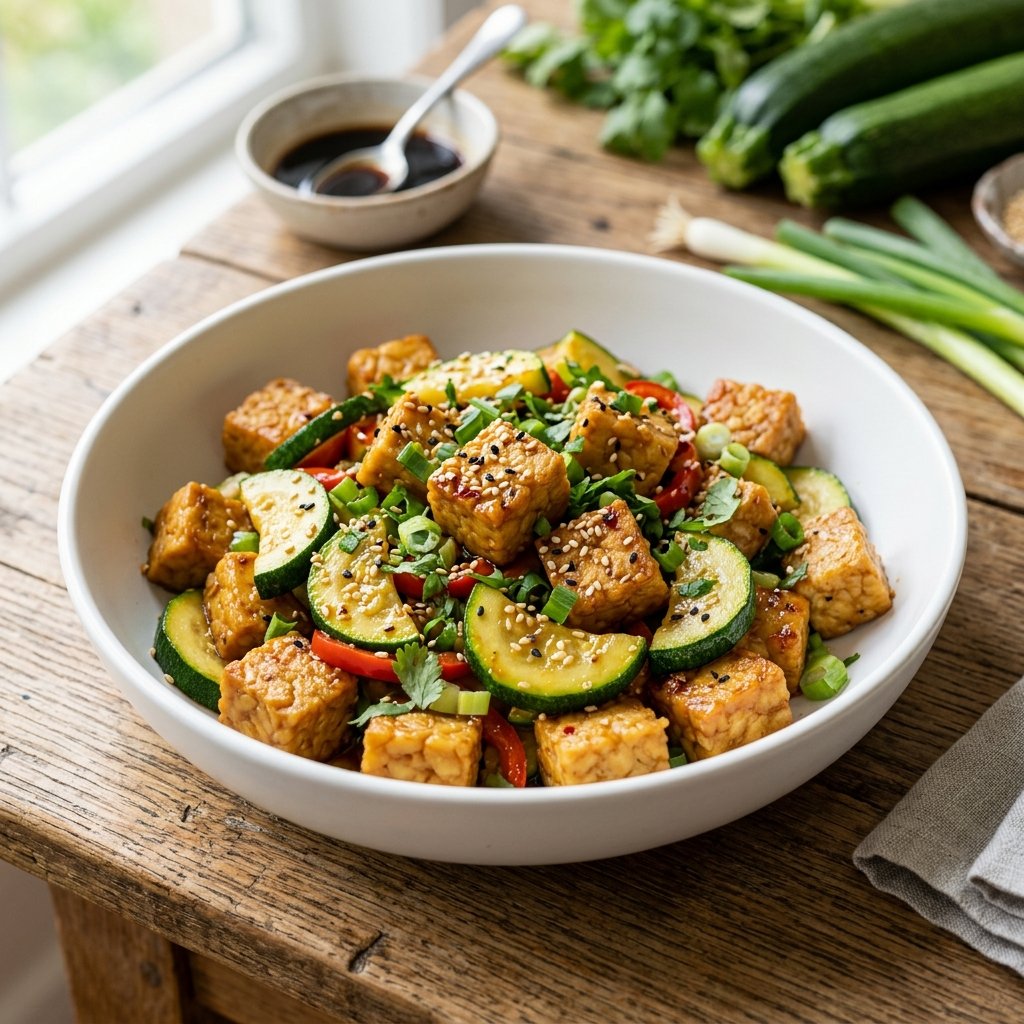
Tempeh and Zucchini Stir-Fry with Low-Sodium Tamari (280 calories | 22g protein per serving)
This quick stir-fry brings together nutty tempeh and tender zucchini for a satisfying meal. You get a solid protein boost from the fermented tempeh, which is also easier to digest than many other plant proteins. The low-sodium tamari adds rich umami flavor without overloading on salt, making this perfect for seniors watching their sodium intake while still needing plenty of protein.
Ingredients
- 8 ounces tempeh, cut into cubes
- 2 medium zucchini, sliced into half-moons
- 1 tablespoon sesame oil
- 3 cloves garlic, minced
- 1 tablespoon fresh ginger, grated
- 3 tablespoons low-sodium tamari
- 1 tablespoon rice vinegar
- 1 teaspoon maple syrup
- 1/2 cup vegetable broth (low-sodium)
- 1 red bell pepper, sliced
- 2 green onions, chopped
- 1 tablespoon sesame seeds
Instructions
- Heat the sesame oil in a large skillet or wok over medium-high heat.
- Add the tempeh cubes and cook for 5-6 minutes, stirring occasionally until golden brown on all sides.
- Toss in the garlic and ginger, cooking for 30 seconds until fragrant.
- Add the zucchini and bell pepper to the pan and stir-fry for 4-5 minutes until the vegetables start to soften.
- Mix together the low-sodium tamari, rice vinegar, maple syrup, and vegetable broth in a small bowl.
- Pour the sauce over the vegetables and tempeh, stirring everything together.
- Let it cook for 2-3 minutes until the sauce thickens slightly and coats everything well.
- Remove from heat and top with green onions and sesame seeds before serving.
Serve this over brown rice or quinoa to add even more protein and make it a complete meal.
Pea protein hummus with cucumber and bell pepper sticks
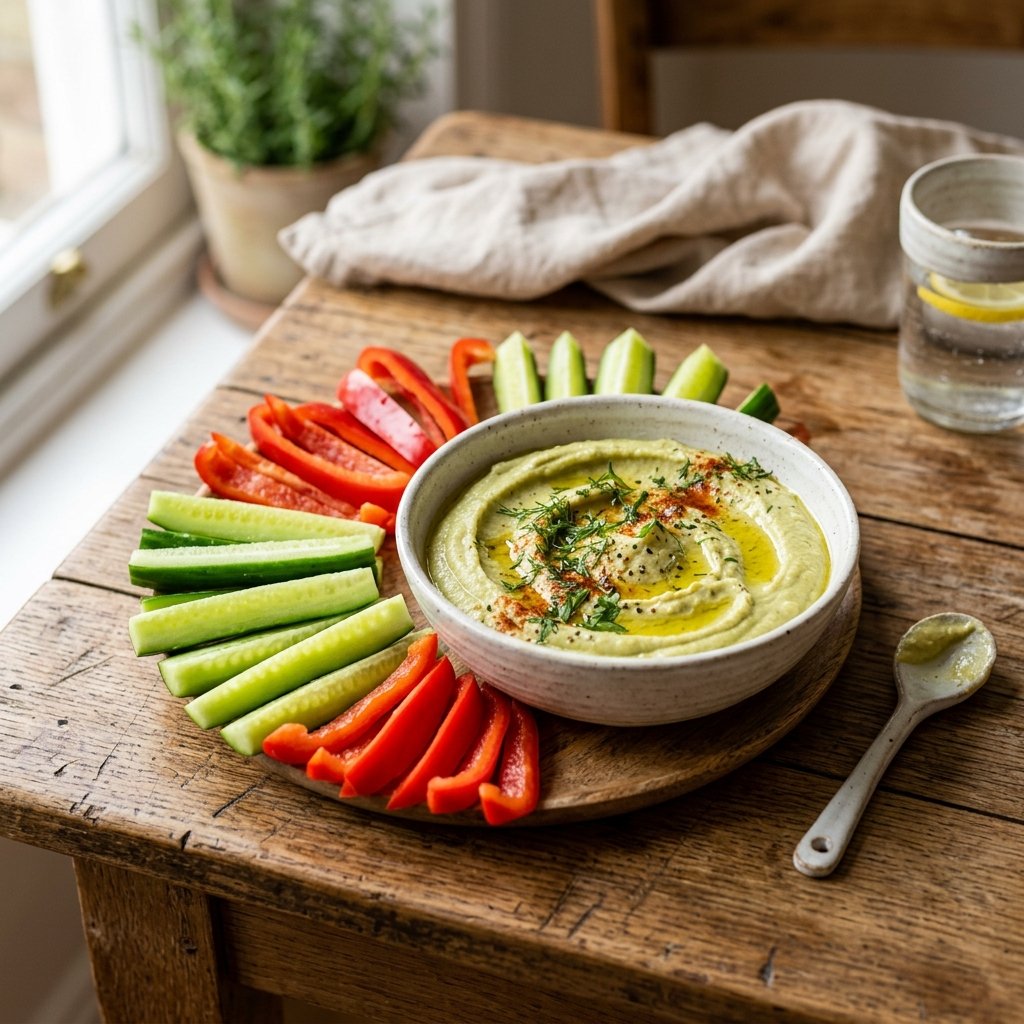
Pea protein hummus with cucumber and bell pepper sticks (180 calories | 12g protein per serving)
This protein-packed snack combines creamy hummus with added pea protein powder for extra nutrition. You get a filling snack that's perfect for mid-afternoon hunger or a light lunch. The colorful vegetables add crunch and vitamins without any extra sodium.
Traditional hummus already contains protein from chickpeas, but adding pea protein powder boosts it even more. This makes it ideal for elderly people who need more protein but struggle with large meals.
Ingredients
- 1 can (15 oz) low-sodium chickpeas, drained and rinsed
- 2 tablespoons unflavored pea protein powder
- 3 tablespoons lemon juice
- 2 tablespoons tahini
- 2 cloves garlic
- 3 tablespoons water
- 1/4 teaspoon cumin
- 2 medium cucumbers, cut into sticks
- 2 bell peppers (any color), cut into strips
Instructions
- Add chickpeas, pea protein powder, lemon juice, tahini, garlic, water, and cumin to a food processor. Blend until smooth and creamy, about 2 minutes.
- Stop the food processor and scrape down the sides with a spatula. Add more water one tablespoon at a time if you want a thinner consistency.
- Taste the hummus and adjust flavors if needed. You can add more lemon juice for tanginess or garlic for stronger flavor.
- Wash and dry the cucumbers and bell peppers. Cut them into stick shapes about 3 inches long and half an inch wide.
- Transfer the hummus to a serving bowl and arrange the vegetable sticks around it. Store any leftover hummus in an airtight container in the fridge for up to 5 days.
Try adding roasted red peppers or fresh herbs like parsley to the hummus for different flavors.
Oven-baked spiced chickpea patties with cauliflower mash
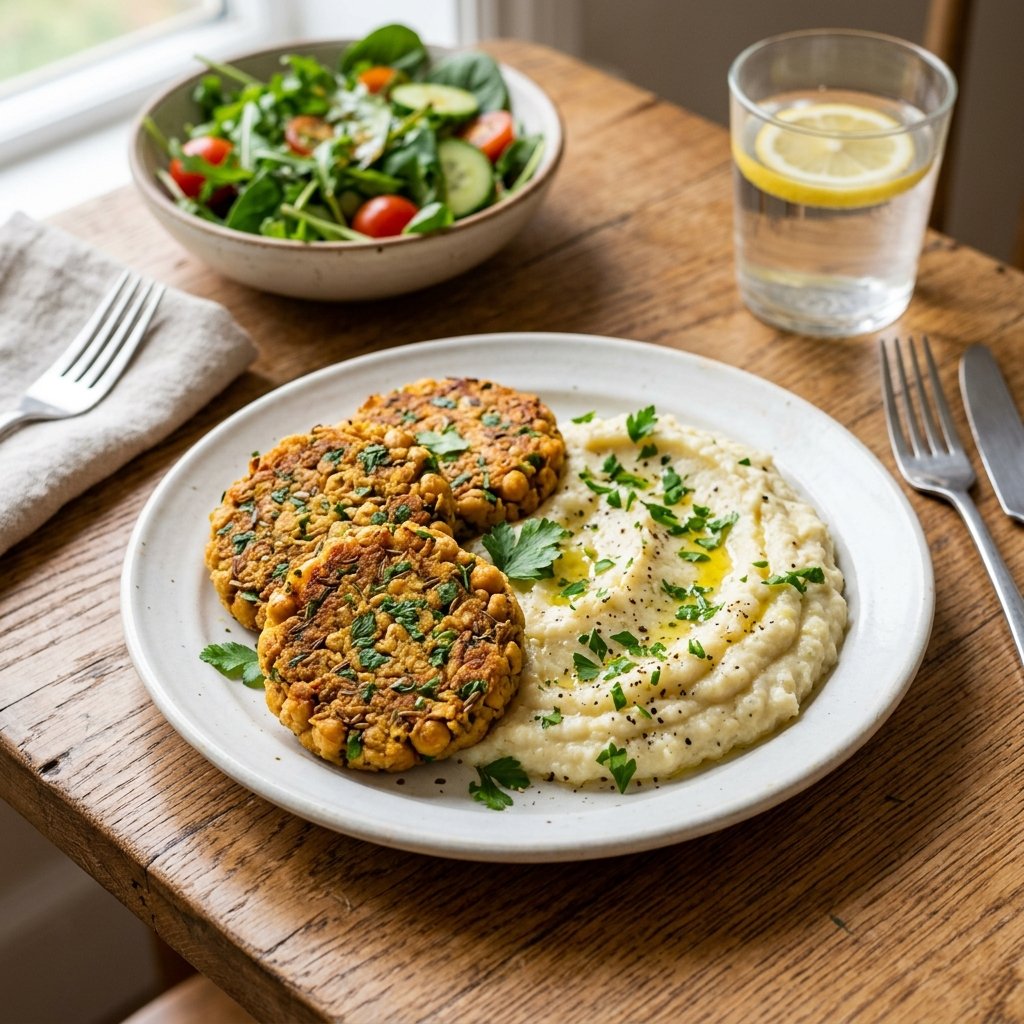
Oven-baked spiced chickpea patties with cauliflower mash (280 calories | 14g protein per serving)
These baked chickpea patties give you a good amount of plant protein without any added salt. The chickpeas provide fiber and protein while the cauliflower mash adds extra vegetables to your meal. This recipe works well for seniors who want a filling dinner that's easy to chew and digest.
Ingredients
- 2 cups cooked chickpeas, drained and rinsed
- 1/4 cup oat flour
- 2 tablespoons ground flaxseed
- 3 tablespoons water
- 1 teaspoon cumin
- 1 teaspoon paprika
- 1/2 teaspoon garlic powder
- 1/4 teaspoon black pepper
- 1 tablespoon lemon juice
- 1 medium head cauliflower, cut into florets
- 2 tablespoons nutritional yeast
- 1 tablespoon olive oil
- 1/4 cup unsweetened plant milk
Instructions
- Set your oven to 375°F and line a baking sheet with parchment paper.
- Mix the flaxseed with water in a small bowl and let it sit for 5 minutes until it gets thick.
- Mash the chickpeas in a large bowl with a fork or potato masher, leaving some chunks.
- Add the oat flour, flaxseed mixture, cumin, paprika, garlic powder, pepper, and lemon juice to the chickpeas and mix well.
- Form the mixture into 6 patties and place them on your baking sheet.
- Bake the patties for 25 minutes, flipping them halfway through.
- While the patties bake, steam the cauliflower florets until they're soft, about 10 minutes.
- Drain the cauliflower and blend it with nutritional yeast, olive oil, and plant milk until smooth and creamy.
- Serve two patties with a side of cauliflower mash.
Add fresh herbs like parsley or cilantro to the patties for extra flavor without sodium.
Green pea and mint soup with a dollop of almond yogurt
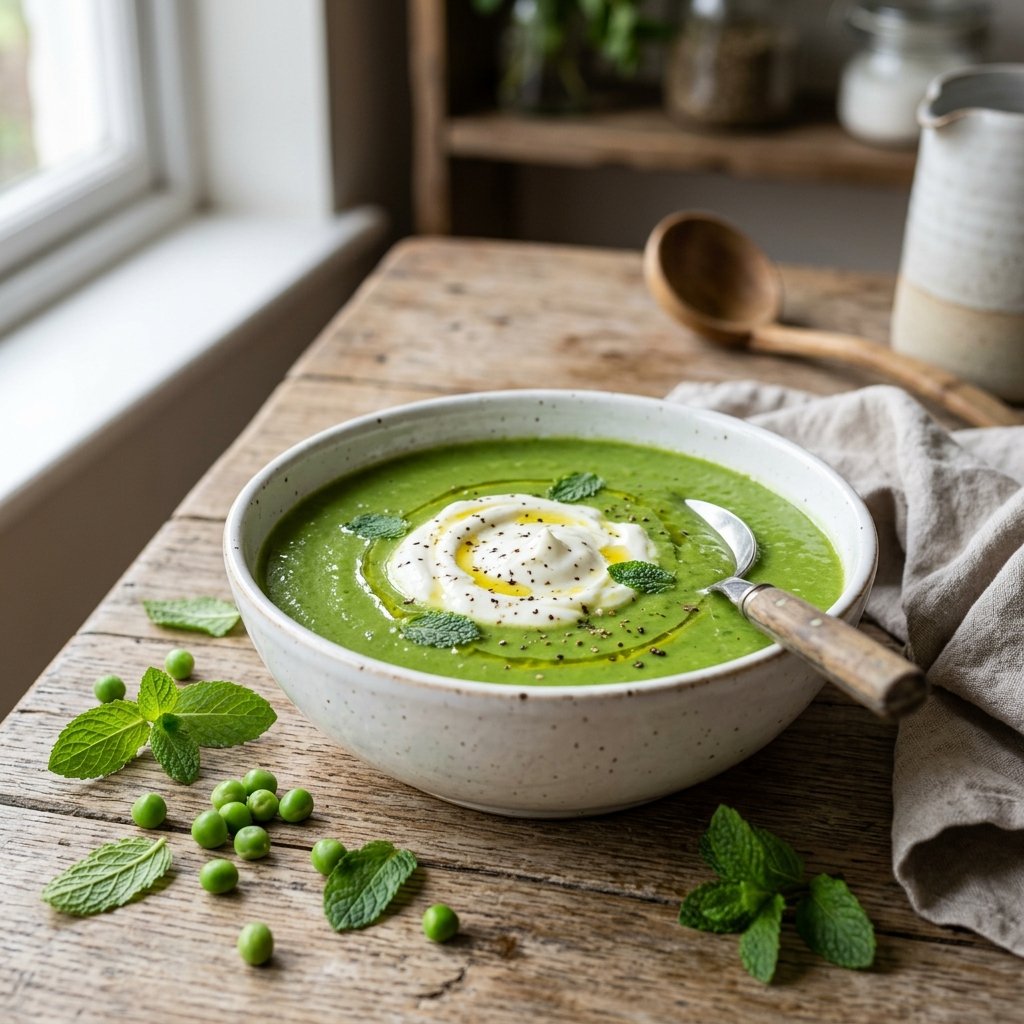
Green Pea and Mint Soup with a Dollop of Almond Yogurt (180 calories | 12g protein per serving)
This creamy soup gets its protein from green peas and almond yogurt. The fresh mint adds a cooling flavor that makes it perfect for any time of year. It's gentle on your stomach and easy to digest, which makes it ideal for elderly people who need something light but filling.
Green peas are a complete protein source and contain all the amino acids your body needs. This soup is naturally low in sodium without added salt.
Ingredients
- 3 cups frozen green peas
- 2 cups low-sodium vegetable broth
- 1/4 cup fresh mint leaves
- 1 small onion, diced
- 2 cloves garlic, minced
- 1/2 teaspoon olive oil
- 1/4 teaspoon black pepper
- 1/4 cup unsweetened almond yogurt
- 2 tablespoons nutritional yeast
Instructions
- Heat olive oil in a medium pot over medium heat and cook the onion for 3 minutes until soft.
- Add garlic and cook for 1 more minute until you can smell it.
- Pour in the vegetable broth and add the frozen peas, then bring to a boil.
- Lower the heat and let it simmer for 8 minutes until the peas are tender.
- Remove from heat and stir in the mint leaves and nutritional yeast.
- Use a blender to puree the soup until smooth and creamy.
- Add black pepper and taste to see if you need more seasoning.
- Pour into bowls and top each serving with a spoonful of almond yogurt.
Add a handful of fresh spinach in step 4 to boost the protein and iron content even more.
Quinoa-stuffed portobello mushrooms with roasted tomatoes
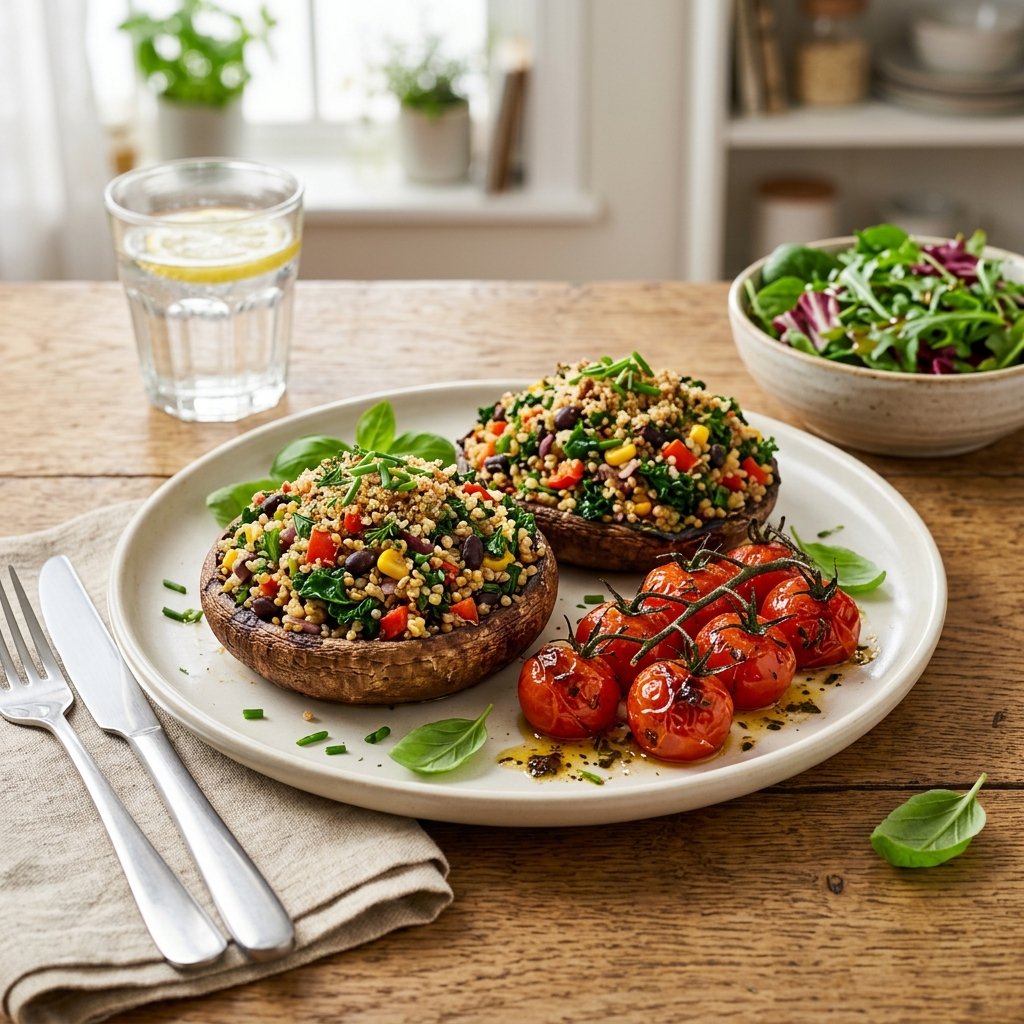
Quinoa-Stuffed Portobello Mushrooms with Roasted Tomatoes (285 calories | 14g protein per serving)
This hearty meal combines protein-rich quinoa with meaty portobello mushrooms for a satisfying dinner. The quinoa provides all nine essential amino acids your body needs. The low sodium content makes it perfect for elderly individuals watching their salt intake.
Cherry tomatoes add a burst of flavor without extra sodium. This dish works great for meal prep since you can make it ahead and reheat it easily.
Ingredients
- 4 large portobello mushroom caps, stems removed
- 1 cup cooked quinoa
- 1 cup cherry tomatoes, halved
- 1/2 cup white beans, drained and rinsed
- 2 tablespoons nutritional yeast
- 2 cloves garlic, minced
- 1 tablespoon olive oil
- 1/2 teaspoon dried basil
- 1/4 teaspoon black pepper
- 2 tablespoons fresh parsley, chopped
Instructions
- Preheat your oven to 400°F and line a baking sheet with parchment paper.
- Clean the mushroom caps with a damp cloth and place them gill-side up on the baking sheet.
- Mix the cooked quinoa, white beans, nutritional yeast, garlic, basil, and black pepper in a medium bowl.
- Arrange the halved cherry tomatoes around the mushrooms on the baking sheet and drizzle everything with olive oil.
- Spoon the quinoa mixture into each mushroom cap, pressing down gently to pack it in.
- Roast for 20-25 minutes until the mushrooms are tender and the tomatoes are slightly caramelized.
- Remove from the oven and sprinkle with fresh parsley before serving.
Add a handful of spinach or kale to the quinoa mixture for extra nutrients and color.
Seared Tofu with Lemon-Herb Green Beans
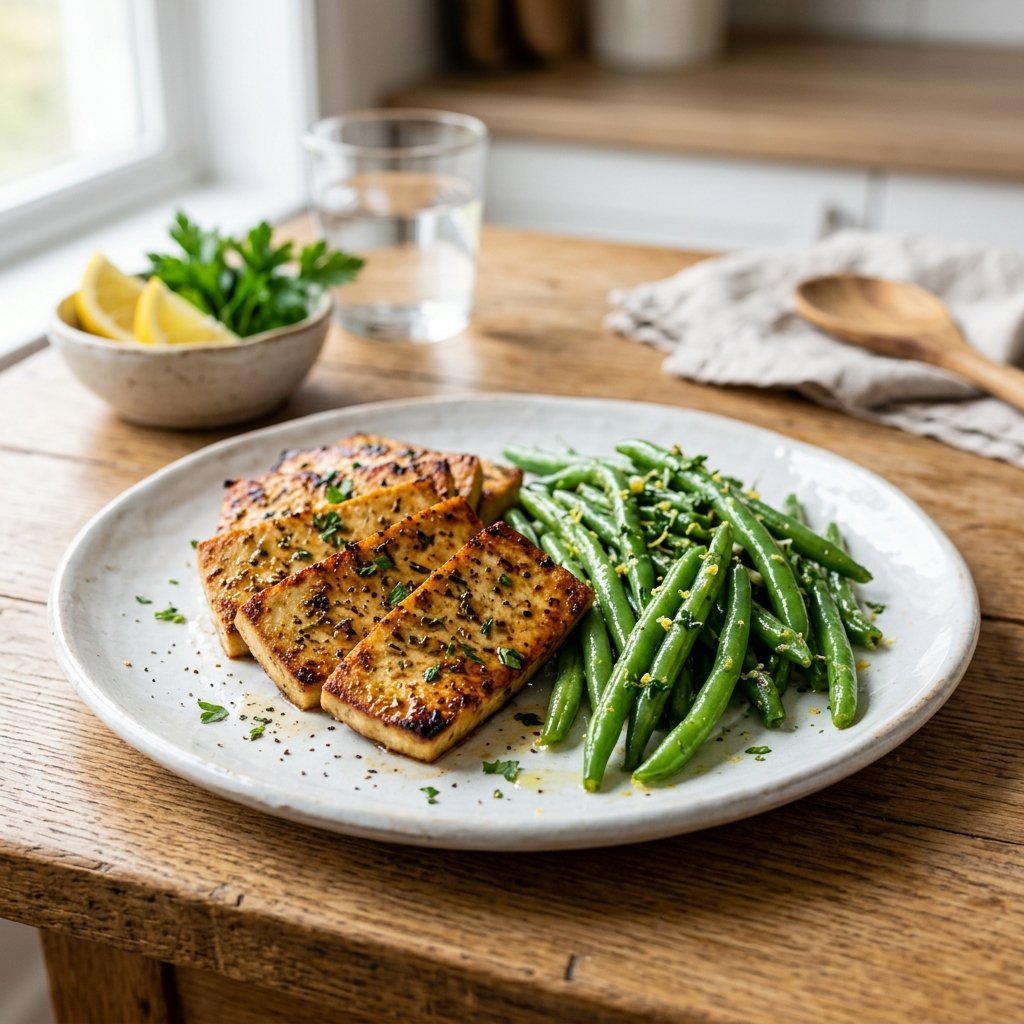
Seared Tofu with Lemon-Herb Green Beans (285 calories | 22g protein per serving)
This simple pan-seared tofu dish gives you a satisfying protein boost without added salt. The tofu gets crispy on the outside while staying soft inside. Fresh lemon and herbs add bright flavor to the green beans without needing sodium. This meal works great for meal prep since you can store the components separately and reheat them throughout the week.
Ingredients
- 14 oz extra-firm tofu, pressed and cut into 1-inch cubes
- 2 tablespoons olive oil, divided
- 1 pound fresh green beans, trimmed
- 3 cloves garlic, minced
- 2 tablespoons fresh lemon juice
- 1 teaspoon lemon zest
- 2 tablespoons fresh parsley, chopped
- 1 tablespoon fresh thyme leaves
- 1/4 teaspoon black pepper
- 1/4 cup low-sodium vegetable broth
Instructions
- Press your tofu between paper towels for 10 minutes to remove extra water, then cut it into cubes.
- Heat 1 tablespoon of olive oil in a large pan over medium-high heat.
- Add the tofu cubes to the pan and cook for 3-4 minutes on each side until golden brown.
- Remove the tofu from the pan and set it aside on a plate.
- Add the remaining tablespoon of olive oil to the same pan.
- Toss in the green beans and cook for 5 minutes, stirring occasionally.
- Add the minced garlic and cook for 1 more minute until it smells good.
- Pour in the vegetable broth and let the green beans cook for another 3-4 minutes until tender.
- Stir in the lemon juice, lemon zest, parsley, thyme, and black pepper.
- Add the tofu back to the pan and toss everything together for 1 minute to warm through.
Add a sprinkle of nutritional yeast on top for extra protein and a cheesy flavor.
Black-eyed pea and sweet potato mash
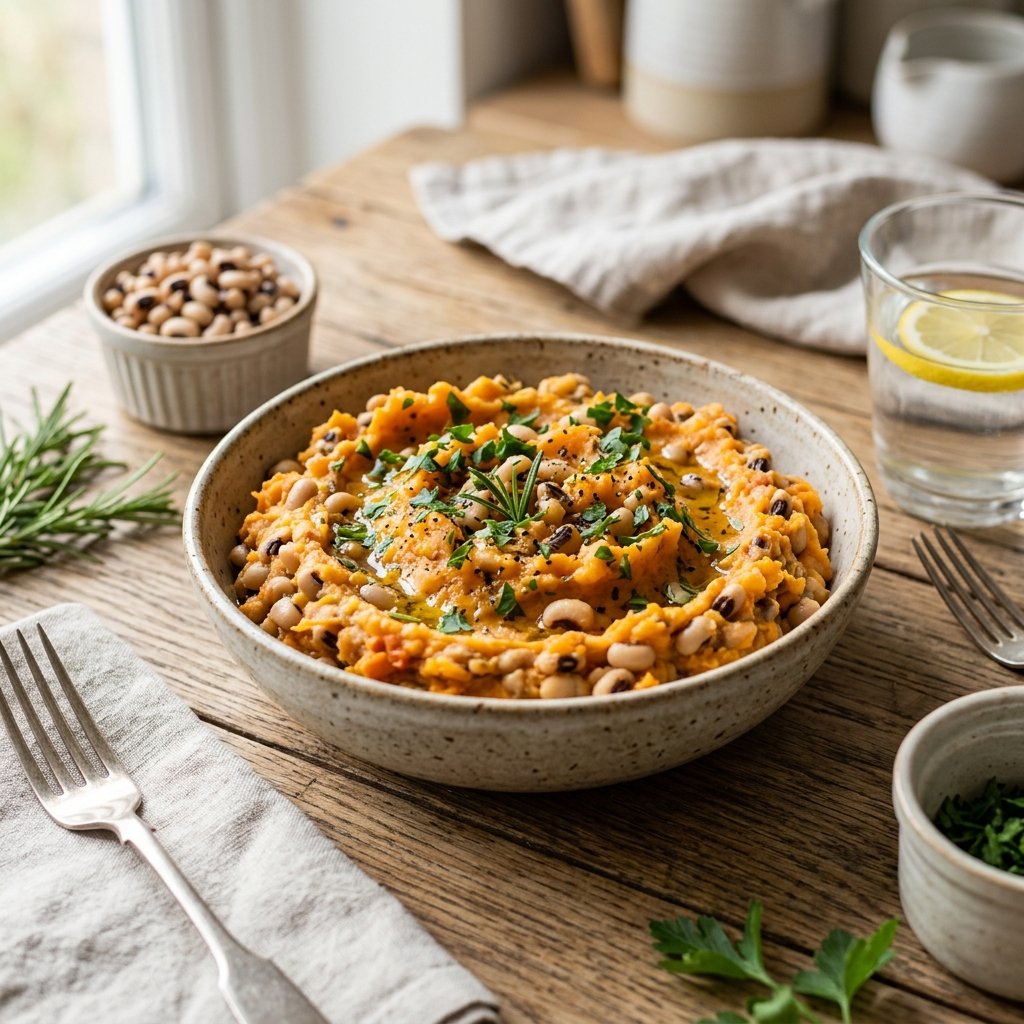
This hearty mash combines black-eyed peas and sweet potatoes to deliver about 280 calories and 12g of protein per serving. The black-eyed peas provide plant-based protein while keeping sodium naturally low. This dish works great as a side or main course for seniors who need filling, nutritious meals.
Ingredients
- 1 cup cooked black-eyed peas (no salt added)
- 2 medium sweet potatoes, peeled and cubed
- 2 tablespoons olive oil
- 1/4 teaspoon garlic powder
- 1/4 teaspoon black pepper
- 1/4 teaspoon paprika
- 2 tablespoons unsweetened almond milk
Instructions
- Place the cubed sweet potatoes in a large pot and cover them with water.
- Bring the water to a boil and cook for 15 minutes until the potatoes are soft when poked with a fork.
- Drain the sweet potatoes and return them to the pot.
- Add the cooked black-eyed peas to the pot with the sweet potatoes.
- Pour in the olive oil and almond milk.
- Mash everything together using a potato masher or fork until you reach your desired texture.
- Stir in the garlic powder, black pepper, and paprika.
- Warm the mash over low heat for 2-3 minutes, stirring occasionally.
Add fresh chopped spinach or kale during the last minute of warming for extra nutrients and color.
Nutritional Benefits for Seniors
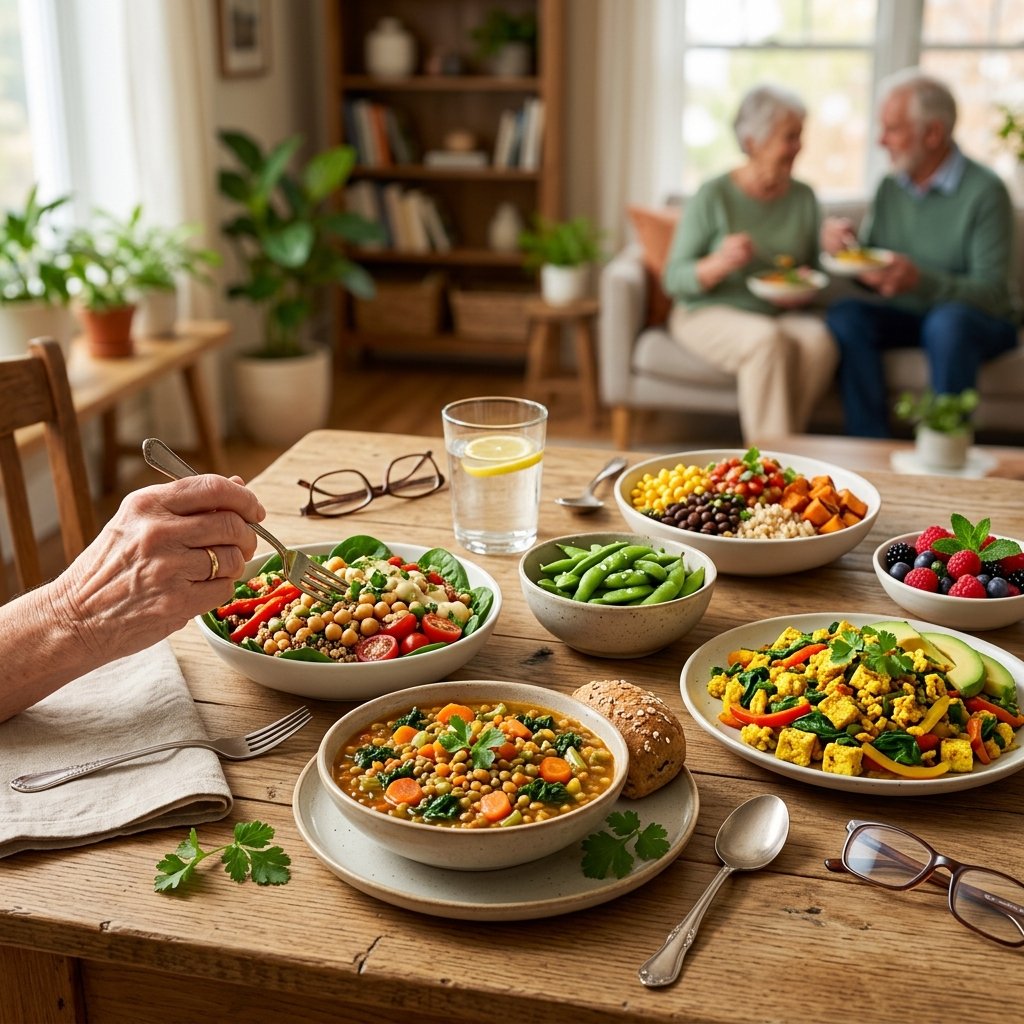
Low sodium high protein vegan meals help protect your heart while keeping your muscles strong. These meals also support healthy blood pressure levels, which becomes more important as you age.
Supporting Muscle Health
Your body needs more protein as you get older to maintain muscle mass. After age 50, you naturally lose about 1-2% of your muscle mass each year if you don't take action.
Protein helps you:
- Stay strong and independent
- Recover faster from illness
- Maintain your balance
- Keep doing daily activities with ease
Vegan protein sources like lentils, chickpeas, and tofu provide all the building blocks your muscles need. You should aim for 25-30 grams of protein per meal to get the best results.
Unlike animal proteins, plant-based options are easier on your kidneys. They also provide fiber, which helps your digestive system work better.
Promoting Heart Wellness
Plant-based proteins protect your heart in ways that animal proteins cannot. They contain zero cholesterol and very little saturated fat.
Your heart benefits from the nutrients in vegan meals. Beans and legumes provide potassium, magnesium, and antioxidants that keep your blood vessels healthy.
Key heart-healthy nutrients in vegan proteins:
- Fiber (lowers cholesterol)
- Omega-3 fatty acids (reduces inflammation)
- Folate (supports blood vessel function)
Studies show that people who eat more plant protein have a 20-30% lower risk of heart disease. This matters even more as you age since heart disease risk increases after 65.
Managing Blood Pressure
High blood pressure affects nearly 75% of adults over 65. Low sodium meals help you avoid this common problem.
Most Americans eat 3,400 mg of sodium daily, but you only need 1,500 mg or less. Cutting back on salt helps your blood vessels relax and work better.
Vegan proteins naturally contain very little sodium. A cup of cooked lentils has only 4 mg of sodium but gives you 18 grams of protein.
Benefits of low sodium eating:
- Reduces strain on your heart
- Prevents fluid buildup
- Lowers stroke risk
- Protects kidney function
The potassium in beans, nuts, and vegetables works against sodium in your body. This mineral balance helps keep your blood pressure in a healthy range without medication.
Tips for Easy Meal Preparation
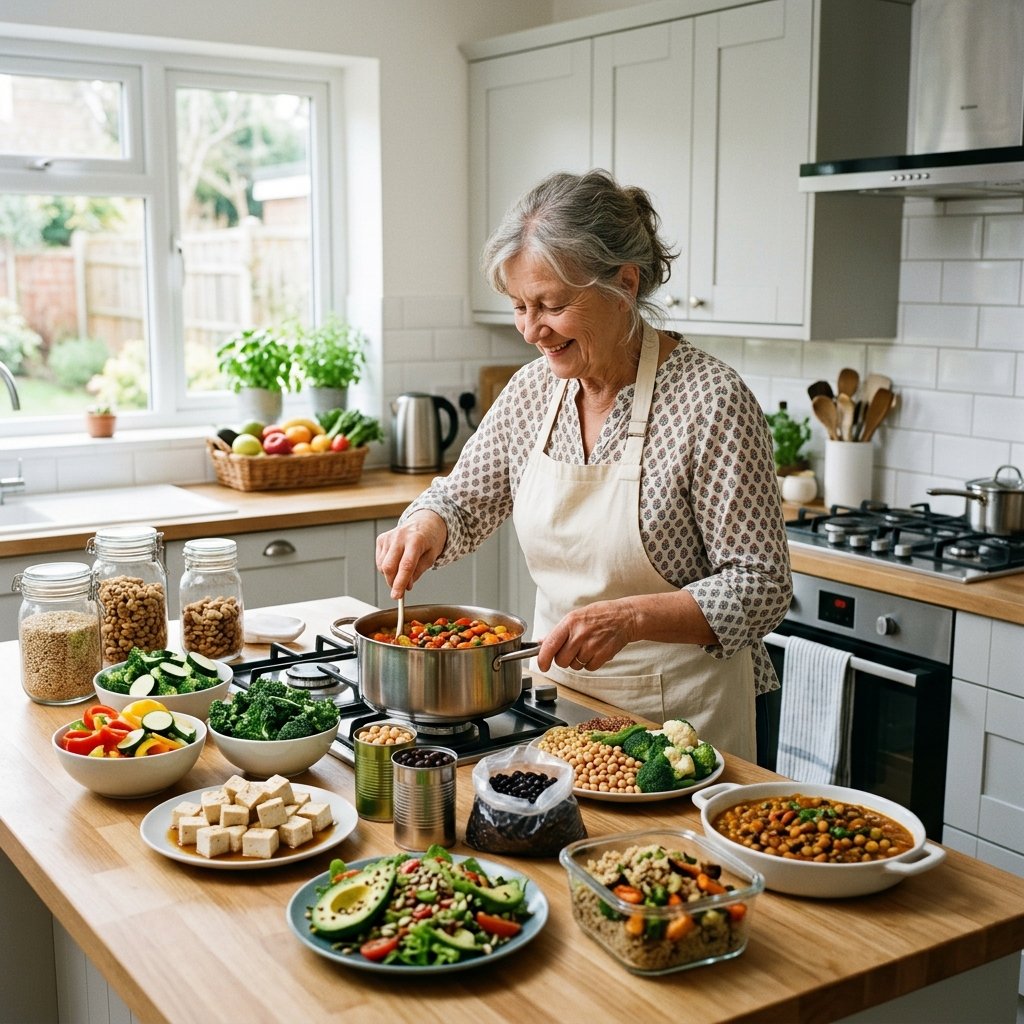
Having the right tools and ingredients makes cooking low-sodium, high-protein vegan meals faster and simpler. These basics help you prepare nutritious food without spending hours in the kitchen.
Convenient Kitchen Tools
A food processor saves time when chopping vegetables and making sauces. You can use it to blend tofu into creamy spreads or pulse nuts into protein-rich toppings.
A slow cooker lets you prepare beans and lentils with minimal effort. Just add your ingredients in the morning, and dinner is ready by evening. This works great for batch cooking meals you can eat throughout the week.
Measuring spoons help you control sodium in your recipes. Since many packaged foods contain hidden salt, measuring lets you know exactly how much you're using.
A rice cooker makes preparing quinoa, brown rice, and other grains foolproof. You simply add the grain and water, press start, and it turns off automatically when done.
Storage containers keep prepped ingredients fresh for several days. Glass containers work best because they don't absorb odors and you can see what's inside.
Flavorful Low-Sodium Ingredients
Fresh herbs like basil, cilantro, and parsley add flavor without any sodium. You can grow them on a windowsill or buy them at the grocery store.
Garlic and onion powder (not garlic salt or onion salt) give your meals depth. These powders contain no sodium but provide the taste you want.
Citrus juice from lemons and limes brightens dishes naturally. A squeeze of fresh juice makes beans, tofu, and vegetables taste better without adding salt.
Nutritional yeast provides a cheesy flavor plus vitamin B12, which many vegans need. Two tablespoons contain about 8 grams of protein and zero sodium.
Low-sodium vegetable broth helps you cook grains and soups with more taste. Check labels carefully since regular broth can have 500-900mg of sodium per cup, while low-sodium versions have under 140mg.
Spices like cumin, turmeric, and paprika add warmth and color to your cooking. These contain no sodium and offer health benefits too.