15 High Protein Meals for Women Over 50 to Prevent Muscle Loss: Delicious Recipes That Build Strength (25g+ Protein Each)

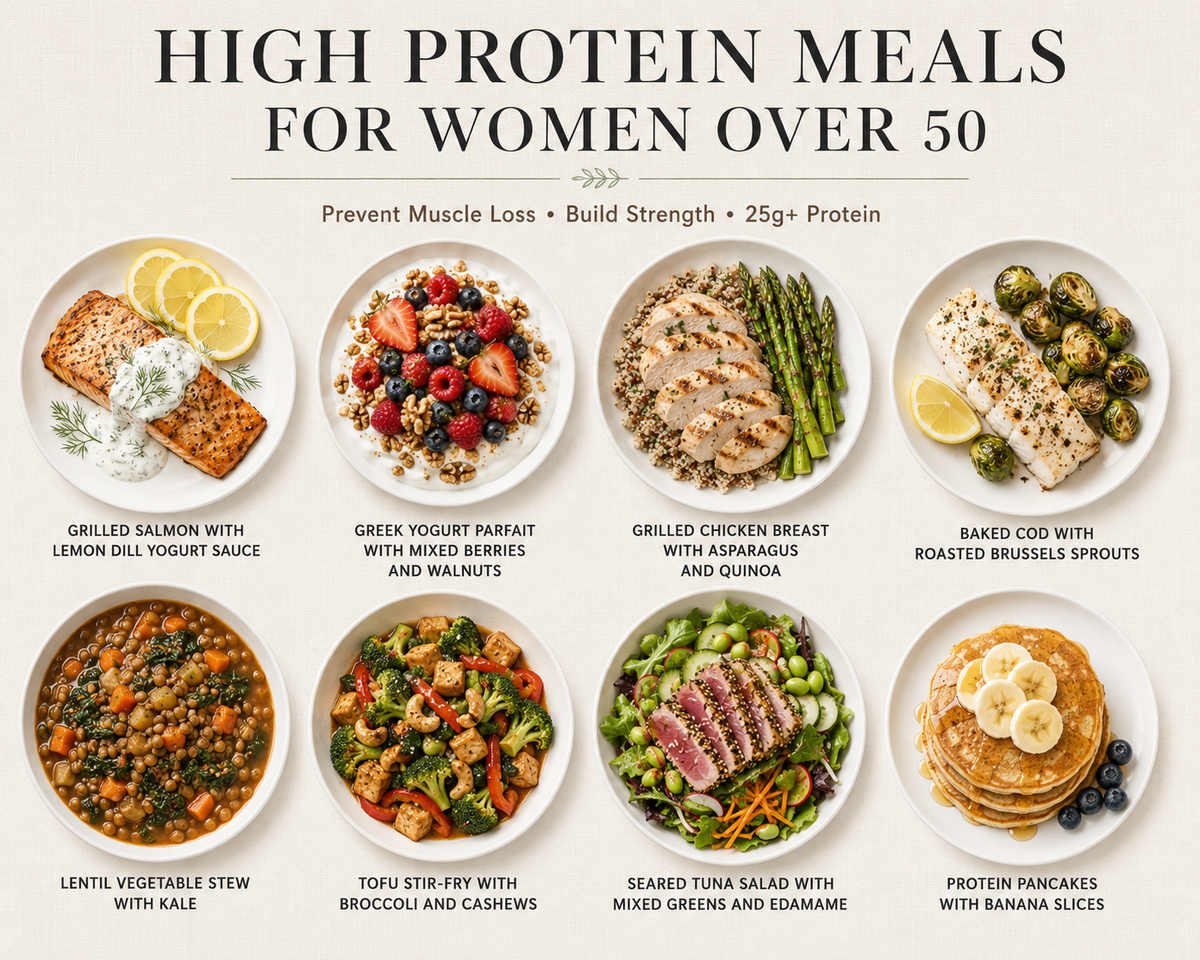
As you get older, your body needs more protein to stay strong and healthy. After age 50, women naturally start to lose muscle mass, which can make everyday activities harder and slow down metabolism. Eating enough protein each day helps protect your muscles, keeps your bones strong, and supports your overall health as you age.
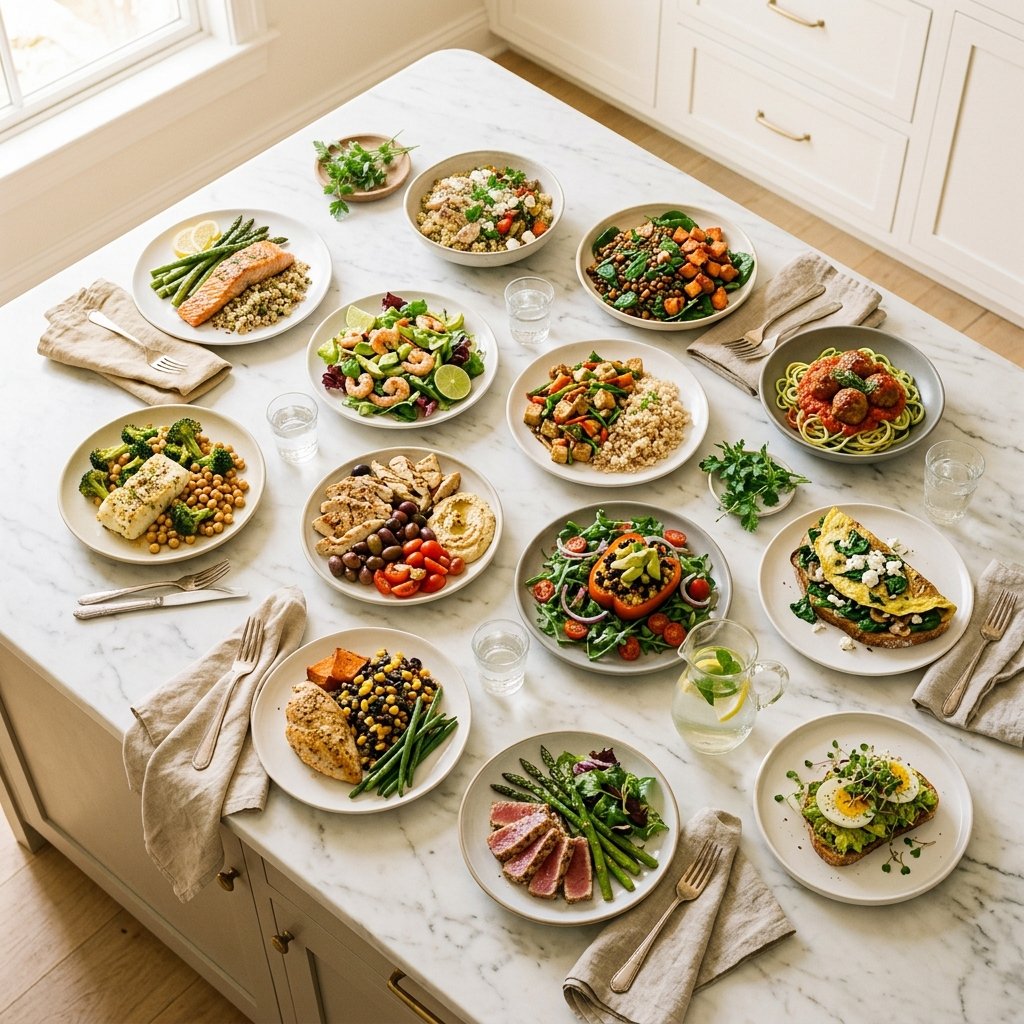
The meals in this guide focus on getting 25 to 35 grams of protein per serving. You'll find options for breakfast, lunch, and dinner that are easy to make and taste great. From quick breakfast parfaits to hearty stews and grilled proteins, these recipes fit into your daily routine without requiring special ingredients or cooking skills.
Grilled Salmon with Lemon-Dill Yogurt
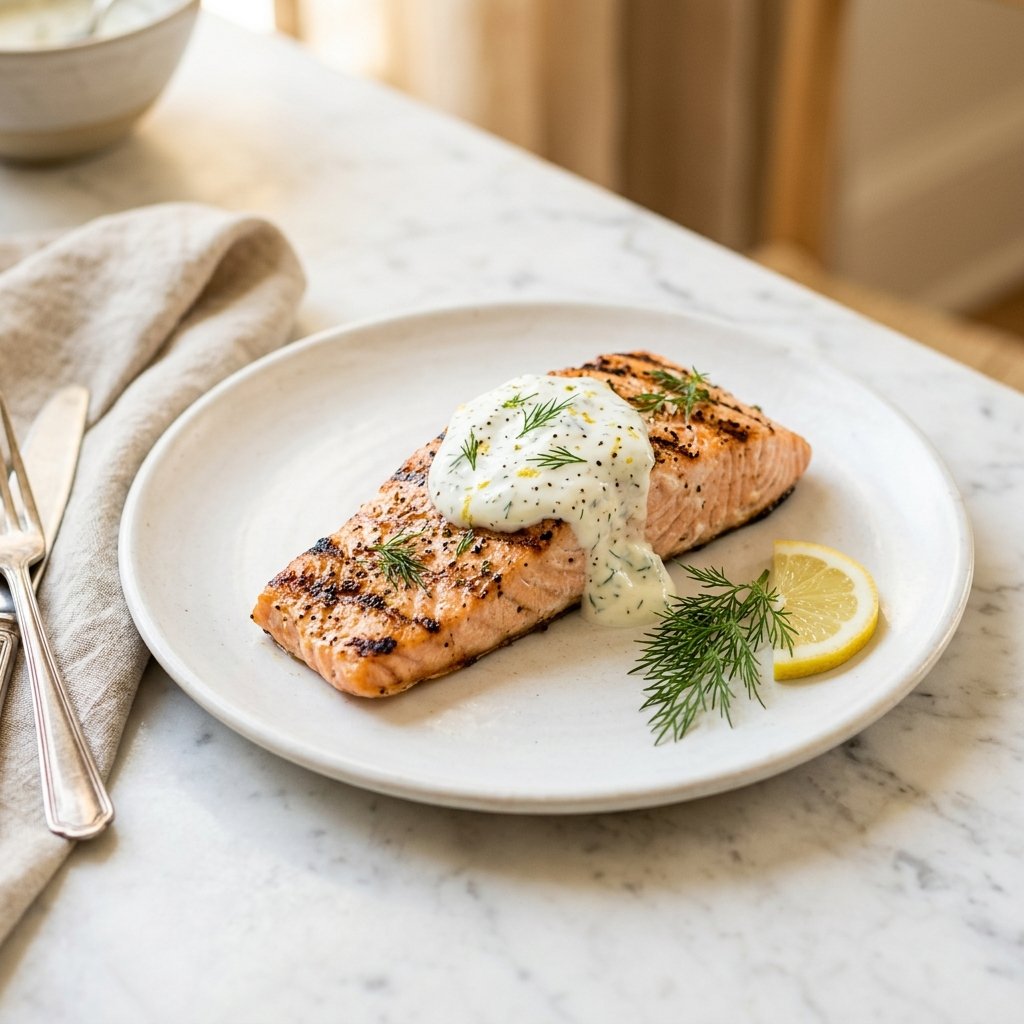
Grilled Salmon with Lemon-Dill Yogurt (385 calories | 42g protein per serving)
Salmon is one of the best fish choices for protein, and this recipe delivers over 40 grams per serving. The lemon-dill yogurt adds extra protein while keeping the dish light and fresh. This meal is perfect for weeknight dinners when you want something healthy but don't have a lot of time. The combination of grilled fish and creamy yogurt sauce makes it satisfying enough to keep you full for hours.
Ingredients
- 6 oz salmon fillet
- 1 teaspoon olive oil
- 1/4 teaspoon salt
- 1/4 teaspoon black pepper
- 1/2 cup plain Greek yogurt
- 1 tablespoon fresh lemon juice
- 1 tablespoon fresh dill, chopped
- 1 clove garlic, minced
- 1/4 teaspoon lemon zest
Instructions
- Heat your grill or grill pan to medium-high heat, around 400°F.
- Brush the salmon with olive oil and season both sides with salt and pepper.
- Place the salmon skin-side down on the grill and cook for 4-5 minutes without moving it.
- Flip the salmon carefully and grill for another 3-4 minutes until it flakes easily with a fork.
- While the salmon cooks, mix the Greek yogurt, lemon juice, dill, garlic, and lemon zest in a small bowl.
- Remove the salmon from the grill and let it rest for 2 minutes.
- Serve the salmon with a generous spoonful of lemon-dill yogurt on top.
Swap fresh dill for dried dill if needed, using 1 teaspoon instead of 1 tablespoon.
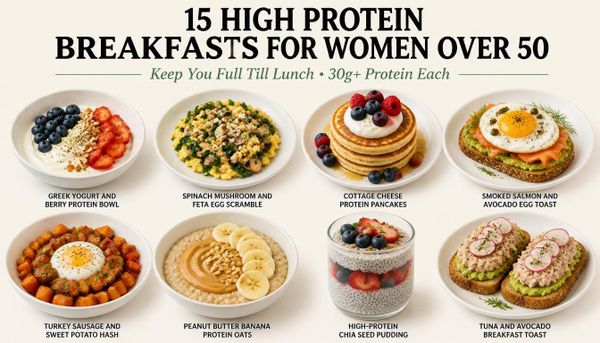
Greek yogurt parfait with mixed berries and walnuts
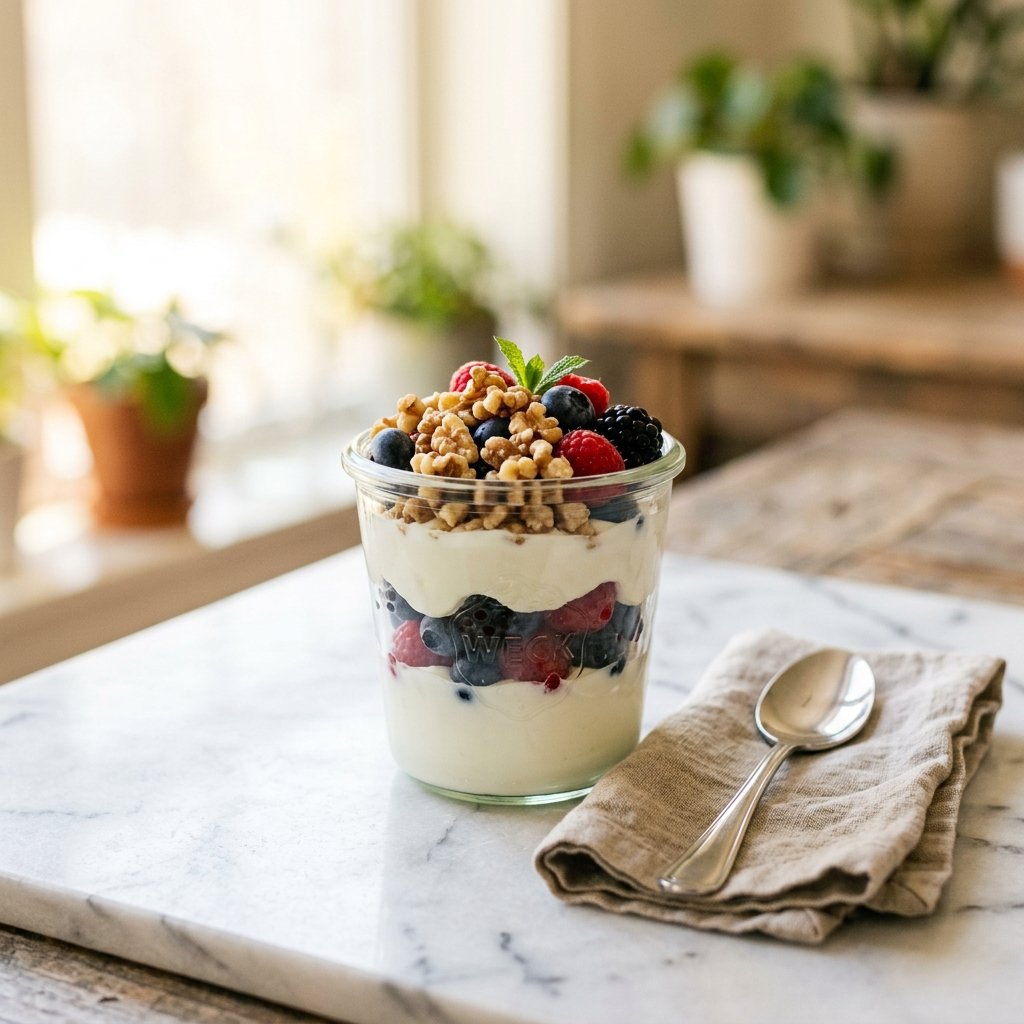
Greek yogurt parfait with mixed berries and walnuts (280 calories | 22g protein per serving)
Greek yogurt packs twice the protein of regular yogurt, making it perfect for preserving muscle as you age. This parfait combines creamy yogurt with antioxidant-rich berries and crunchy walnuts for healthy fats. It works great as a quick breakfast or post-workout snack that keeps you full for hours. You can make it in under five minutes with no cooking required.
Ingredients
- 1 cup plain Greek yogurt (2% or full-fat)
- 1/2 cup mixed berries (blueberries, strawberries, raspberries)
- 2 tablespoons chopped walnuts
- 1 teaspoon honey
- 1/4 teaspoon vanilla extract
Instructions
- Spoon half of the Greek yogurt into a bowl or glass.
- Add half of the mixed berries on top of the yogurt layer.
- Sprinkle 1 tablespoon of chopped walnuts over the berries.
- Add the remaining Greek yogurt as a second layer.
- Top with the rest of the berries and remaining walnuts.
- Drizzle honey over the top and add vanilla extract if desired.
Add a tablespoon of ground flaxseed or chia seeds to boost your omega-3 intake even more.
Turkey and spinach omelet with feta
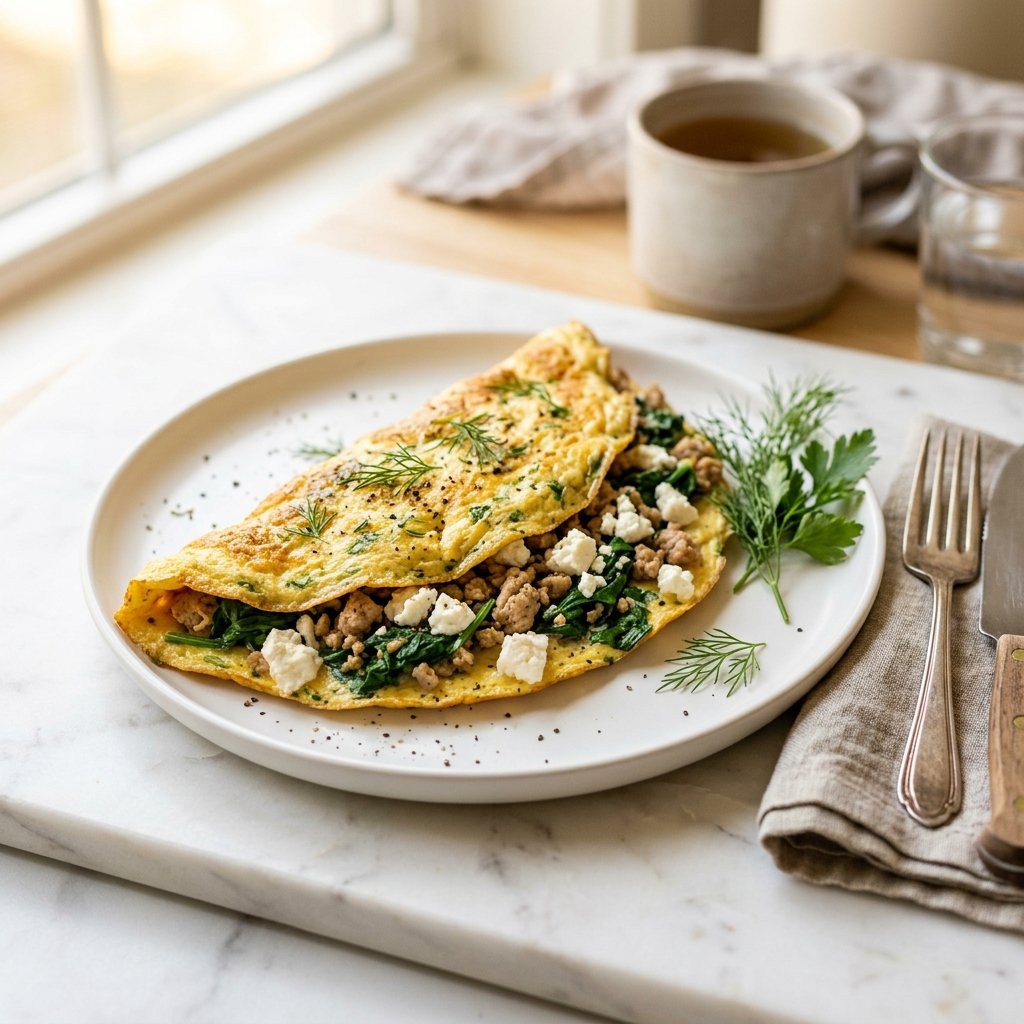
This protein-packed omelet combines lean ground turkey, fresh spinach, and creamy feta cheese for a filling breakfast or lunch. Each serving delivers approximately 380 calories and 35g of protein. It's perfect for women over 50 who want to start their day with a muscle-building meal.
Ingredients
- 3 large eggs
- 3 oz ground turkey (93% lean)
- 1 cup fresh spinach, chopped
- 2 tbsp feta cheese, crumbled
- 1 tbsp olive oil
- 1/4 tsp garlic powder
- Salt and pepper to taste
Instructions
- Heat half the olive oil in a non-stick skillet over medium heat and cook the ground turkey for 5-6 minutes until browned and cooked through.
- Add the chopped spinach to the turkey and cook for 1-2 minutes until wilted, then transfer everything to a plate.
- Crack the eggs into a bowl, add garlic powder, salt, and pepper, then whisk until well combined.
- Add the remaining olive oil to the same skillet over medium-low heat and pour in the beaten eggs.
- Let the eggs cook for 2 minutes until the edges start to set, then add the turkey and spinach mixture to one half of the omelet.
- Sprinkle the crumbled feta cheese over the turkey and spinach.
- Fold the empty half of the omelet over the filling and cook for another 1-2 minutes until the eggs are fully set.
- Slide the omelet onto a plate and serve immediately.
Try adding diced tomatoes or mushrooms for extra vegetables and nutrients.
Quinoa and black bean salad with avocado
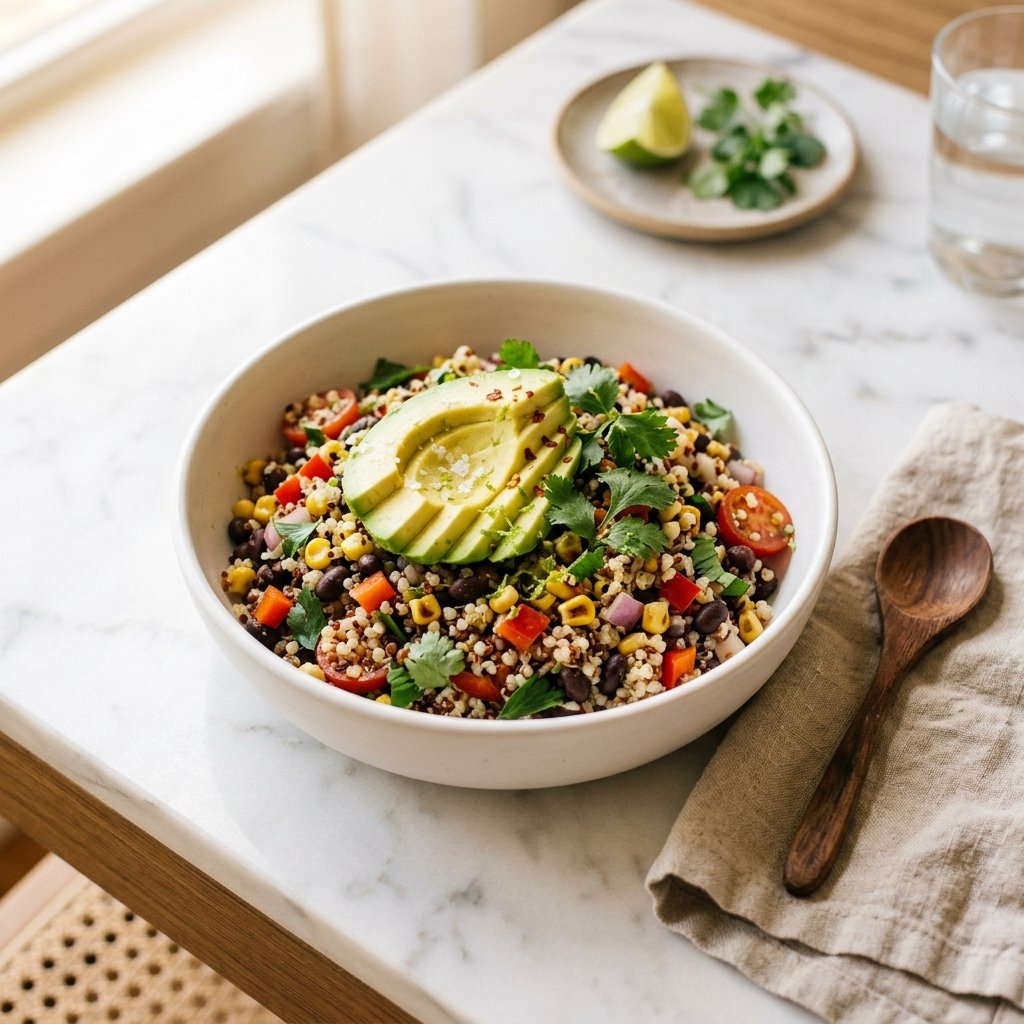
This colorful salad combines quinoa and black beans to deliver about 380 calories and 16 grams of protein per serving. It's packed with complete protein from the quinoa and fiber-rich black beans that help keep you full. The creamy avocado adds healthy fats that support nutrient absorption and joint health.
Ingredients
- 1 cup uncooked quinoa
- 2 cups water
- 1 can (15 oz) black beans, drained and rinsed
- 1 ripe avocado, diced
- 1 cup cherry tomatoes, halved
- 1/4 cup red onion, finely diced
- 1/4 cup fresh cilantro, chopped
- 2 tablespoons lime juice
- 2 tablespoons olive oil
- 1/2 teaspoon cumin
- 1/4 teaspoon salt
- 1/4 teaspoon black pepper
Instructions
- Rinse the quinoa under cold water in a fine-mesh strainer for about 30 seconds.
- Add quinoa and water to a medium pot and bring to a boil over high heat.
- Reduce heat to low, cover, and simmer for 15 minutes until water is absorbed.
- Remove from heat and let it sit covered for 5 minutes, then fluff with a fork.
- Transfer quinoa to a large bowl and let it cool for 10 minutes.
- Add black beans, diced avocado, cherry tomatoes, red onion, and cilantro to the bowl.
- In a small bowl, whisk together lime juice, olive oil, cumin, salt, and pepper.
- Pour the dressing over the salad and gently toss everything together.
- Serve immediately or refrigerate for up to 3 days in an airtight container.
Add grilled chicken or hard-boiled eggs on top to boost the protein content even more.
Baked Cod with Roasted Brussels Sprouts
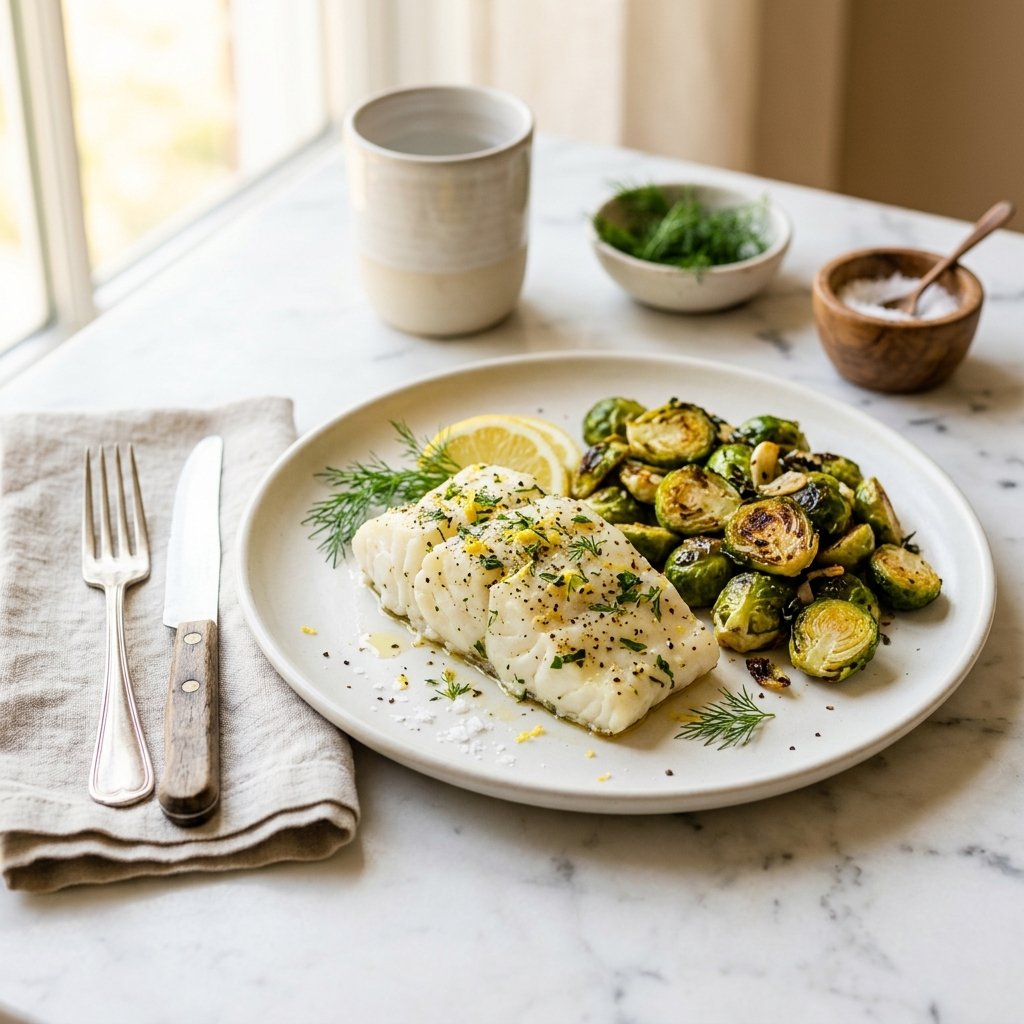
Baked Cod with Roasted Brussels Sprouts (320 calories | 38g protein per serving)
This simple sheet pan dinner combines flaky white fish with crispy vegetables for a complete high-protein meal. Cod is naturally low in fat and packed with protein, making it perfect for maintaining muscle mass as you age. The Brussels sprouts add fiber and vitamins while keeping the calorie count reasonable. This recipe takes less than 30 minutes from start to finish, which makes it ideal for busy weeknights.
Ingredients
- 6 oz cod fillet
- 2 cups Brussels sprouts, halved
- 1 tablespoon olive oil
- 1/2 teaspoon garlic powder
- 1/4 teaspoon black pepper
- 1/4 teaspoon salt
- 1/2 lemon, sliced
- 1 teaspoon dried herbs (like thyme or parsley)
Instructions
- Preheat your oven to 400°F and line a baking sheet with parchment paper.
- Toss the halved Brussels sprouts with half the olive oil, salt, and pepper in a bowl.
- Spread the Brussels sprouts on one side of the baking sheet and roast for 10 minutes.
- While the sprouts cook, pat the cod dry with paper towels and brush it with the remaining olive oil.
- Season the cod with garlic powder, dried herbs, salt, and pepper.
- Remove the baking sheet from the oven and add the cod to the empty side.
- Place lemon slices on top of the fish and return the pan to the oven.
- Bake for 12-15 minutes until the fish flakes easily with a fork and the Brussels sprouts are golden brown.
- Let the fish rest for 2 minutes before serving.
Swap cod for salmon or halibut if you want more omega-3 fatty acids in your meal.
Cottage Cheese with Pineapple and Chia Seeds
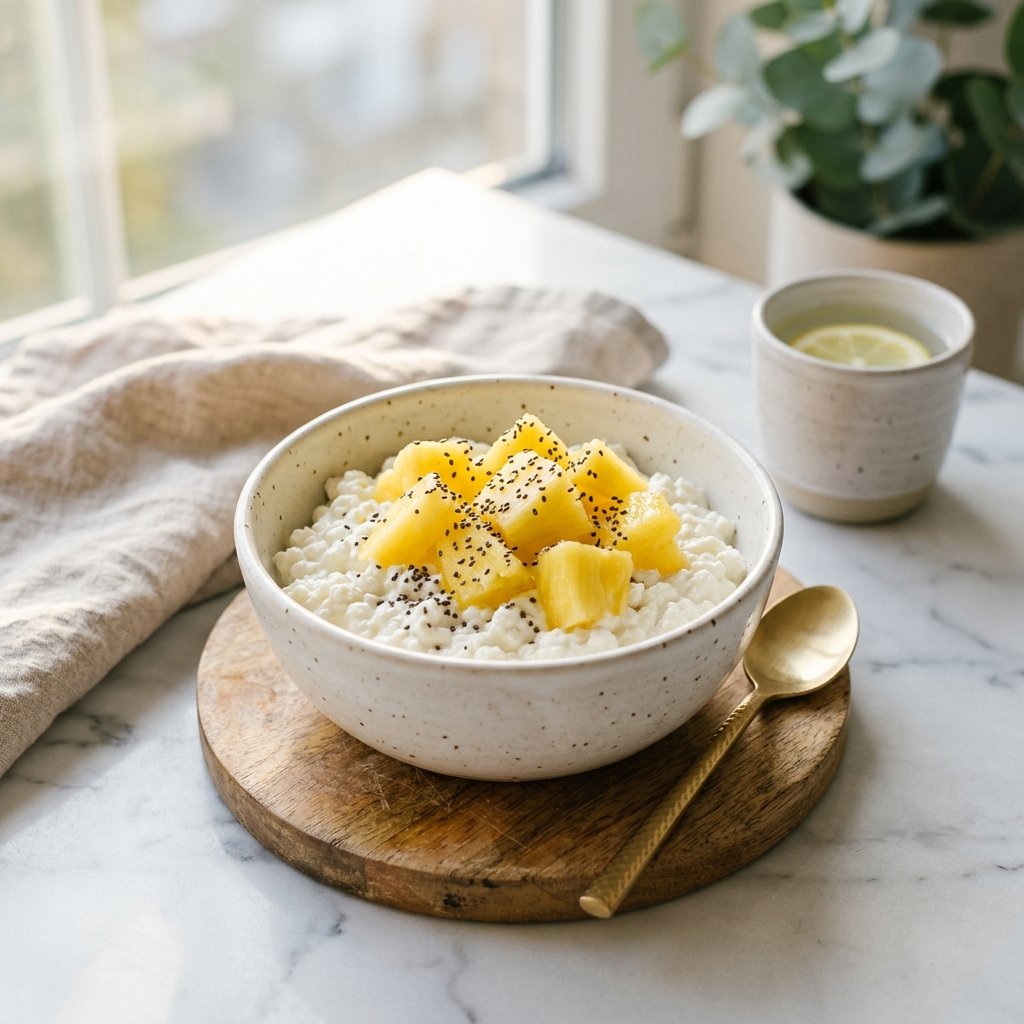
Cottage Cheese with Pineapple and Chia Seeds (220 calories | 24g protein per serving)
This simple recipe combines creamy cottage cheese with sweet pineapple chunks and fiber-rich chia seeds for a protein-packed snack or breakfast. The cottage cheese provides slow-digesting casein protein that helps protect your muscles throughout the day. Chia seeds add omega-3 fatty acids and extra fiber to keep you satisfied. This meal takes just two minutes to prepare and works perfectly as a quick breakfast or afternoon snack.
Ingredients
- 1 cup low-fat cottage cheese
- ½ cup fresh or canned pineapple chunks (drained if canned)
- 1 tablespoon chia seeds
- ½ teaspoon vanilla extract (optional)
- 1 teaspoon honey (optional)
Instructions
- Scoop the cottage cheese into a bowl.
- Add the pineapple chunks on top of the cottage cheese.
- Sprinkle the chia seeds evenly over the mixture.
- Add vanilla extract and honey if you want extra sweetness.
- Stir everything together or enjoy it layered.
- Let it sit for 5 minutes if you want the chia seeds to soften and expand.
Try swapping pineapple for berries or sliced peaches when you want a different flavor.
Lentil and vegetable stew with kale
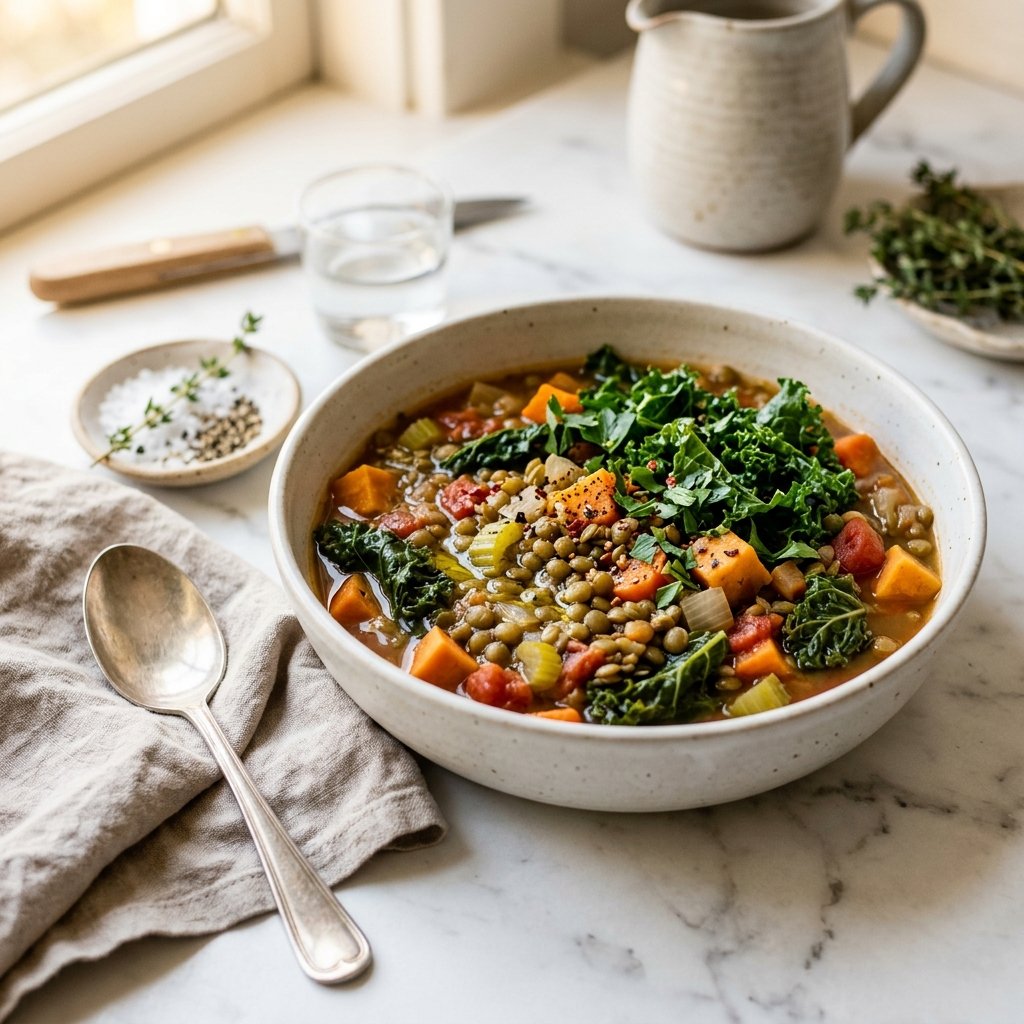
Lentil and vegetable stew with kale (320 calories | 18g protein per serving)
This hearty stew uses lentils as its main protein source, making it perfect for a plant-based high-protein meal. Lentils pack both protein and fiber to help you stay full and support muscle health. The kale adds extra vitamins and minerals that your body needs. This recipe is great for meal prep because it tastes even better the next day.
Ingredients
- 1 cup dried green or brown lentils, rinsed
- 4 cups low-sodium vegetable broth
- 1 medium onion, diced
- 3 cloves garlic, minced
- 2 medium carrots, chopped
- 2 celery stalks, chopped
- 1 can (14 oz) diced tomatoes
- 3 cups chopped kale, stems removed
- 1 teaspoon dried thyme
- 1 teaspoon cumin
- 2 tablespoons olive oil
- Salt and pepper to taste
Instructions
- Heat the olive oil in a large pot over medium heat.
- Add the onion, carrots, and celery, then cook for 5 minutes until they start to soften.
- Stir in the garlic, thyme, and cumin, and cook for 1 more minute.
- Pour in the vegetable broth, lentils, and diced tomatoes with their juice.
- Bring the mixture to a boil, then reduce heat to low and simmer for 25-30 minutes until lentils are tender.
- Add the chopped kale and stir it into the stew.
- Cook for another 5 minutes until the kale wilts and becomes tender.
- Season with salt and pepper to your taste.
Add a squeeze of lemon juice before serving to brighten the flavors and help your body absorb more iron from the lentils.
Grilled chicken breast with asparagus and quinoa
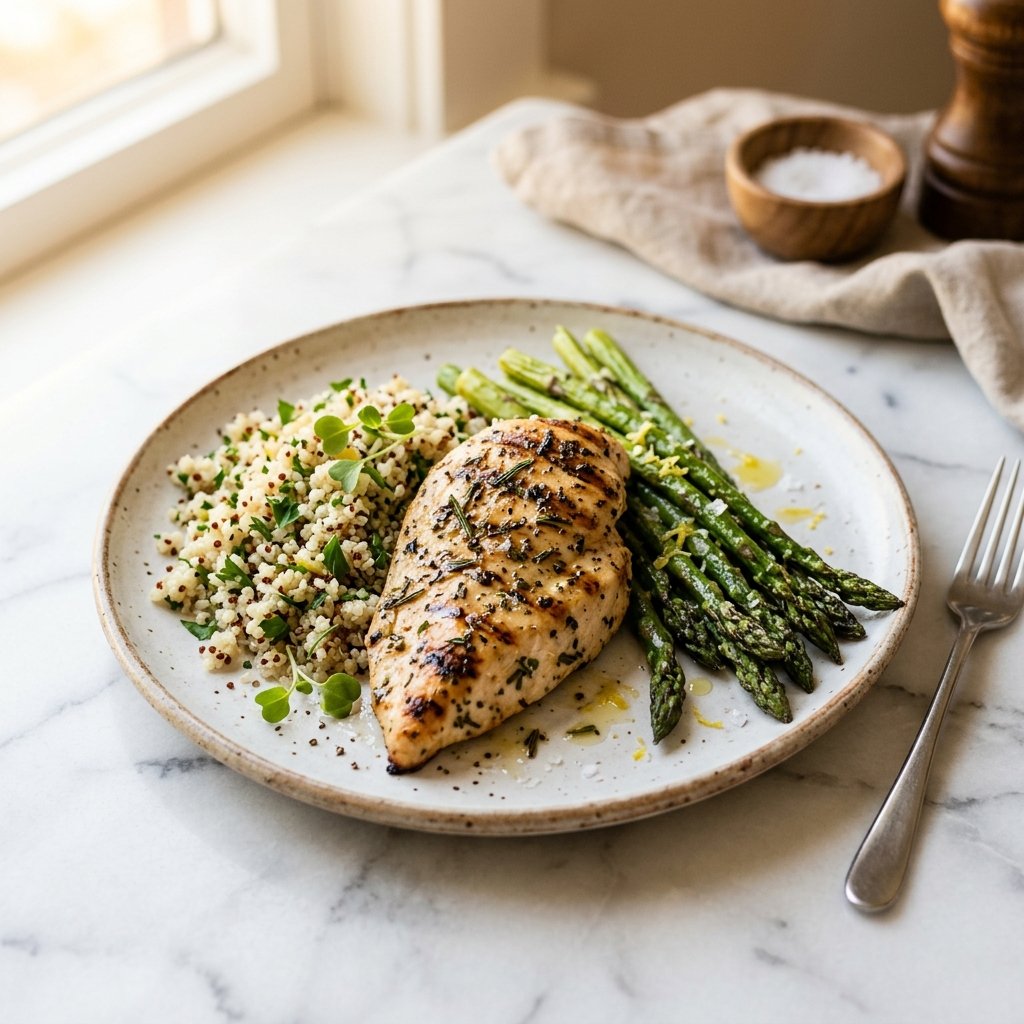
Grilled Chicken Breast with Asparagus and Quinoa (420 calories | 45g protein per serving)
This meal combines lean grilled chicken with fiber-rich quinoa and fresh asparagus. You get a complete protein source that helps maintain muscle mass as you age. The quinoa adds extra plant-based protein while the asparagus provides important vitamins and minerals.
Ingredients
- 6 oz boneless, skinless chicken breast
- 1 cup fresh asparagus spears, trimmed
- 1/2 cup uncooked quinoa
- 1 cup low-sodium chicken broth
- 1 tablespoon olive oil
- 1 teaspoon garlic powder
- 1/2 teaspoon black pepper
- 1/2 teaspoon salt
- 1/2 lemon, juiced
- 1 teaspoon dried herbs (such as thyme or rosemary)
Instructions
- Rinse the quinoa under cold water and cook it in chicken broth according to package directions, usually about 15 minutes.
- While the quinoa cooks, season the chicken breast with garlic powder, black pepper, salt, and half of the dried herbs.
- Heat your grill or grill pan to medium-high heat (about 375°F).
- Brush the asparagus with half of the olive oil and season with remaining salt and herbs.
- Place the chicken on the grill and cook for 6-7 minutes per side until it reaches 165°F internal temperature.
- Add the asparagus to the grill during the last 5-6 minutes of cooking, turning occasionally until tender and slightly charred.
- Remove the chicken and let it rest for 5 minutes before slicing.
- Fluff the cooked quinoa with a fork and drizzle with remaining olive oil and lemon juice.
- Plate the quinoa, top with sliced chicken, and arrange the grilled asparagus on the side.
Try marinating the chicken in lemon juice and herbs for 30 minutes before grilling for extra flavor.
Smoked salmon and avocado on whole-grain toast
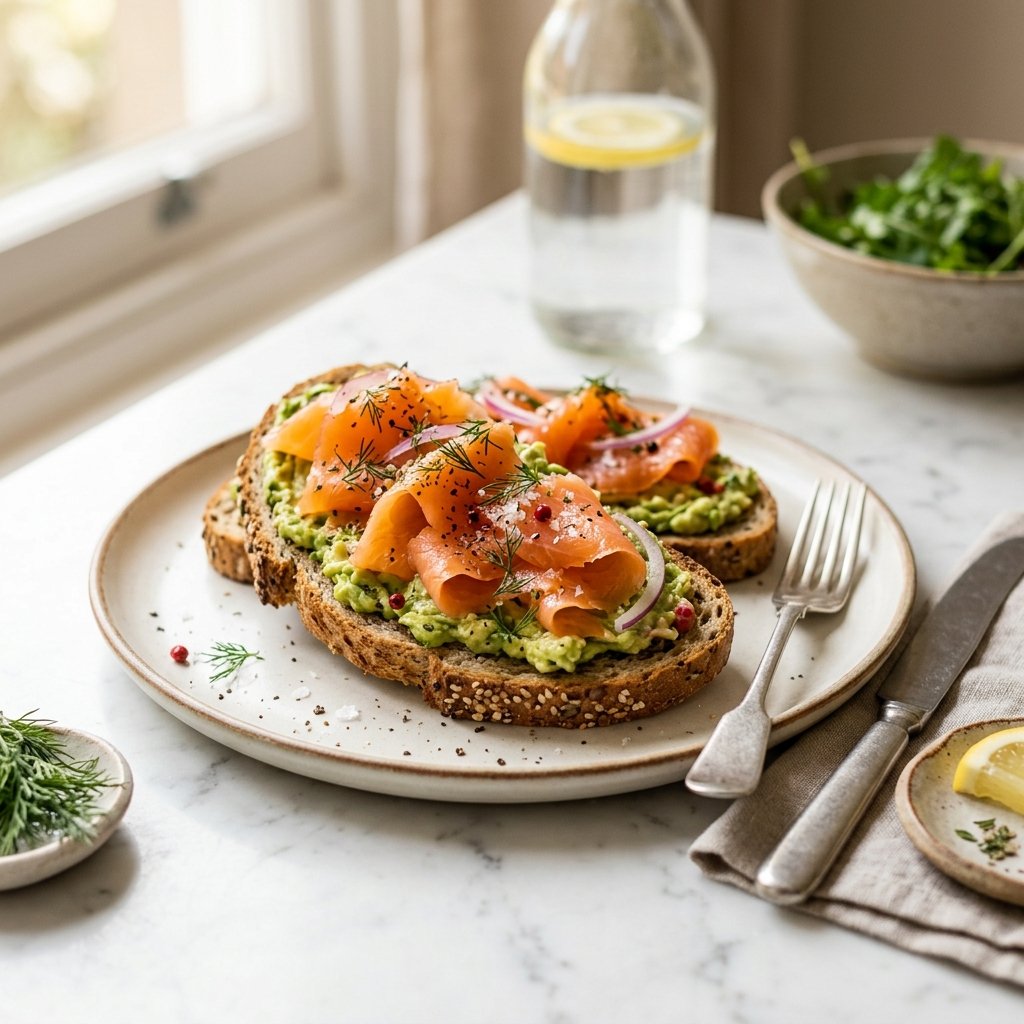
This simple breakfast or lunch delivers about 320 calories and 22 grams of protein per serving. Smoked salmon is packed with protein and omega-3 fatty acids that support muscle health. The healthy fats from avocado help your body absorb nutrients better.
Ingredients
- 2 slices whole-grain bread
- 3 ounces smoked salmon
- 1/2 ripe avocado
- 1 teaspoon lemon juice
- 1/4 teaspoon black pepper
- 1 tablespoon capers (optional)
- Fresh dill for garnish (optional)
Instructions
- Toast the whole-grain bread slices until they reach your preferred level of crispness.
- Mash the avocado in a small bowl and mix in the lemon juice and black pepper.
- Spread the mashed avocado evenly across both pieces of toast.
- Layer the smoked salmon on top of the avocado.
- Sprinkle capers and fresh dill on top if using.
- Serve immediately while the toast is still warm.
Add sliced cucumber or tomato on top for extra vegetables and crunch.
Tofu stir-fry with broccoli and cashews
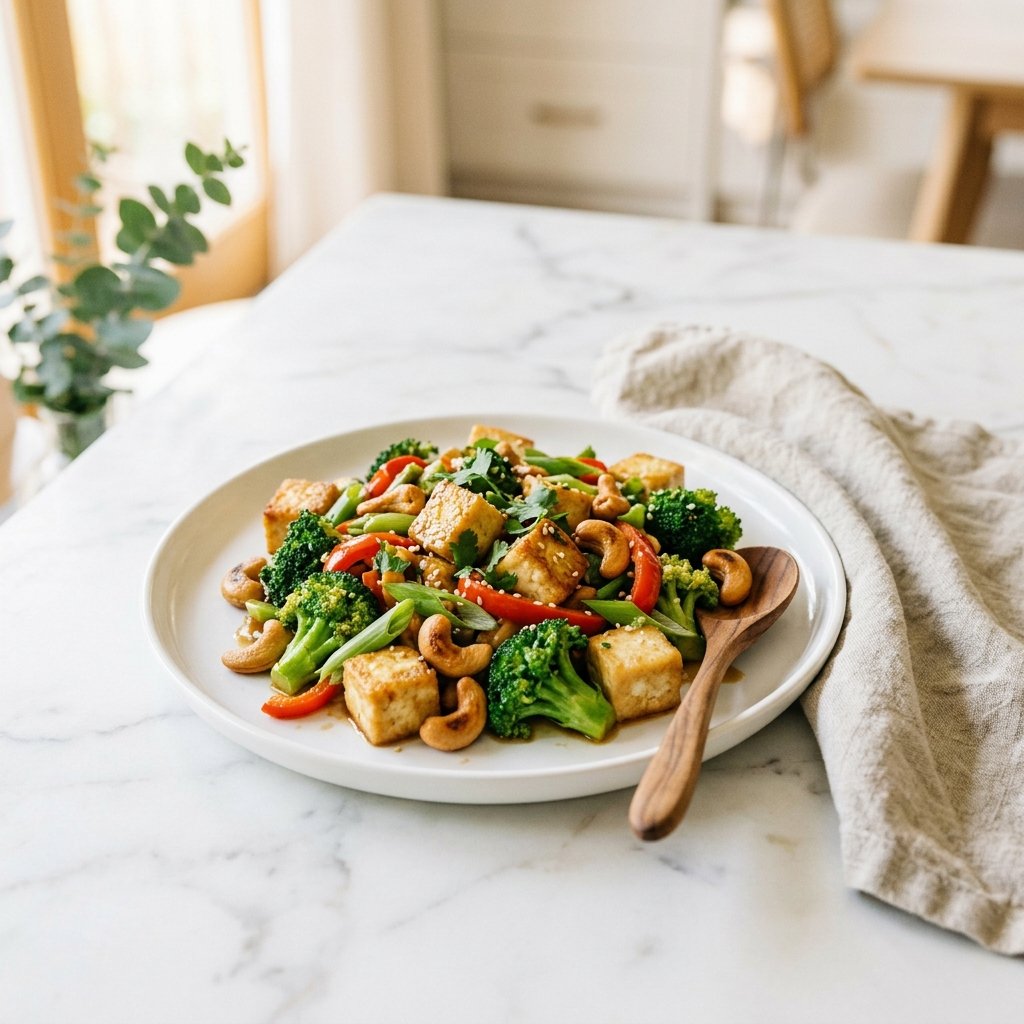
Tofu stir-fry with broccoli and cashews (320 calories | 22g protein per serving)
This colorful stir-fry packs a protein punch with firm tofu as the star ingredient. The cashews add extra protein and healthy fats while giving you a satisfying crunch. You can make this meal in under 30 minutes, which makes it perfect for busy weeknights. The broccoli provides fiber and vitamins that support bone health as you age.
Ingredients
- 14 oz firm tofu, pressed and cubed
- 3 cups broccoli florets
- 1/3 cup raw cashews
- 2 tablespoons soy sauce
- 1 tablespoon sesame oil
- 2 cloves garlic, minced
- 1 teaspoon fresh ginger, grated
- 1 tablespoon olive oil
- 1 tablespoon rice vinegar
- 1 teaspoon honey
- 2 green onions, sliced
Instructions
- Press your tofu between paper towels for 10 minutes to remove extra water, then cut it into bite-sized cubes.
- Heat olive oil in a large skillet or wok over medium-high heat.
- Add the tofu cubes and cook for 5-7 minutes, turning occasionally until golden brown on all sides.
- Remove the tofu from the pan and set it aside on a plate.
- Add the broccoli florets to the same pan and stir-fry for 4-5 minutes until bright green and slightly tender.
- Toss in the minced garlic and grated ginger, cooking for about 30 seconds until fragrant.
- Return the tofu to the pan along with the cashews.
- Mix the soy sauce, sesame oil, rice vinegar, and honey in a small bowl, then pour it over the stir-fry.
- Toss everything together and cook for 2 more minutes to coat evenly and heat through.
- Top with sliced green onions before serving.
Swap cashews for almonds or peanuts if you prefer a different flavor and texture.
Beef and Vegetable Kabobs with Chimichurri
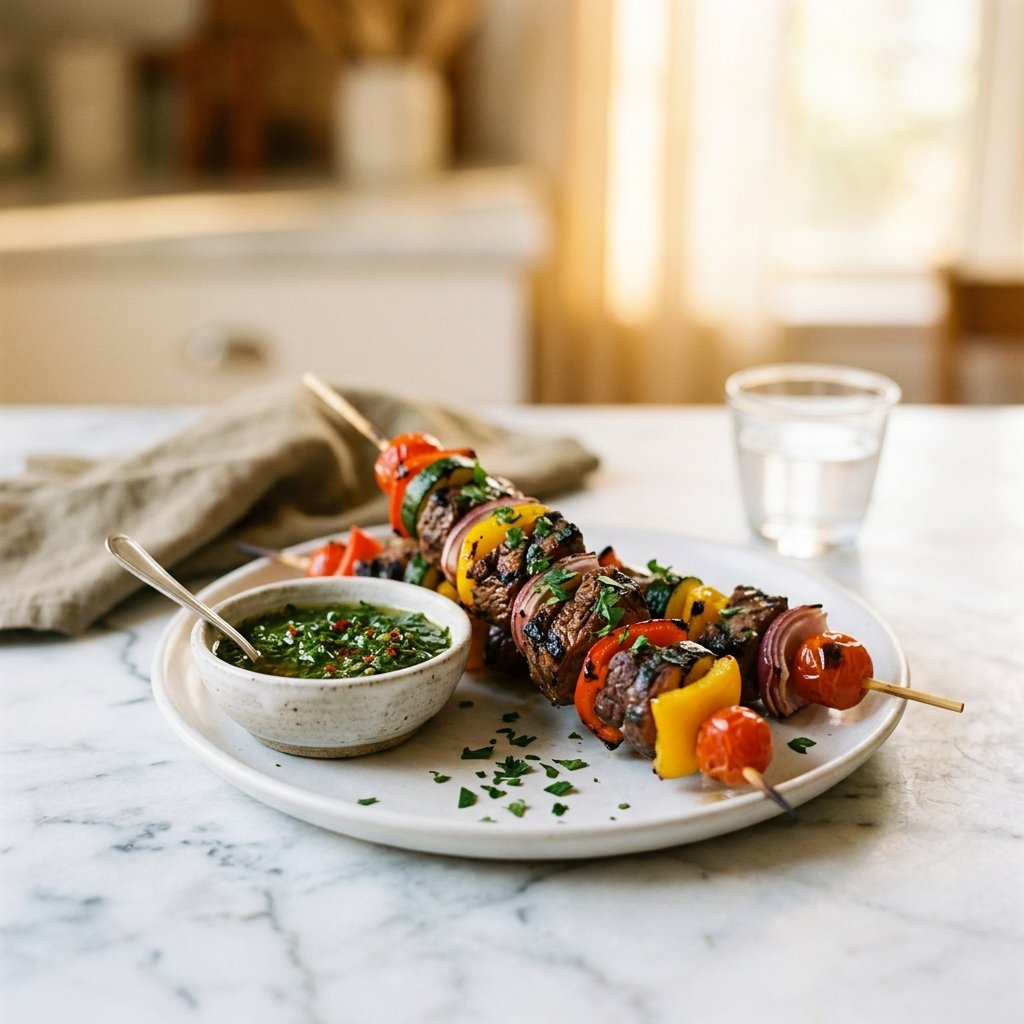
Beef and Vegetable Kabobs with Chimichurri (320 calories | 28g protein per serving)
These colorful kabobs pack lean beef and fresh vegetables onto skewers for an easy grilling option. The chimichurri sauce adds bright flavor while keeping calories low. This meal works great for summer cookouts or when you want something filling that doesn't heat up your kitchen.
Ingredients
- 1 pound sirloin steak, cut into 1-inch cubes
- 1 red bell pepper, cut into chunks
- 1 yellow bell pepper, cut into chunks
- 1 medium zucchini, sliced into rounds
- 8 cherry tomatoes
- 1 red onion, cut into chunks
- 2 tablespoons olive oil
- 1 teaspoon salt
- ½ teaspoon black pepper
- ½ cup fresh parsley, chopped
- ¼ cup fresh cilantro, chopped
- 3 cloves garlic, minced
- 2 tablespoons red wine vinegar
- ¼ cup olive oil (for chimichurri)
- ¼ teaspoon red pepper flakes
- 8 metal or wooden skewers
Instructions
- If using wooden skewers, soak them in water for 30 minutes to prevent burning.
- Mix the beef cubes with 2 tablespoons olive oil, salt, and black pepper in a bowl.
- Thread the beef and vegetables onto skewers, alternating between meat and vegetables.
- Preheat your grill to medium-high heat (about 400°F).
- Make the chimichurri by mixing parsley, cilantro, garlic, red wine vinegar, ¼ cup olive oil, and red pepper flakes in a small bowl.
- Grill the kabobs for 10-12 minutes, turning every 3 minutes until the beef reaches your desired doneness.
- Remove kabobs from the grill and let them rest for 3 minutes.
- Drizzle the chimichurri sauce over the kabobs before serving.
Use chicken breast instead of beef for a leaner option with similar protein content.
Chickpea and spinach curry with brown rice
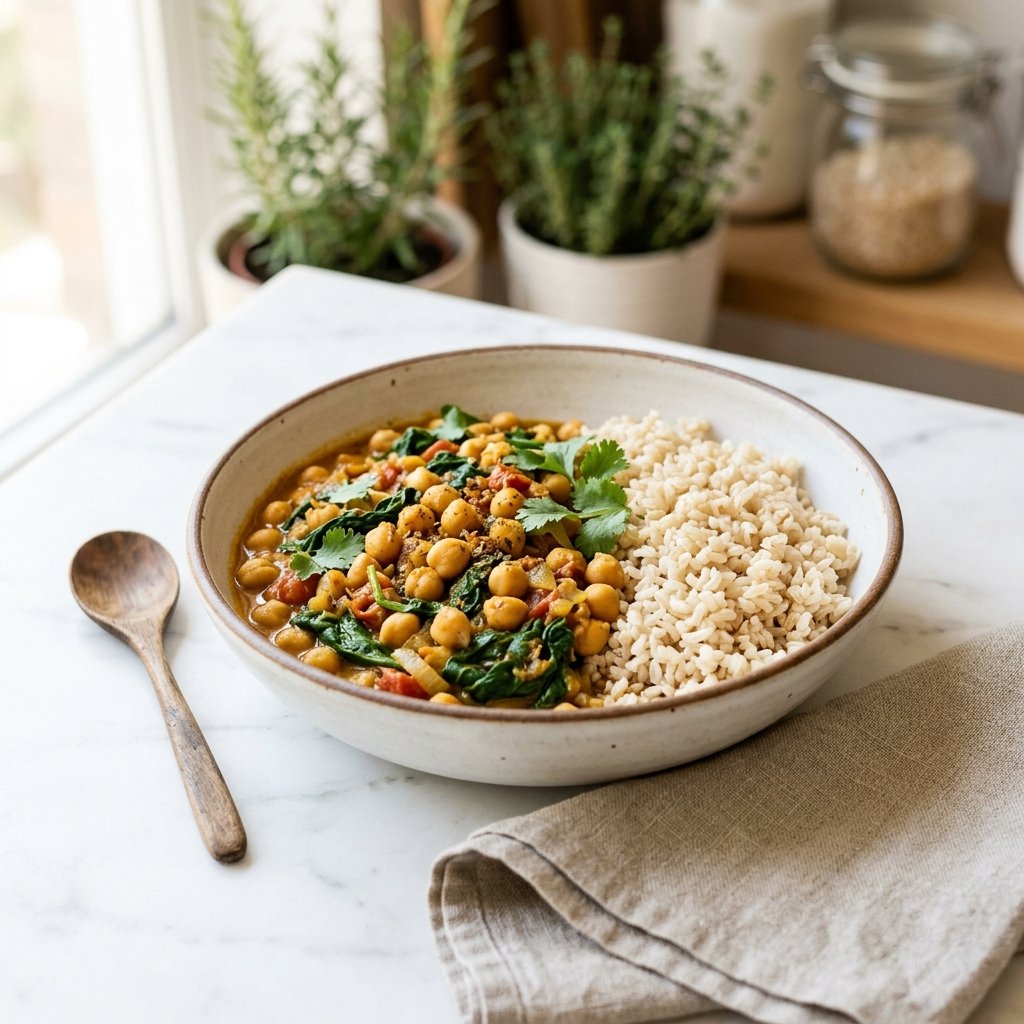
Chickpea and spinach curry with brown rice (380 calories | 16g protein per serving)
This warming curry combines chickpeas and spinach to deliver plant-based protein that helps preserve muscle mass. The chickpeas provide both protein and fiber, while brown rice adds extra nutrients and staying power. You can make a big batch on Sunday and enjoy quick, nutritious lunches all week long. The turmeric and spices also offer anti-inflammatory benefits that support recovery and joint health.
Ingredients
- 1 can (15 oz) chickpeas, drained and rinsed
- 3 cups fresh spinach
- 1 cup brown rice, uncooked
- 1 can (14 oz) diced tomatoes
- 1 can (14 oz) light coconut milk
- 1 medium onion, diced
- 3 cloves garlic, minced
- 1 tablespoon curry powder
- 1 teaspoon turmeric
- 1 teaspoon cumin
- 2 tablespoons olive oil
- Salt and pepper to taste
- 2 cups water for rice
Instructions
- Cook brown rice according to package directions with 2 cups water, which usually takes about 45 minutes.
- Heat olive oil in a large pan over medium heat and cook the diced onion for 5 minutes until soft.
- Add garlic, curry powder, turmeric, and cumin to the pan and stir for 30 seconds until fragrant.
- Pour in the diced tomatoes and coconut milk, then add the chickpeas and bring to a simmer.
- Let the curry cook for 10 minutes so the flavors blend together.
- Stir in the fresh spinach and cook for 2 minutes until it wilts down.
- Season with salt and pepper to your taste and serve over the cooked brown rice.
Add a dollop of Greek yogurt on top for extra protein and a cool, creamy contrast to the warm spices.
Edamame and Farro Salad with Cherry Tomatoes
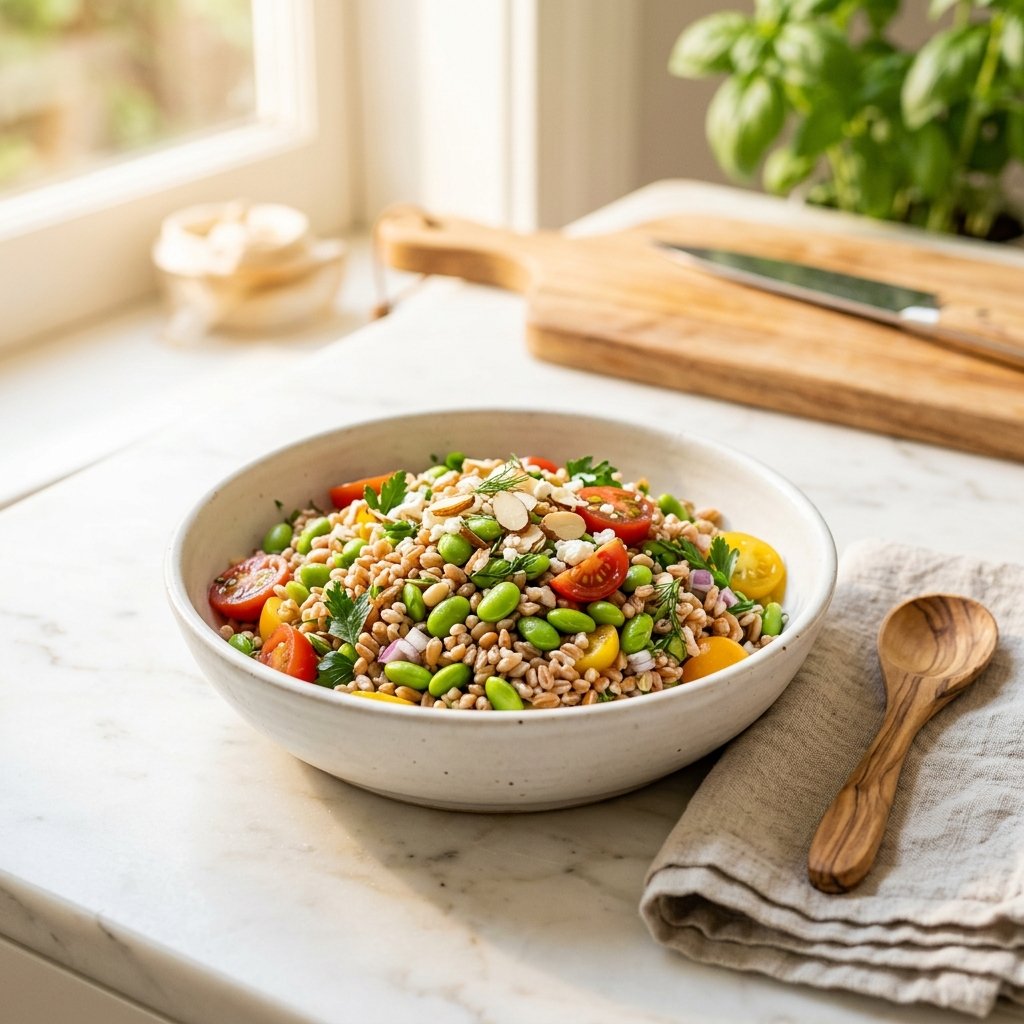
This colorful salad combines edamame and farro to deliver around 320 calories and 18g of protein per serving. The edamame provides plant-based protein while the farro adds fiber and a nutty, chewy texture. This meal works great for lunch prep or as a light dinner that keeps you satisfied.
Ingredients
- 1 cup cooked farro
- 1 cup shelled edamame (fresh or frozen)
- 1 cup cherry tomatoes, halved
- 2 tablespoons olive oil
- 1 tablespoon lemon juice
- 2 cups fresh spinach, roughly chopped
- ¼ cup crumbled feta cheese
- 2 tablespoons fresh basil, chopped
- ¼ teaspoon salt
- ¼ teaspoon black pepper
- 1 clove garlic, minced
Instructions
- Cook the farro according to package directions, then drain and let it cool to room temperature.
- If using frozen edamame, cook according to package instructions and drain well.
- In a large bowl, whisk together the olive oil, lemon juice, minced garlic, salt, and pepper.
- Add the cooled farro, edamame, cherry tomatoes, and spinach to the bowl.
- Toss everything together until the dressing coats all ingredients evenly.
- Sprinkle the feta cheese and fresh basil on top and gently mix.
- Serve immediately or refrigerate for up to 3 days in an airtight container.
Add grilled chicken or canned chickpeas for extra protein, or swap feta for goat cheese if you prefer a creamier taste.
Protein pancakes made with pea protein and banana
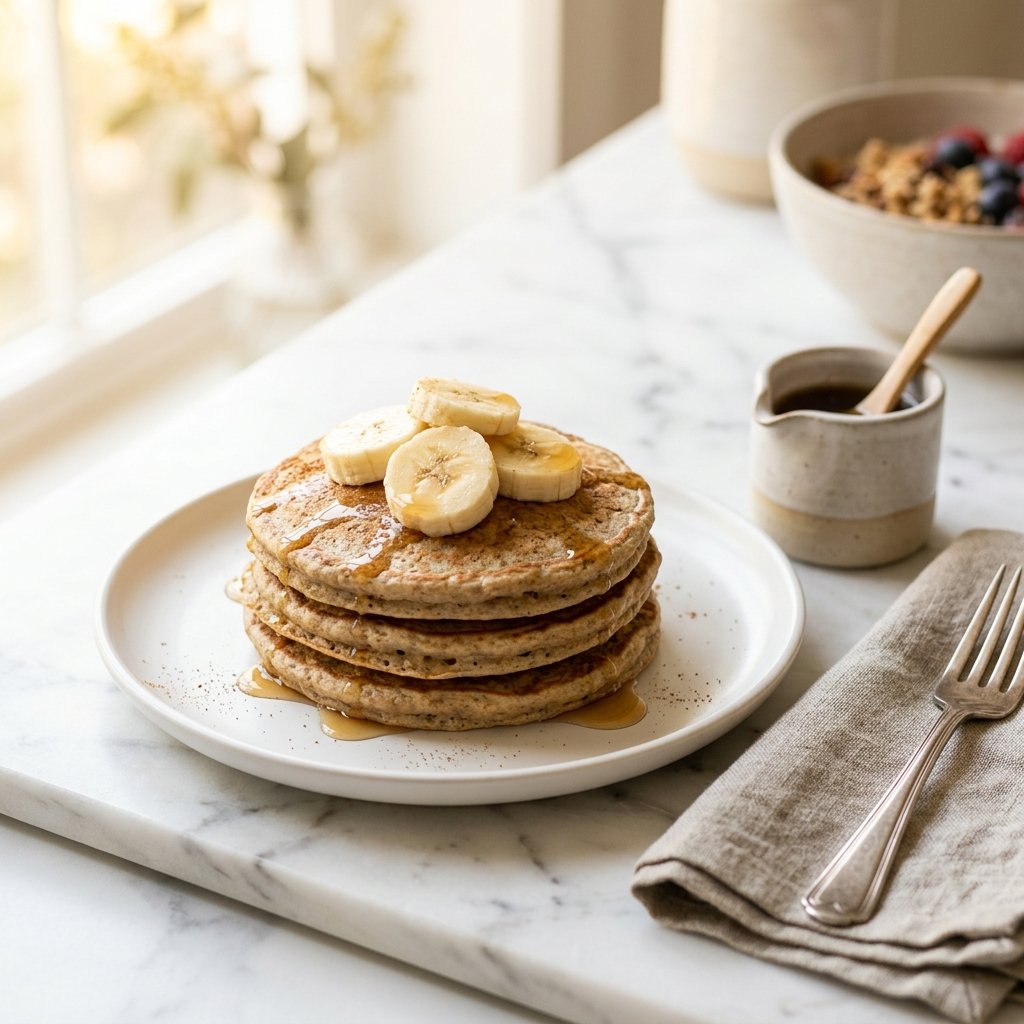
Protein Pancakes with Pea Protein and Banana (280 calories | 22g protein per serving)
These fluffy pancakes combine ripe banana with pea protein powder to create a breakfast that supports muscle maintenance. The banana adds natural sweetness and helps bind the batter without needing lots of eggs. You get a satisfying meal that tastes like a treat but delivers the protein your body needs. This recipe works great for weekend breakfasts or you can make a batch and freeze them for busy mornings.
Ingredients
- 1 ripe banana, mashed
- 2 eggs
- 1/4 cup pea protein powder
- 1/4 cup oat flour
- 1/2 teaspoon baking powder
- 1/4 teaspoon cinnamon
- 2 tablespoons unsweetened almond milk
- 1 teaspoon vanilla extract
- Cooking spray or 1 teaspoon coconut oil
Instructions
- Mash the banana in a medium bowl until smooth with only small lumps remaining.
- Add the eggs and whisk them together with the banana until well combined.
- Mix in the pea protein powder, oat flour, baking powder, and cinnamon until you have a thick batter.
- Stir in the almond milk and vanilla extract to thin the batter slightly.
- Heat a non-stick skillet over medium heat and coat it lightly with cooking spray or coconut oil.
- Pour 1/4 cup of batter onto the skillet for each pancake.
- Cook for 2-3 minutes until bubbles form on the surface and the edges look set.
- Flip carefully and cook for another 2 minutes until golden brown on both sides.
- Repeat with the remaining batter, making about 6 small pancakes total.
Top with Greek yogurt and fresh berries instead of syrup to add even more protein to your meal.
Seared Tuna Salad with Mixed Greens and Edamame
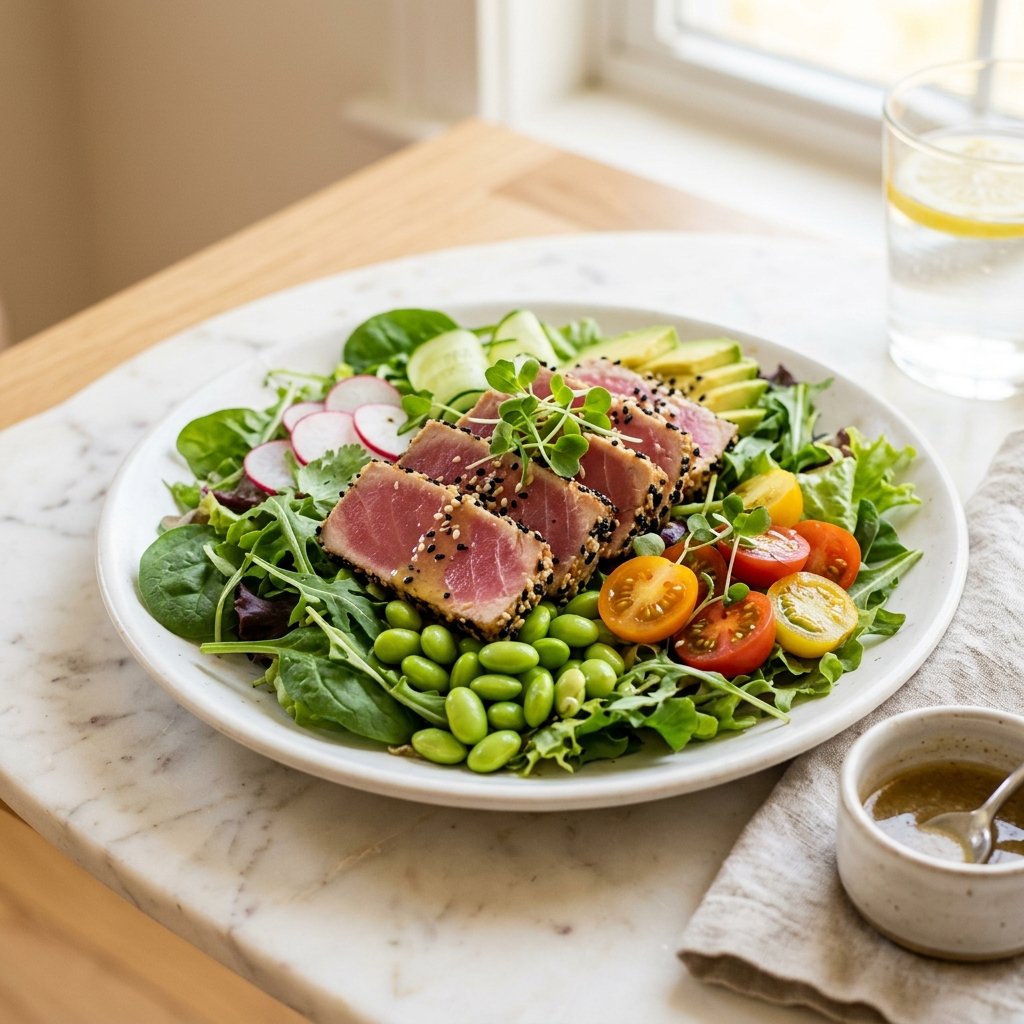
Seared Tuna Salad with Mixed Greens and Edamame (320 calories | 38g protein per serving)
This fresh and filling salad combines lean tuna steak with protein-rich edamame for a double dose of muscle-supporting nutrients. The quick searing method keeps the tuna tender while creating a flavorful crust on the outside. It's perfect for lunch or a light dinner when you want something nutritious without spending much time in the kitchen. The combination of complete protein from tuna and plant-based protein from edamame makes this meal especially beneficial for maintaining muscle mass.
Ingredients
- 5 oz fresh tuna steak
- 4 cups mixed salad greens
- 1/2 cup shelled edamame (cooked)
- 1/4 cup shredded carrots
- 1/4 cup sliced cucumber
- 1 tablespoon olive oil
- 1 tablespoon soy sauce
- 1 teaspoon sesame oil
- 1 teaspoon rice vinegar
- Salt and pepper to taste
- 1 teaspoon sesame seeds (optional)
Instructions
- Pat the tuna steak dry with paper towels and season both sides with salt and pepper.
- Heat olive oil in a skillet over high heat until it starts to shimmer.
- Place the tuna in the hot skillet and sear for 1-2 minutes per side for medium-rare, or longer if you prefer it more cooked.
- Remove the tuna from heat and let it rest for 2 minutes, then slice it into thin strips.
- In a large bowl, combine the mixed greens, edamame, carrots, and cucumber.
- In a small bowl, whisk together soy sauce, sesame oil, and rice vinegar to make the dressing.
- Pour the dressing over the salad and toss gently to coat everything evenly.
- Top the salad with sliced tuna and sprinkle with sesame seeds if using.
Swap fresh tuna for canned tuna to make this recipe more budget-friendly and convenient for meal prep.
Why Protein Needs Change After 50
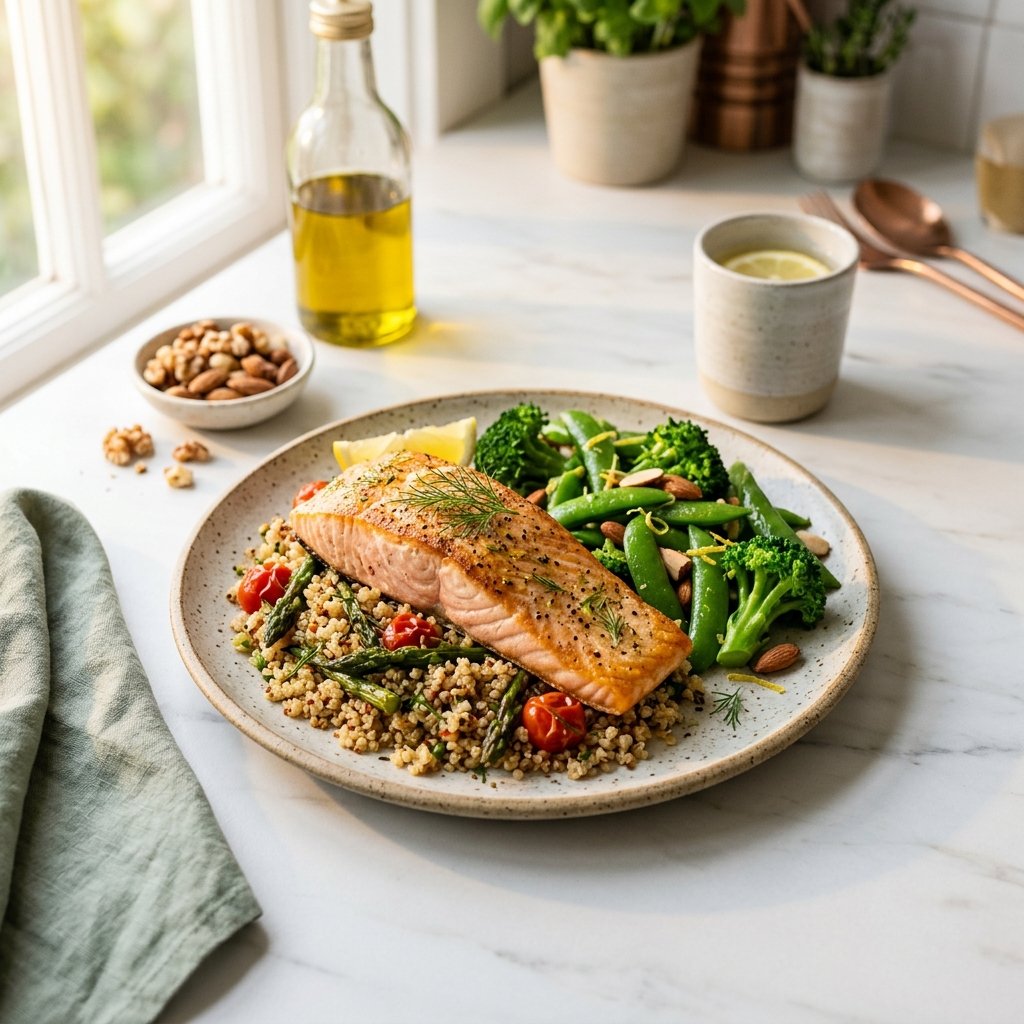
Your body processes and uses protein differently as you age, requiring you to eat more protein to maintain the same muscle mass you had in your younger years.
Age-Related Muscle Changes
After age 50, your body naturally loses muscle mass in a process called sarcopenia. You can lose 3-8% of your muscle mass each decade after 30, and this loss speeds up after you turn 60.
Your muscles become less responsive to protein as you age. This means your body doesn't build muscle as easily from the protein you eat compared to when you were younger.
Muscle loss affects your strength, balance, and metabolism. Less muscle mass means you burn fewer calories at rest and may feel weaker during daily activities like carrying groceries or climbing stairs.
Hormonal changes during menopause also contribute to muscle loss. Lower estrogen levels can speed up the rate at which you lose muscle tissue.
The Importance of Dietary Protein
Eating enough protein helps slow down muscle loss and supports muscle repair. Research shows that women over 50 need about 1.0-1.2 grams of protein per kilogram of body weight daily, which is higher than the standard recommendation for younger adults.
Protein does more than just build muscle. It supports your immune system, helps wounds heal faster, and keeps your bones strong.
Your body needs protein at every meal to maximize muscle building. Spreading your protein intake throughout the day works better than eating most of it in one sitting. Aim for 25-30 grams of protein per meal to give your muscles the best chance to stay strong.
Maximizing Muscle Health With Balanced Meals
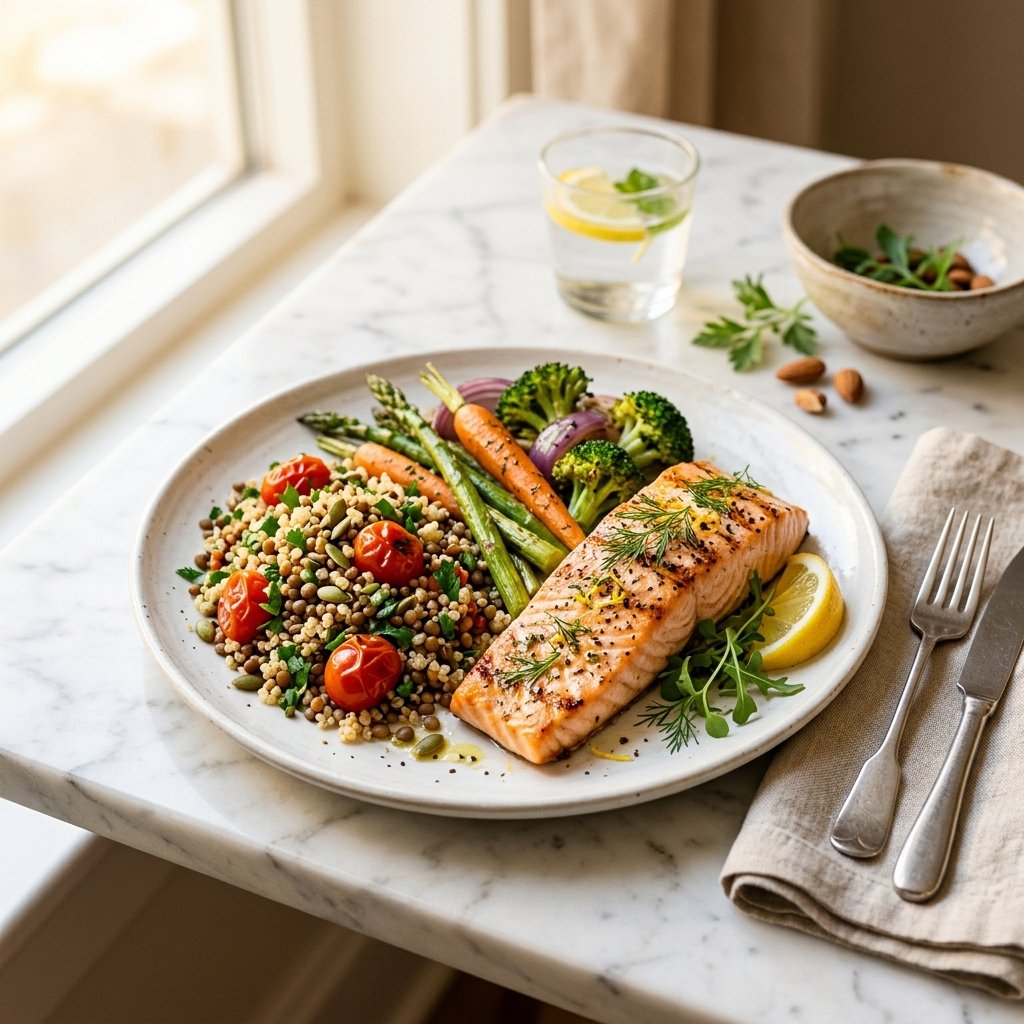
Building muscle requires more than just protein—it needs the right combination of nutrients at the right times. Eating balanced meals with protein spread throughout the day helps your body maintain and build muscle tissue more effectively.
Pairing Protein With Nutrient-Dense Foods
Your muscles need protein to rebuild, but they also need vitamins, minerals, and healthy fats to function properly. When you eat protein alongside colorful vegetables, whole grains, and healthy fats, your body absorbs and uses the protein more efficiently.
Vitamin D and calcium support muscle contraction and bone strength. You can find these in dairy products, fortified plant milk, and leafy greens. Iron carries oxygen to your muscles, which you get from lean meats, beans, and spinach.
Omega-3 fatty acids reduce inflammation and help with muscle recovery. Add salmon, walnuts, or chia seeds to your protein-rich meals. Fiber from vegetables and whole grains helps stabilize your blood sugar, giving you steady energy for staying active throughout the day.
Tips for Spreading Protein Intake Throughout the Day
Your body can only use about 25-30 grams of protein at one time for muscle building. Eating smaller amounts of protein every 3-4 hours works better than having one large protein-heavy meal.
Start your morning with 20-25 grams of protein at breakfast. This could be eggs, Greek yogurt, or a protein smoothie. Include a protein source at lunch and dinner, plus a high-protein snack between meals.
Good snack options include cottage cheese with fruit, hard-boiled eggs, or a handful of almonds. If you exercise, eat protein within two hours after your workout when your muscles are most ready to rebuild. This steady approach keeps your muscles fed and helps prevent breakdown between meals.