15 High Protein Vegan Foods for Seniors to Prevent Muscle Loss: Easy Plant-Based Options That Actually Taste Great

As you get older, keeping your muscles strong becomes more important for staying active and independent. Eating enough protein each day helps your body maintain muscle mass, which can naturally decline with age. A plant-based diet can provide all the protein you need to support healthy muscles and prevent age-related muscle loss.
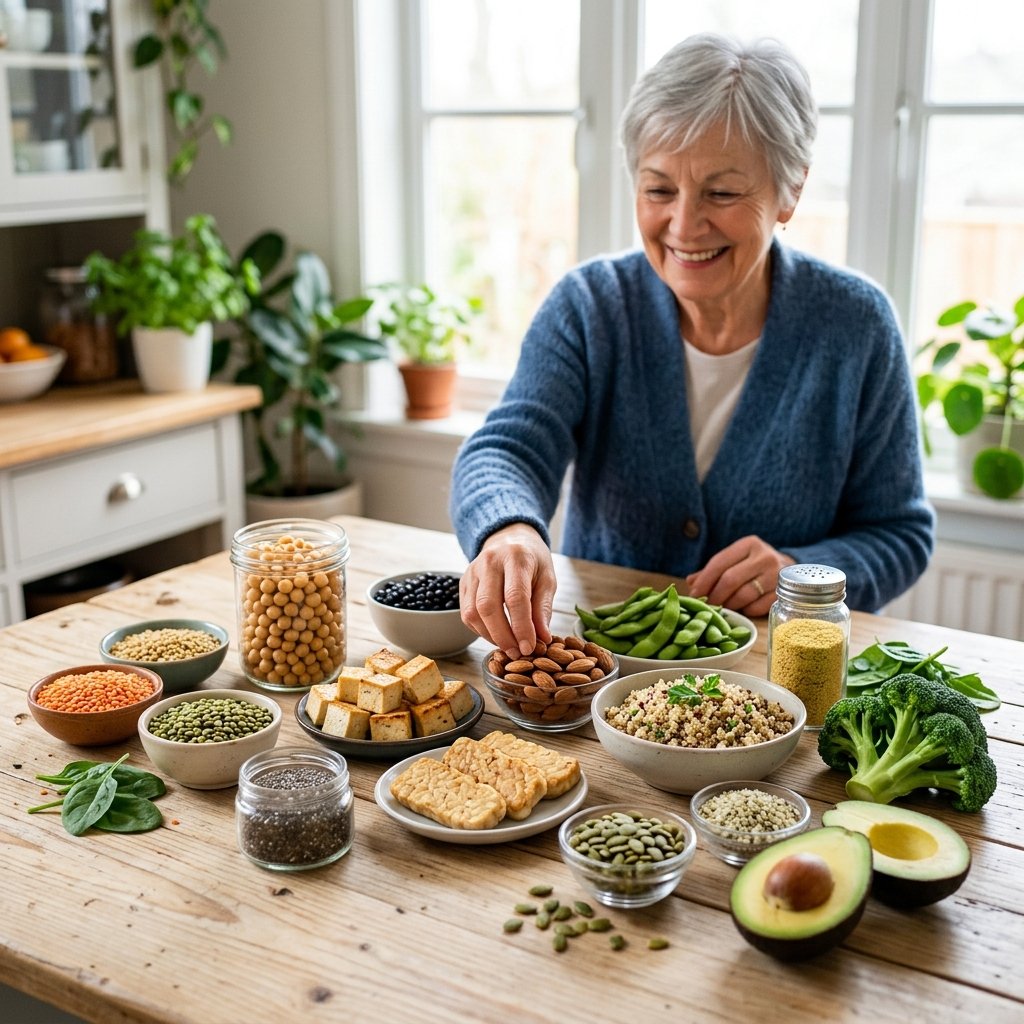
This article covers 15 vegan foods that are packed with protein and easy to add to your daily meals. You'll learn about simple options like lentils and tempeh, along with tips for making sure your body absorbs plant-based protein effectively. These foods can help you meet your protein needs while enjoying the benefits of eating more plants.
Silken Tofu
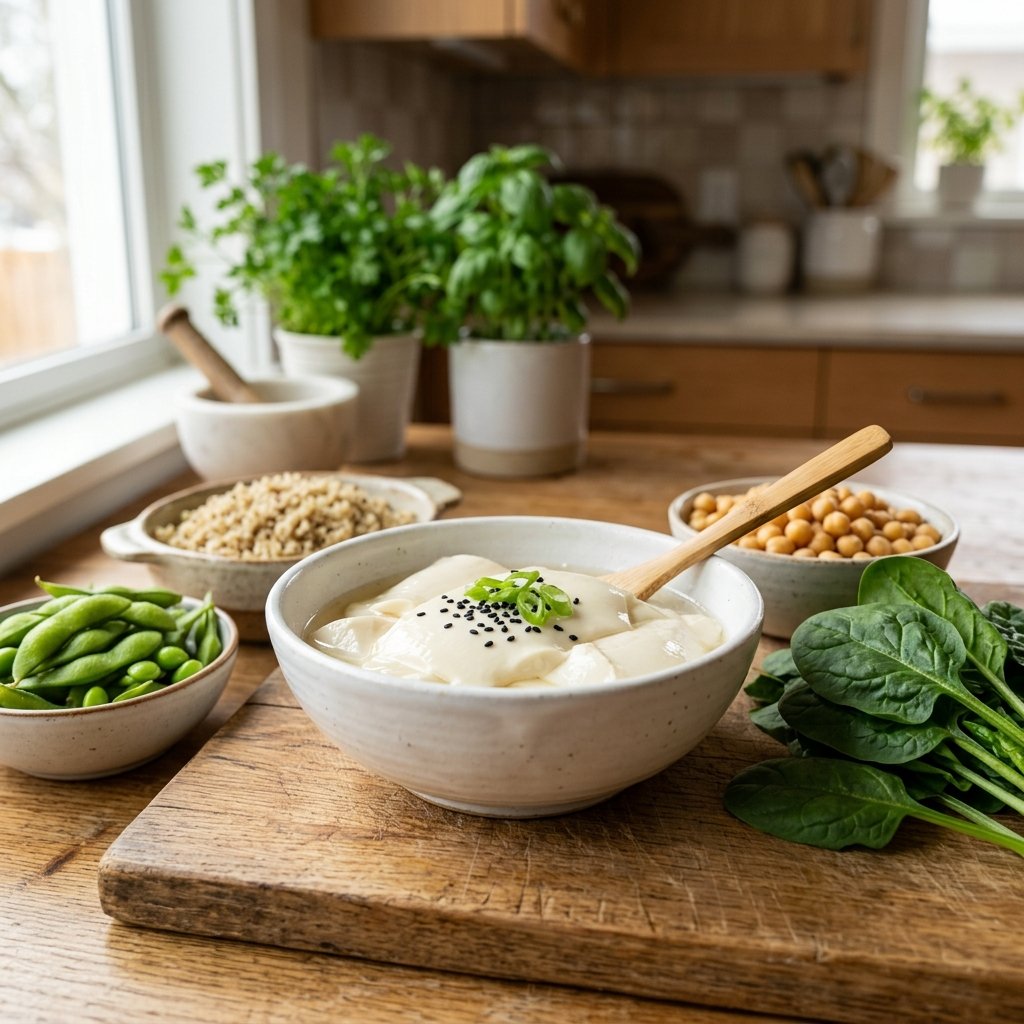
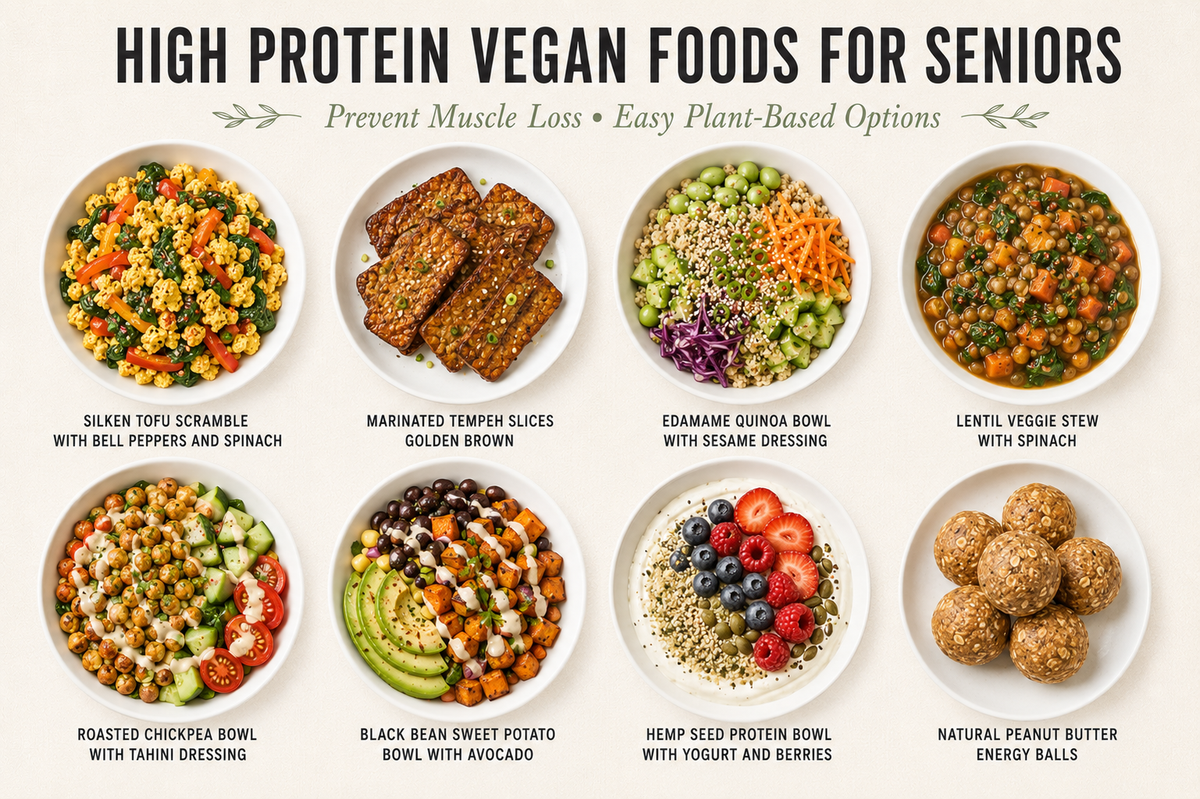
Silken Tofu Scramble (180 calories | 15g protein per serving)
Silken tofu has a soft, creamy texture that makes it perfect for breakfast scrambles. Each serving gives you 15 grams of plant-based protein to help protect your muscles. This recipe is ready in under 10 minutes, making it ideal for busy mornings. The turmeric adds color and anti-inflammatory benefits your body will appreciate.
Ingredients
- 14 oz package silken tofu, drained
- 1 tablespoon olive oil
- 1/4 teaspoon turmeric powder
- 1/4 teaspoon garlic powder
- 1/4 teaspoon black salt (or regular salt)
- 1/8 teaspoon black pepper
- 1/2 cup diced bell peppers
- 1/4 cup diced onions
- 1/4 cup chopped spinach
Instructions
- Heat olive oil in a non-stick pan over medium heat for 1 minute.
- Add diced onions and bell peppers to the pan and cook for 3 minutes until soft.
- Crumble the silken tofu into the pan using your hands or a fork.
- Sprinkle turmeric, garlic powder, salt, and black pepper over the tofu.
- Stir everything together and cook for 3-4 minutes until heated through.
- Add chopped spinach and cook for 1 more minute until wilted.
- Remove from heat and serve immediately.
Add nutritional yeast on top for extra protein and a cheesy flavor.
Tempeh
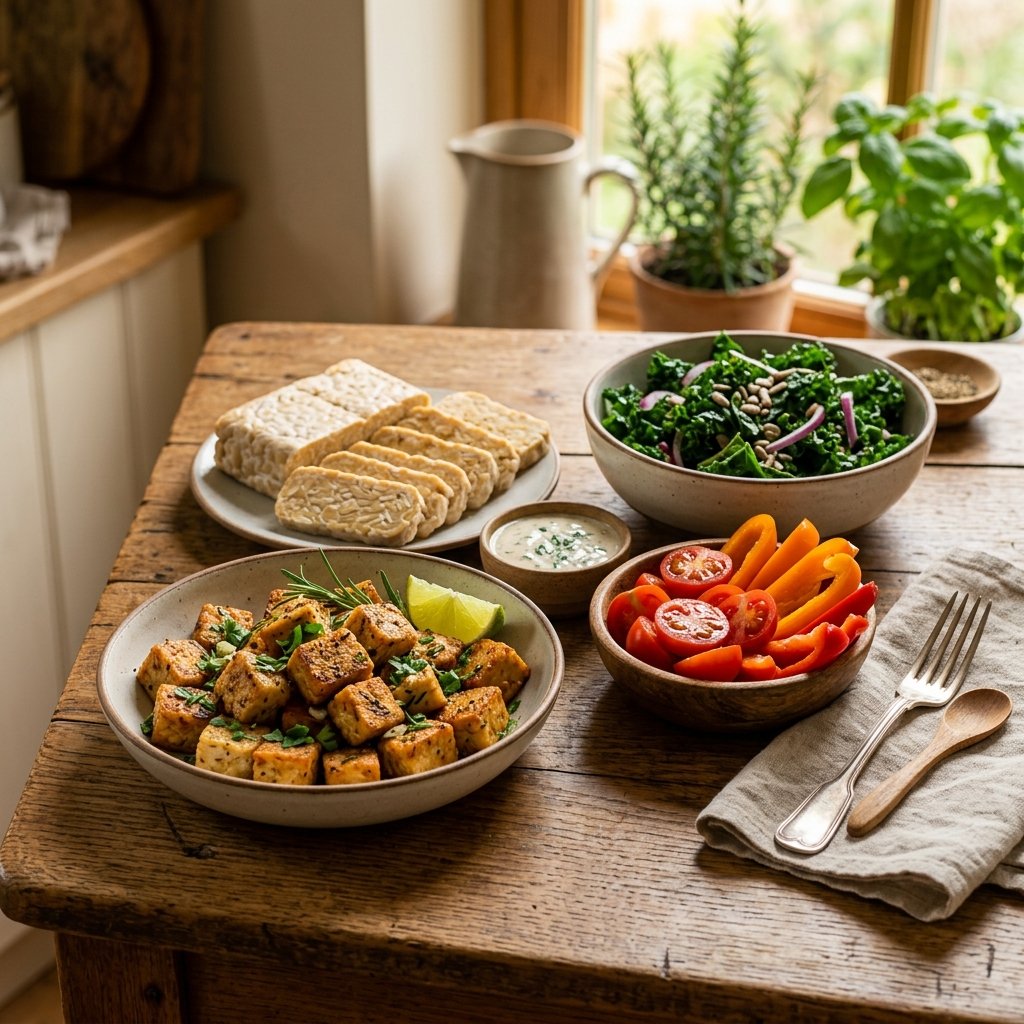
Tempeh is a fermented soybean product that packs about 20 grams of protein per cup. This recipe for marinated tempeh gives you approximately 250 calories and 22 grams of protein per serving. The fermentation process makes tempeh easier to digest than regular soybeans, which is helpful for your digestive system as you age.
Ingredients
- 8 oz tempeh block
- 3 tablespoons soy sauce
- 2 tablespoons olive oil
- 1 tablespoon maple syrup
- 1 teaspoon garlic powder
- 1/2 teaspoon ground ginger
- 1/4 teaspoon black pepper
Instructions
- Cut the tempeh into thin slices about 1/4 inch thick.
- Mix the soy sauce, olive oil, maple syrup, garlic powder, ginger, and black pepper in a shallow dish.
- Place the tempeh slices in the marinade and let them sit for at least 15 minutes, flipping once.
- Heat a non-stick skillet over medium heat.
- Cook the marinated tempeh slices for 3-4 minutes on each side until they turn golden brown.
- Remove from heat and serve warm.
You can crumble the cooked tempeh over salads or mix it into grain bowls for extra protein.
Edamame
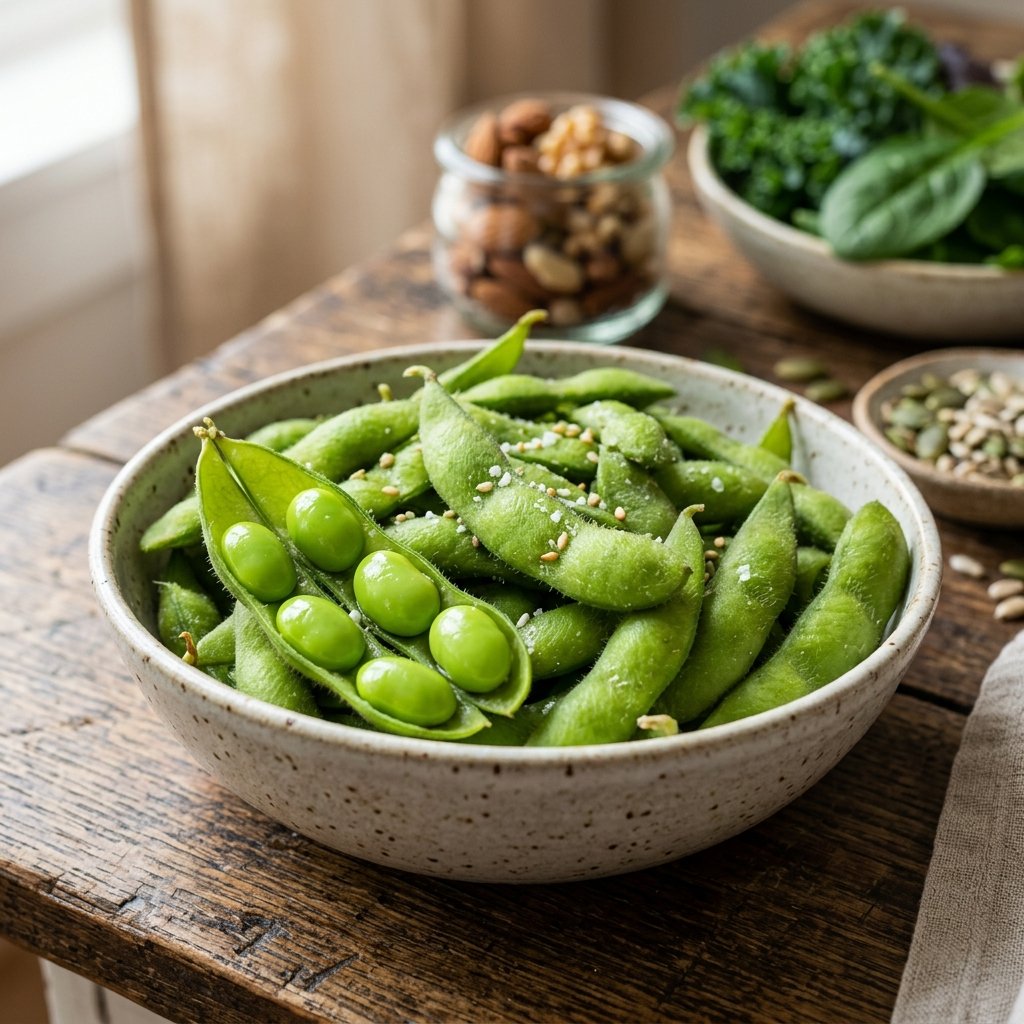
Edamame and Quinoa Bowl (320 calories | 18g protein per serving)
Edamame are young soybeans that pack a serious protein punch. This simple bowl combines edamame with quinoa to give you a complete protein meal that's perfect for lunch or dinner. The dish is easy to prepare and provides plenty of fiber along with protein to help maintain muscle mass. It's ideal if you want a light but filling meal that doesn't require much cooking experience.
Ingredients
- 1 cup shelled edamame (fresh or frozen)
- ½ cup quinoa (uncooked)
- 1 cup vegetable broth
- 1 tablespoon sesame oil
- 2 tablespoons rice vinegar
- 1 tablespoon soy sauce
- 1 teaspoon grated fresh ginger
- 1 medium carrot, shredded
- 2 green onions, sliced
- 1 tablespoon sesame seeds
Instructions
- Rinse the quinoa under cold water and cook it in vegetable broth according to package directions, usually about 15 minutes.
- While the quinoa cooks, boil the edamame in salted water for 5 minutes if frozen, or 3 minutes if fresh.
- Drain the edamame and set aside to cool slightly.
- Mix the sesame oil, rice vinegar, soy sauce, and grated ginger in a small bowl to make the dressing.
- Fluff the cooked quinoa with a fork and divide it between two bowls.
- Top each bowl with half of the edamame, shredded carrot, and green onions.
- Drizzle the dressing over each bowl and sprinkle with sesame seeds.
Add diced cucumber or sliced radishes for extra crunch and nutrients.
Seitan
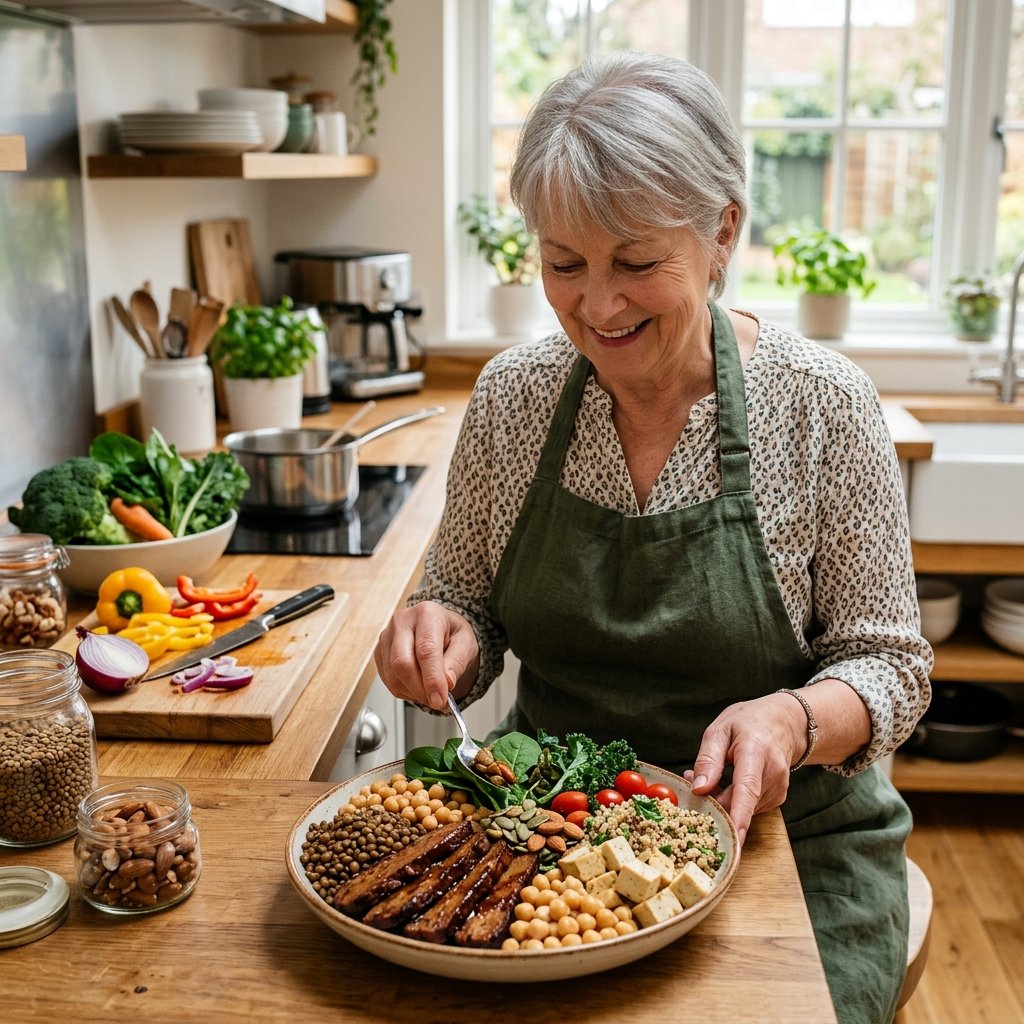
Grilled Seitan Steaks (180 calories | 25g protein per serving)
Seitan is made from wheat gluten and packs more protein per serving than most plant-based foods. This grilled version gives you a chewy, meat-like texture that works great for your muscles. It's perfect if you're looking for a filling meal that's easy to prepare. You can make these steaks ahead of time and keep them in your fridge for quick lunches.
Ingredients
- 8 oz seitan, sliced into 4 steaks
- 2 tablespoons soy sauce
- 1 tablespoon olive oil
- 1 teaspoon garlic powder
- 1/2 teaspoon black pepper
- 1/2 teaspoon smoked paprika
- 1 tablespoon maple syrup
Instructions
- Mix the soy sauce, olive oil, garlic powder, black pepper, smoked paprika, and maple syrup in a shallow dish.
- Place the seitan steaks in the marinade and turn them over to coat both sides.
- Let the seitan sit in the marinade for 15 minutes at room temperature.
- Heat a grill pan or regular pan over medium-high heat.
- Cook the seitan steaks for 3-4 minutes on each side until you see grill marks and they turn golden brown.
- Remove from heat and let them rest for 2 minutes before serving.
Serve these steaks with roasted vegetables or add them to a sandwich for extra protein.
Lentils
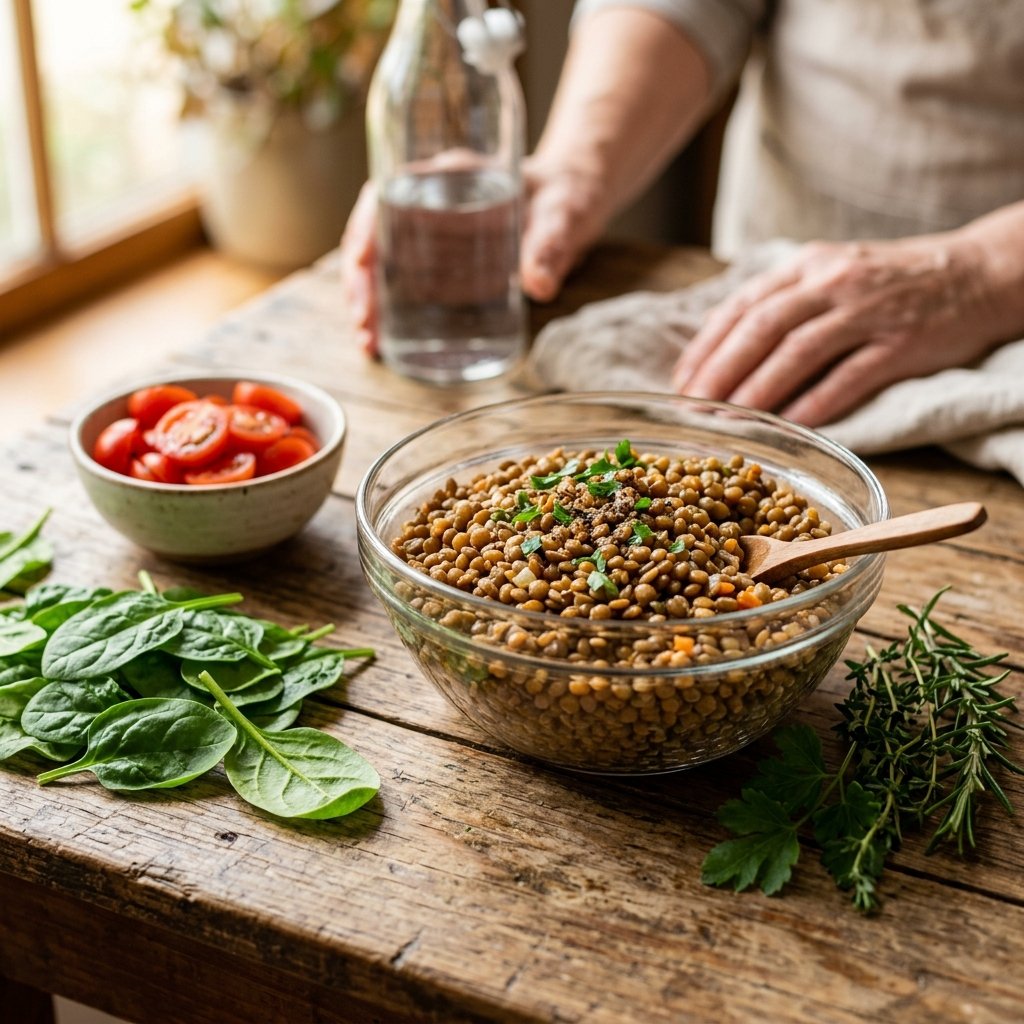
Lentil and Veggie Stew (240 calories | 18g protein per serving)
Lentils are one of the best plant-based protein sources you can eat. This hearty stew packs a serious protein punch while being easy on your budget. The fiber in lentils helps keep your digestive system healthy too. This recipe is perfect if you want to meal prep for the week since it tastes even better the next day.
Ingredients
- 1 cup dried green or brown lentils, rinsed
- 4 cups vegetable broth
- 1 medium onion, diced
- 2 carrots, chopped
- 2 celery stalks, chopped
- 3 cloves garlic, minced
- 1 can (14 oz) diced tomatoes
- 1 teaspoon cumin
- 1 teaspoon paprika
- 2 tablespoons olive oil
- Salt and pepper to taste
- 2 cups fresh spinach
Instructions
- Heat olive oil in a large pot over medium heat.
- Add the onion, carrots, and celery, then cook for 5 minutes until they start to soften.
- Stir in the garlic and cook for another minute until it smells good.
- Add the lentils, vegetable broth, diced tomatoes, cumin, and paprika to the pot.
- Bring everything to a boil, then lower the heat and let it simmer for 25-30 minutes until the lentils are tender.
- Stir in the fresh spinach and cook for 2 more minutes until it wilts.
- Season with salt and pepper to taste before serving.
Add a squeeze of lemon juice at the end for extra brightness and flavor.
Chickpeas
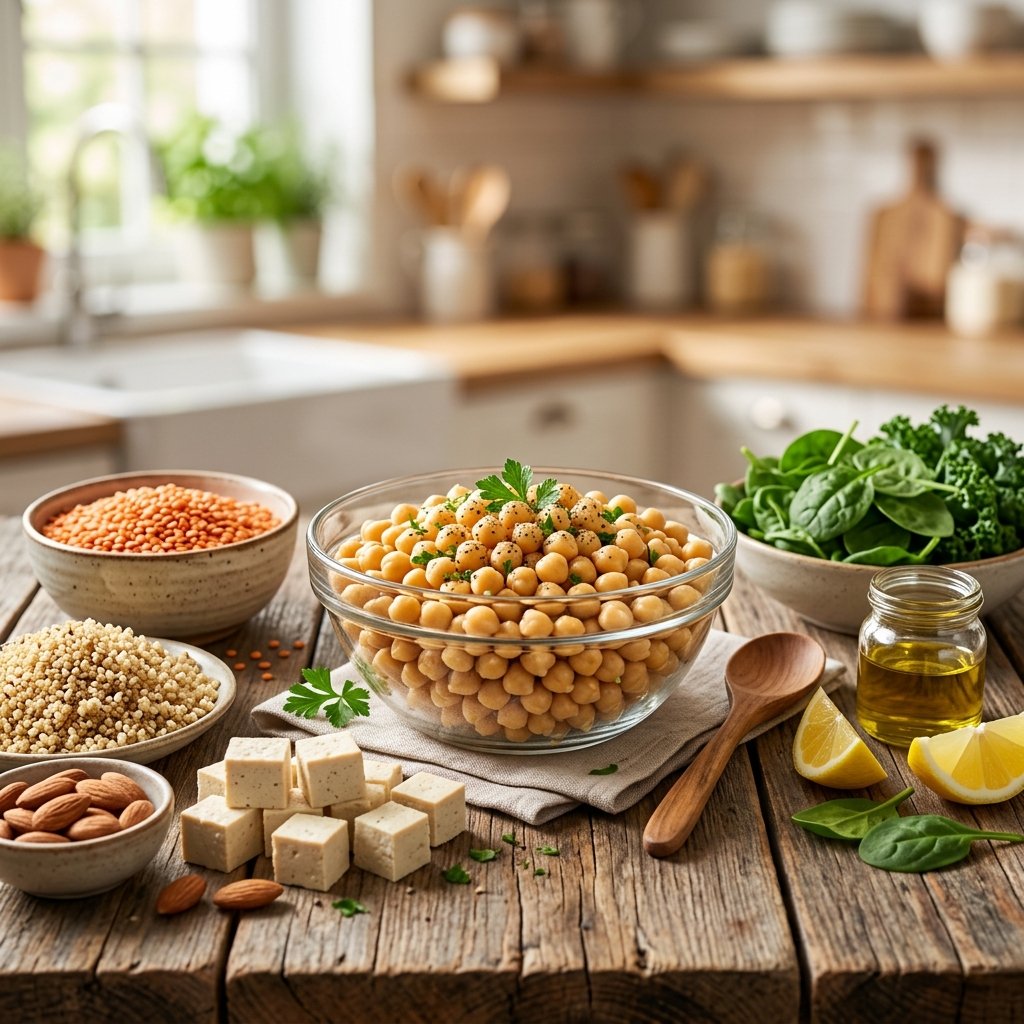
Chickpeas are a protein powerhouse that can help you maintain muscle as you age. Just one cup of cooked chickpeas gives you about 15 grams of protein and 270 calories. They're also packed with fiber and easy to cook in large batches for meal prep.
1. Roasted Chickpea Bowl (320 calories | 18g protein per serving)
This simple bowl combines crispy roasted chickpeas with fresh vegetables and tahini dressing. It's perfect for lunch or a light dinner when you want something filling but not heavy. The chickpeas get crunchy in the oven, making them more satisfying to eat. You can prep the ingredients ahead of time and assemble the bowl when you're ready to eat.
Ingredients
- 1 can (15 oz) chickpeas, drained and rinsed
- 2 tablespoons olive oil
- 1 teaspoon cumin
- 1/2 teaspoon salt
- 2 cups mixed salad greens
- 1/2 cup cherry tomatoes, halved
- 1/4 cup cucumber, diced
- 2 tablespoons tahini
- 1 tablespoon lemon juice
- 1 tablespoon water
Instructions
- Preheat your oven to 400°F and pat the chickpeas dry with a paper towel.
- Toss chickpeas with olive oil, cumin, and salt on a baking sheet.
- Roast for 25-30 minutes, shaking the pan halfway through, until golden and crispy.
- Mix tahini, lemon juice, and water in a small bowl to make the dressing.
- Place greens in a bowl and top with roasted chickpeas, tomatoes, and cucumber.
- Drizzle the tahini dressing over everything and serve.
Add a sprinkle of nutritional yeast on top for extra protein and a cheesy flavor.
Black Beans
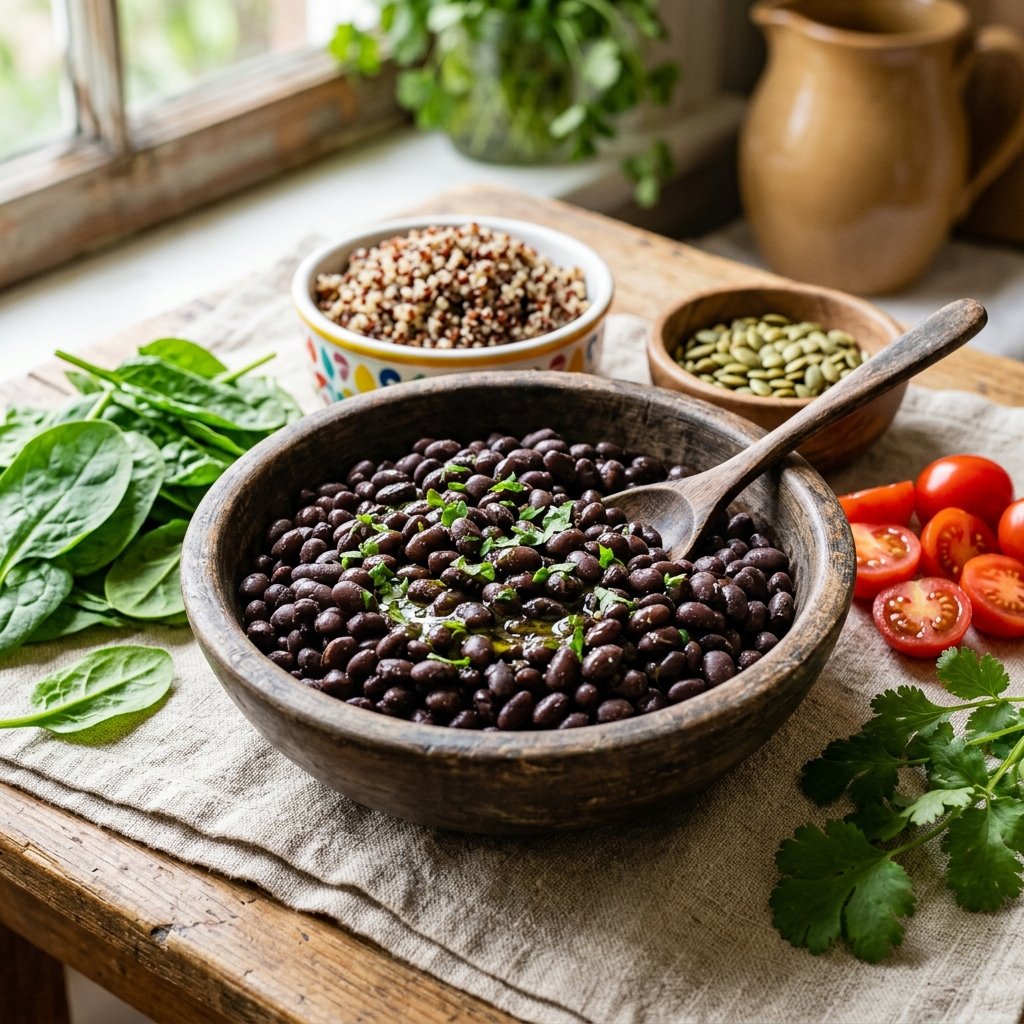
Black Bean and Sweet Potato Bowl (380 calories | 18g protein per serving)
Black beans are one of the best plant-based protein sources you can add to your diet. This colorful bowl combines black beans with roasted sweet potatoes for a meal that's both filling and nutritious. The fiber in black beans helps with digestion while the protein supports your muscles. This recipe is perfect for meal prep since you can make it ahead and reheat it throughout the week.
Ingredients
- 1 cup cooked black beans (or 1 can, drained and rinsed)
- 1 medium sweet potato, cubed
- 1 tablespoon olive oil
- 1/2 teaspoon cumin
- 1/2 teaspoon paprika
- 1/4 teaspoon garlic powder
- 1/4 teaspoon salt
- 1/4 cup diced red onion
- 1/2 avocado, sliced
- 2 tablespoons chopped cilantro
- 1 lime, cut into wedges
Instructions
- Preheat your oven to 400°F.
- Toss the cubed sweet potato with olive oil, cumin, paprika, garlic powder, and salt in a bowl.
- Spread the sweet potato cubes on a baking sheet and roast for 25-30 minutes until tender and slightly crispy.
- While the sweet potato roasts, warm the black beans in a small pot over medium heat for 5 minutes.
- Add the diced red onion to the black beans and stir for 1 minute.
- Place the warm black beans in a bowl and top with roasted sweet potato.
- Add sliced avocado and sprinkle with fresh cilantro.
- Squeeze lime juice over the top before eating.
Add a dollop of plant-based yogurt or tahini sauce for extra creaminess and flavor.
Hemp seeds
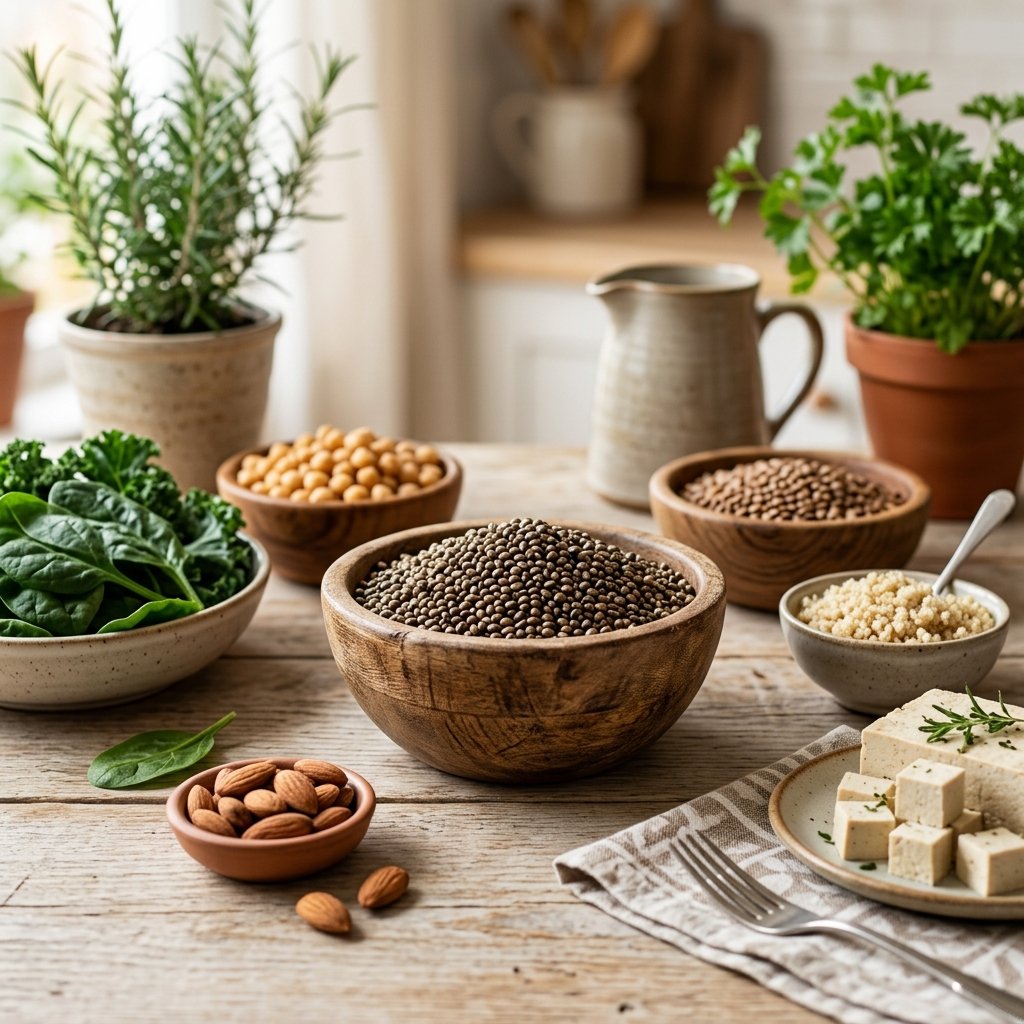
Hemp seeds are tiny nutritional powerhouses that deliver about 10 grams of protein in just three tablespoons. They're easy to digest and contain all nine essential amino acids your body needs to maintain muscle mass as you age.
You can sprinkle hemp seeds on almost anything without changing the flavor much. They have a mild, nutty taste that works well in both sweet and savory dishes. Plus, they don't need any cooking or preparation.
1. Hemp Seed Protein Bowl (320 calories | 15g protein per serving)
This simple breakfast bowl takes less than five minutes to make and keeps you full for hours. Hemp seeds blend perfectly with creamy yogurt and fresh berries to create a satisfying meal. The combination gives you complete protein along with healthy fats that help your body absorb vitamins. This recipe works great for anyone who wants a quick, no-cook breakfast that supports muscle health.
Ingredients
- 1 cup plain Greek yogurt (dairy or plant-based)
- 3 tablespoons hemp seeds
- 1/2 cup mixed berries
- 1 tablespoon maple syrup
- 1/4 teaspoon vanilla extract
- 2 tablespoons sliced almonds
Instructions
- Spoon the yogurt into a bowl.
- Sprinkle the hemp seeds evenly over the yogurt.
- Add the mixed berries on top.
- Drizzle with maple syrup and vanilla extract.
- Finish with sliced almonds for extra crunch.
Try adding a mashed banana for extra sweetness and potassium.
Chia Seeds
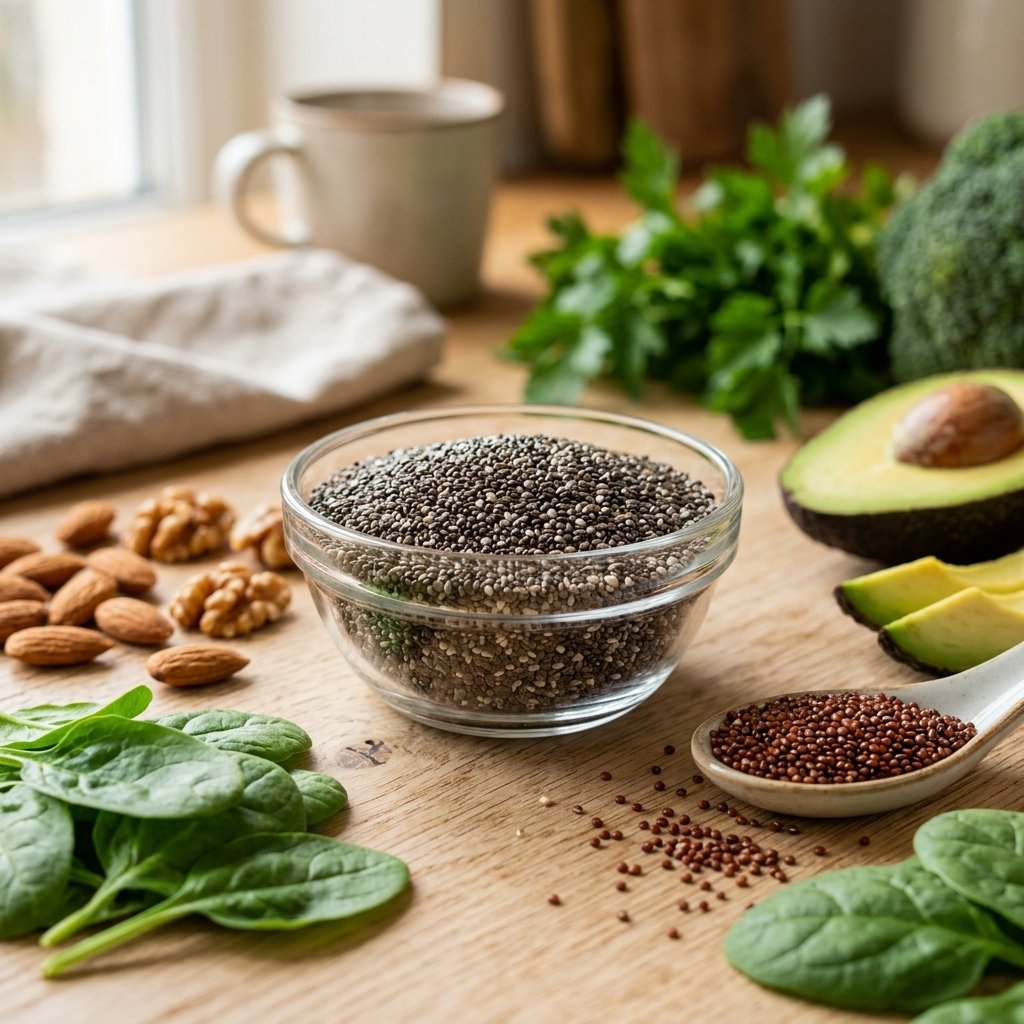
Chia seeds are tiny nutritional powerhouses that pack about 2 grams of protein per tablespoon. They also contain fiber, omega-3 fatty acids, and calcium, which are all important for seniors. These seeds absorb liquid and create a gel-like texture, making them perfect for puddings, smoothies, and overnight oats.
1. Vanilla Chia Pudding (150 calories | 6g protein per serving)
This simple chia pudding makes a great breakfast or snack that you can prepare the night before. The seeds turn creamy and thick when mixed with plant milk, creating a texture similar to tapioca pudding. It's perfect for seniors who want an easy, no-cook meal option. You can customize it with your favorite toppings like fresh fruit or nuts.
Ingredients
- 3 tablespoons chia seeds
- 1 cup unsweetened soy milk
- 1 teaspoon maple syrup
- 1/2 teaspoon vanilla extract
- Pinch of salt
Instructions
- Mix the chia seeds, soy milk, maple syrup, vanilla extract, and salt in a jar or bowl.
- Stir well to prevent clumping, then refrigerate for at least 4 hours or overnight.
- Stir again before serving and add your favorite toppings like berries or sliced almonds.
Add a scoop of protein powder to boost the protein content to 20g per serving.
2. Energy-Boosting Chia Smoothie (200 calories | 8g protein per serving)
This smoothie combines chia seeds with protein-rich ingredients for a filling drink. It's ideal for seniors who have trouble eating solid foods or need a quick meal. The chia seeds help thicken the smoothie and keep you feeling full longer.
Ingredients
- 2 tablespoons chia seeds
- 1 cup soy milk
- 1 frozen banana
- 1/2 cup frozen berries
- 1 tablespoon almond butter
Instructions
- Add all ingredients to a blender and blend on high speed for 30-60 seconds until smooth.
- Let the smoothie sit for 2-3 minutes to allow the chia seeds to thicken it slightly.
- Pour into a glass and enjoy immediately.
Add a handful of spinach for extra nutrients without changing the sweet taste.
Pumpkin seeds
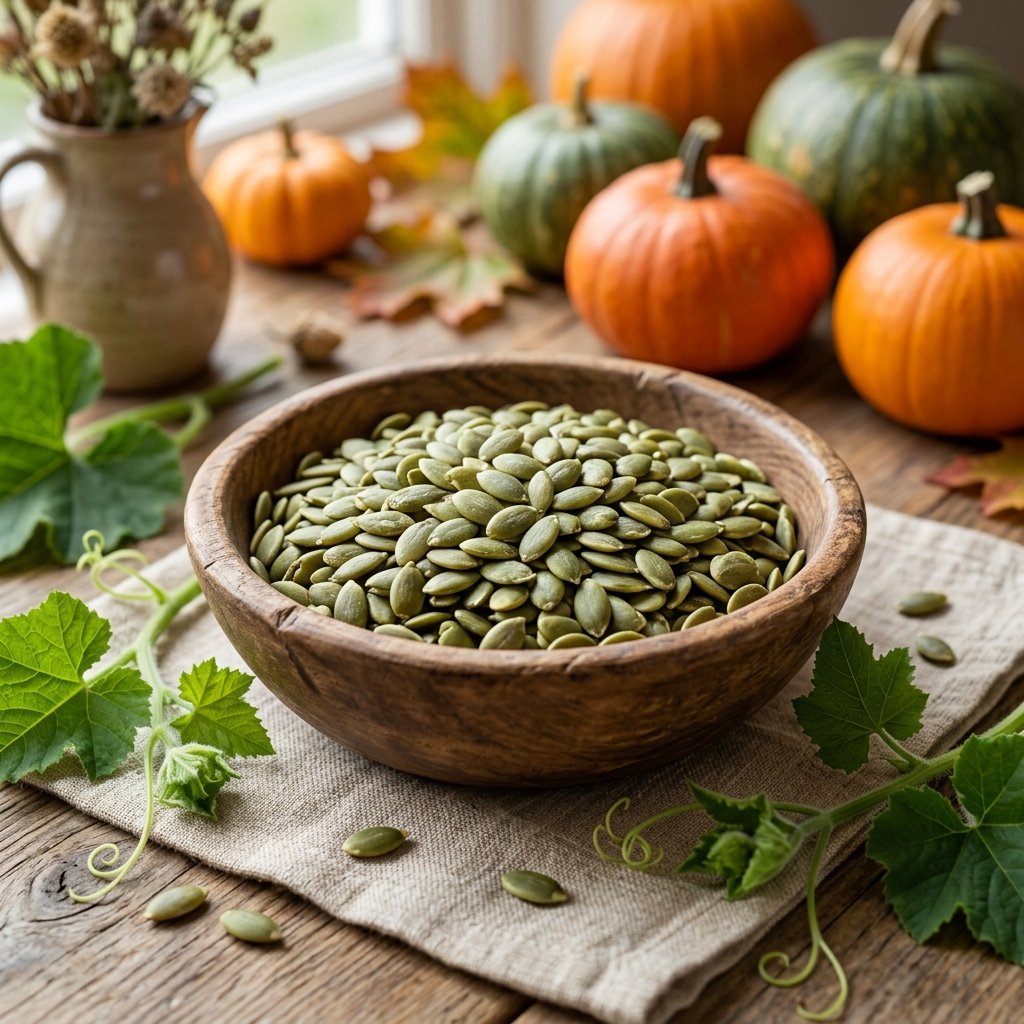
Roasted Pumpkin Seeds with Tahini (220 calories | 11g protein per serving)
Pumpkin seeds pack a serious protein punch for such a small food. They work great as a snack or salad topper. This recipe adds tahini to boost the protein even more while creating a tasty coating. The combination gives you healthy fats along with plant-based protein to help keep your muscles strong.
Ingredients
- 1 cup raw pumpkin seeds
- 2 tablespoons tahini
- 1 tablespoon olive oil
- 1/2 teaspoon garlic powder
- 1/4 teaspoon salt
- 1/4 teaspoon paprika
Instructions
- Preheat your oven to 325°F and line a baking sheet with parchment paper.
- Mix the tahini, olive oil, garlic powder, salt, and paprika in a medium bowl until smooth.
- Add the pumpkin seeds to the bowl and stir until all seeds are coated evenly.
- Spread the coated seeds in a single layer on your prepared baking sheet.
- Bake for 20-25 minutes, stirring every 10 minutes to prevent burning.
- Remove from oven and let cool completely before eating or storing.
Sprinkle these over your morning oatmeal or blend them into smoothies for extra protein.
Quinoa
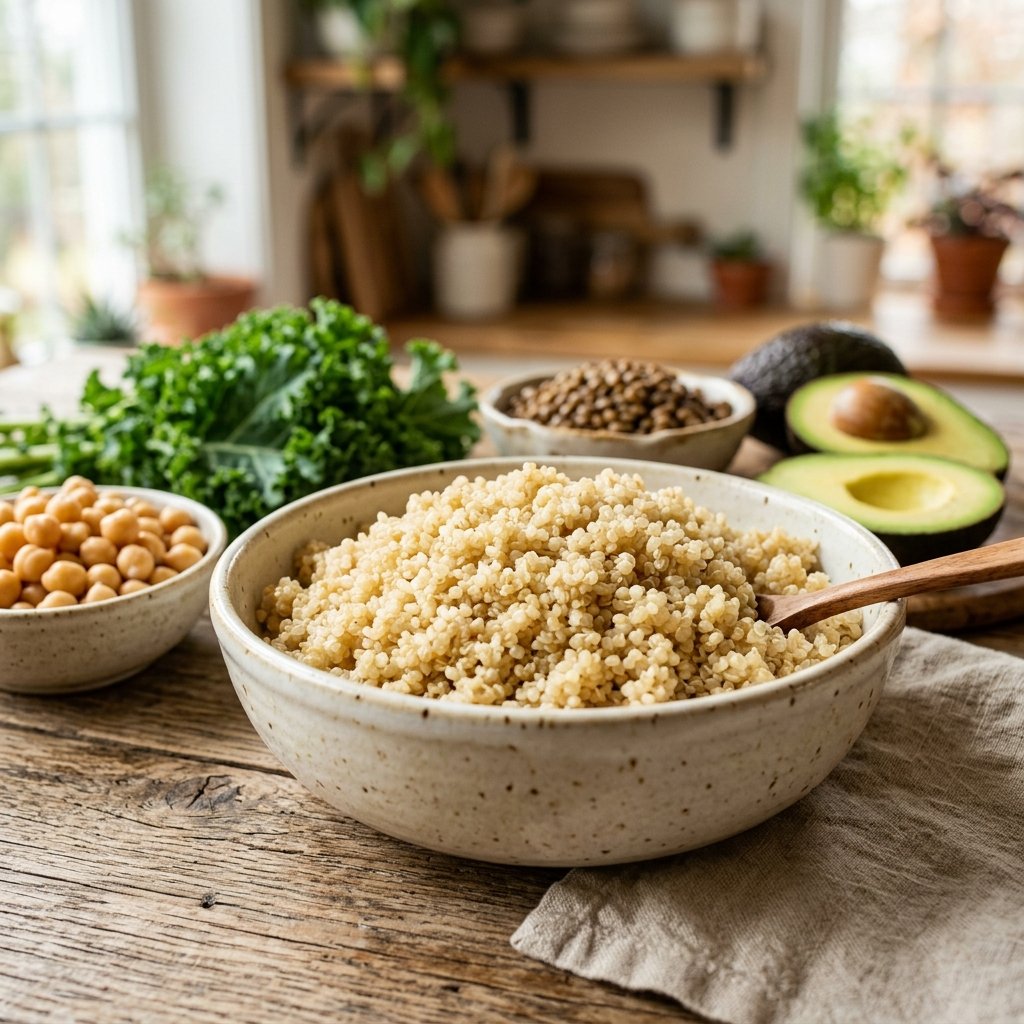
Quinoa is a complete protein that contains all nine essential amino acids your body needs. One cup of cooked quinoa provides about 222 calories and 8 grams of protein. It's easy to digest and works well as a base for many different meals.
This grain cooks quickly and stores well in your fridge for up to five days. You can use it in place of rice or pasta in most recipes. Quinoa also contains fiber and iron, which support your overall health as you age.
Ingredients
- 1 cup quinoa, uncooked
- 2 cups water or vegetable broth
- 1/4 teaspoon salt
- 1 tablespoon olive oil (optional)
Instructions
- Rinse the quinoa in a fine-mesh strainer under cold water for 30 seconds to remove any bitter coating.
- Add the rinsed quinoa, water or broth, and salt to a medium pot.
- Bring the mixture to a boil over high heat, then reduce to low and cover with a lid.
- Simmer for 15 minutes without lifting the lid.
- Remove from heat and let it sit covered for 5 minutes to absorb any remaining liquid.
- Fluff with a fork and drizzle with olive oil if desired.
Add cooked quinoa to soups, salads, or breakfast bowls for an easy protein boost throughout the day.
Nutritional Yeast
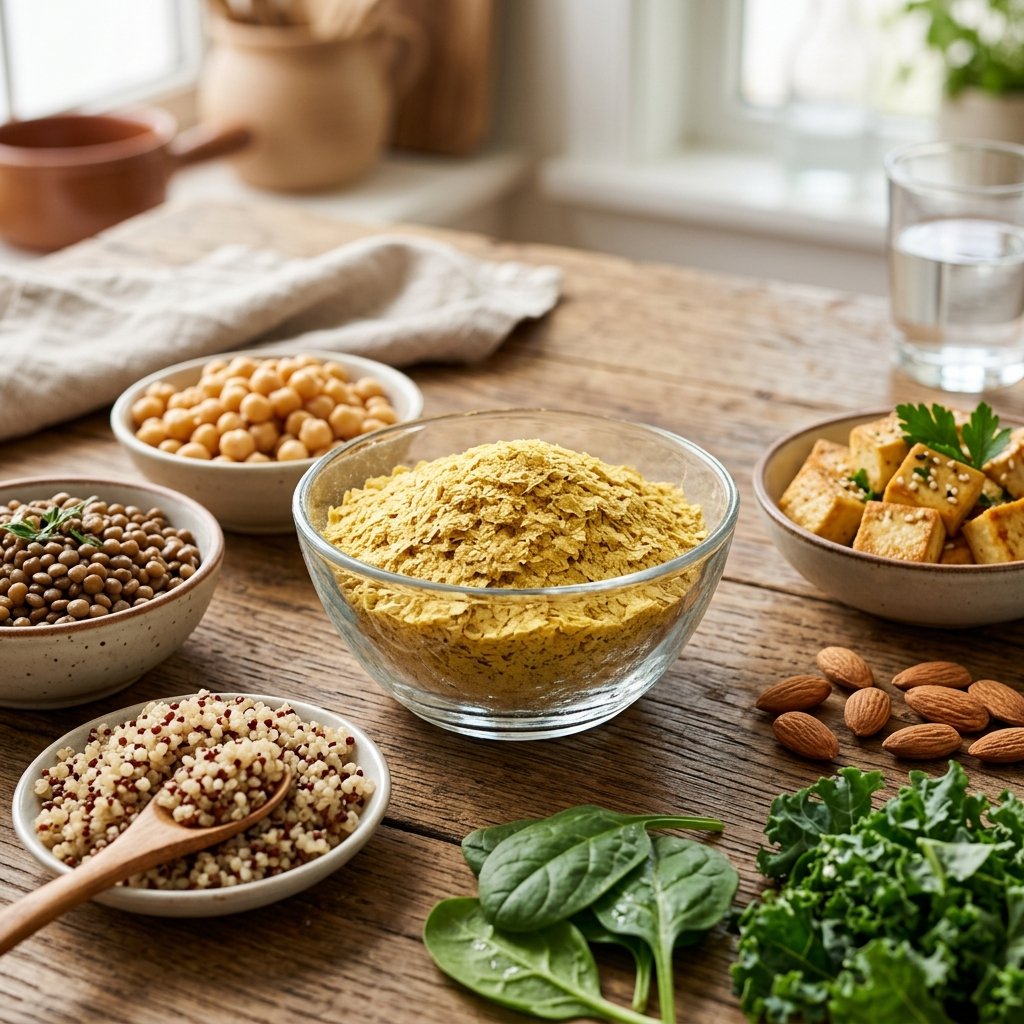
Nutritional yeast is a deactivated yeast that comes in yellow flakes or powder. It has a cheesy, nutty flavor that makes it perfect for adding to savory dishes. Just two tablespoons give you about 8 grams of protein and only 40 calories.
This ingredient is also packed with B vitamins, including B12, which many vegans struggle to get enough of. You can sprinkle it on popcorn, pasta, salads, or mix it into sauces. It's one of the easiest ways to boost protein in your meals without cooking anything special.
1. Cheesy Nutritional Yeast Tofu Scramble (180 calories | 16g protein per serving)
This scramble tastes like scrambled eggs but is completely plant-based. The nutritional yeast gives it a cheesy flavor while the turmeric adds a yellow color. It's perfect for breakfast or any meal when you want something quick and filling. You can make it in less than 10 minutes.
Ingredients
- 8 oz firm tofu, drained and crumbled
- 3 tablespoons nutritional yeast
- 1/2 teaspoon turmeric
- 1/4 teaspoon garlic powder
- 1/4 teaspoon black pepper
- 1/2 teaspoon salt
- 1 tablespoon olive oil
- 2 tablespoons unsweetened plant milk
Instructions
- Heat olive oil in a pan over medium heat.
- Add crumbled tofu to the pan and cook for 2 minutes, stirring occasionally.
- Mix in nutritional yeast, turmeric, garlic powder, pepper, and salt.
- Pour in plant milk and stir everything together for 3-4 minutes until heated through.
- Remove from heat and serve warm.
Add chopped spinach or diced tomatoes during step 4 for extra nutrients and flavor.
Peanut butter (natural)
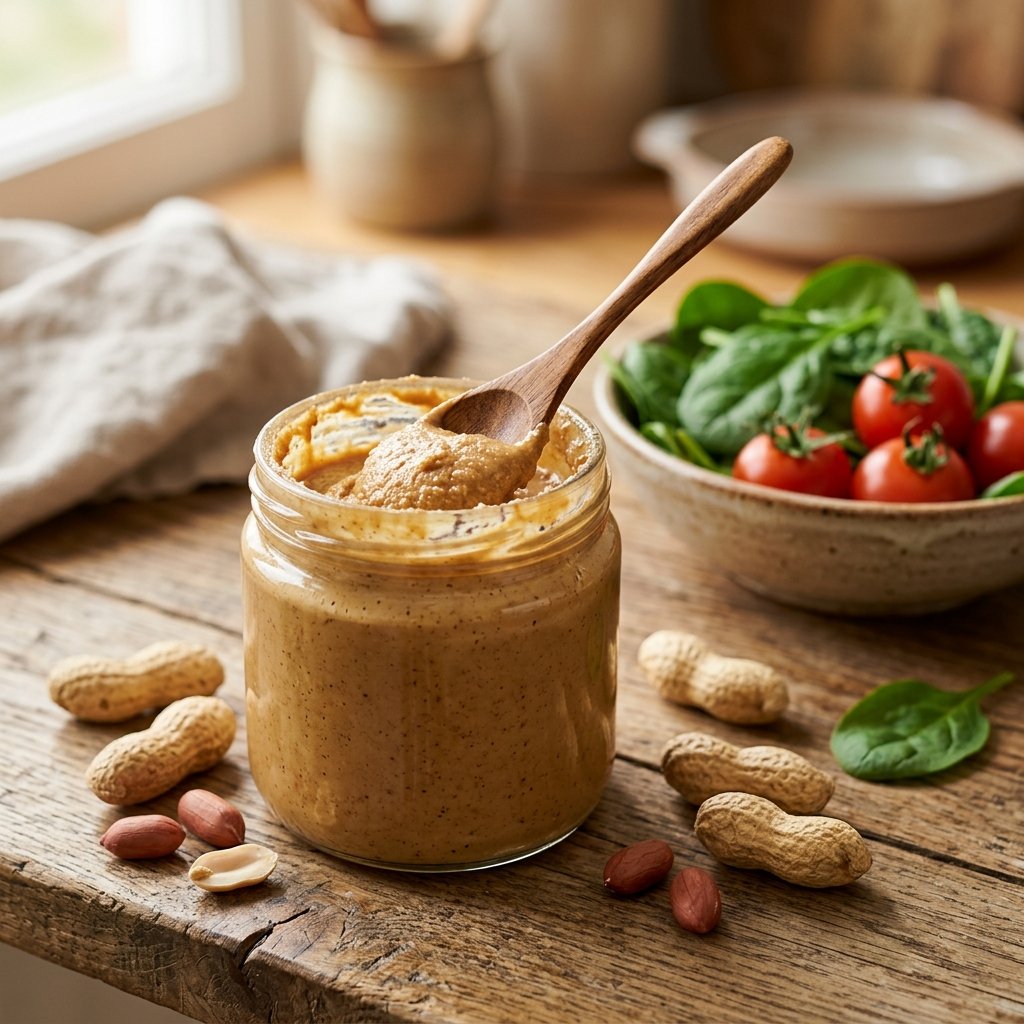
Natural Peanut Butter Energy Balls (120 calories | 5g protein per ball)
Natural peanut butter makes an excellent protein source for seniors looking to maintain muscle mass. These no-bake energy balls combine peanut butter with oats and seeds to create a convenient snack you can grab anytime. Each ball delivers a solid amount of protein along with healthy fats that help your body absorb nutrients. You can make a batch on Sunday and have protein-packed snacks ready for the entire week.
Ingredients
- 1 cup natural peanut butter (unsweetened)
- 1 cup rolled oats
- 1/4 cup ground flaxseed
- 2 tablespoons chia seeds
- 3 tablespoons maple syrup
- 1 teaspoon vanilla extract
- 1/4 teaspoon salt
Instructions
- Mix the peanut butter and maple syrup together in a large bowl until smooth.
- Add the oats, flaxseed, chia seeds, vanilla, and salt to the bowl.
- Stir everything together until all ingredients are fully combined and the mixture feels sticky.
- Place the bowl in your refrigerator for 15 minutes to make the mixture easier to handle.
- Use your hands to roll the mixture into balls about 1 inch wide.
- Store the energy balls in an airtight container in your refrigerator for up to one week.
Add a tablespoon of hemp seeds or chopped nuts for extra protein and crunch.
Almonds
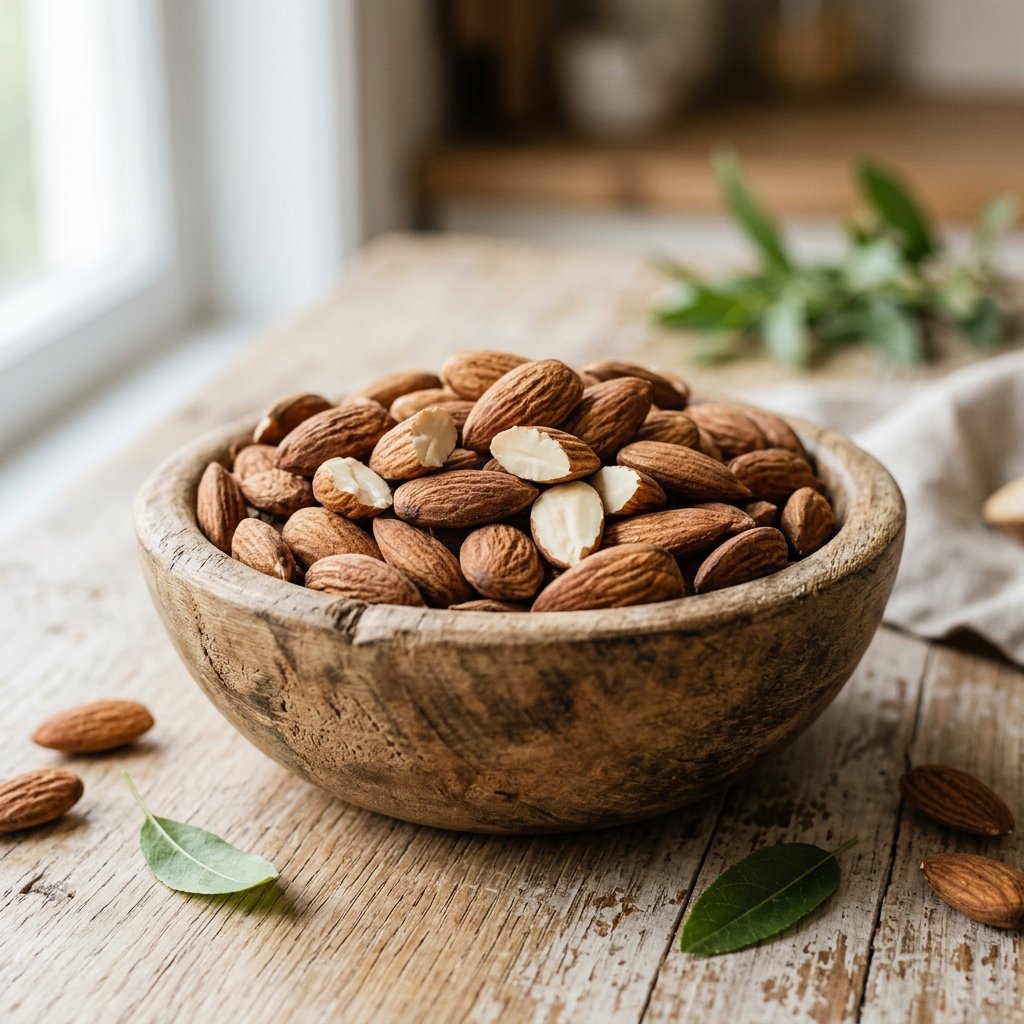
Almonds are a simple and portable protein source that you can enjoy anywhere. A quarter-cup serving gives you about 160 calories and 6 grams of protein. They also provide healthy fats that support your heart and brain health.
These nuts are perfect for seniors because they don't require any cooking or preparation. You can eat them as a quick snack between meals or add them to other dishes for extra protein. Almonds also contain vitamin E, which helps protect your cells from damage.
Ingredients
- 1/4 cup raw almonds
- 1/4 teaspoon cinnamon (optional)
- 1/8 teaspoon sea salt (optional)
Instructions
- Measure out 1/4 cup of raw almonds into a small bowl or container.
- If you want to add flavor, sprinkle the cinnamon and sea salt over the almonds and toss them together.
- You can eat them right away or store them in an airtight container for up to two weeks.
- For roasted almonds, spread them on a baking sheet and bake at 350°F for 10 minutes, stirring halfway through.
Try spreading almond butter on whole grain toast for an easy high-protein breakfast.
Greek-style vegan yogurt (soy)
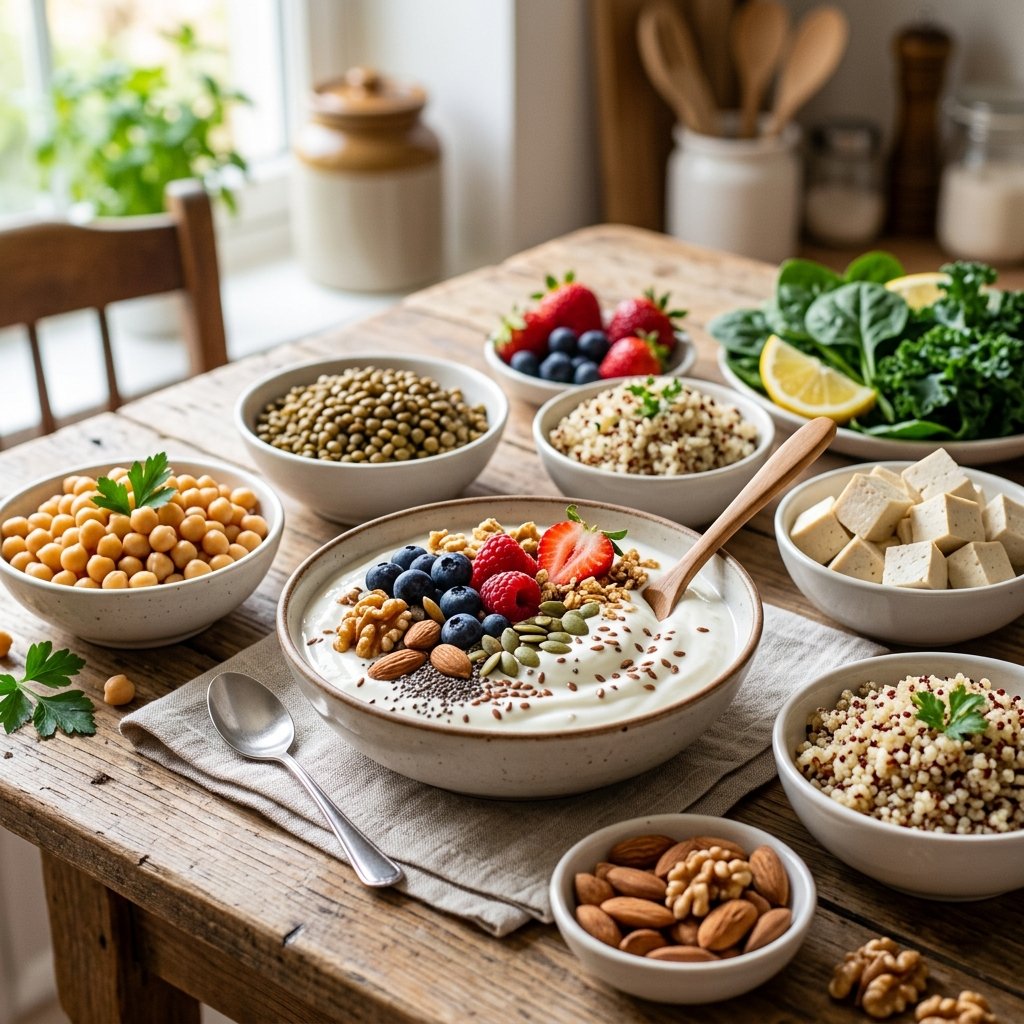
Greek-style vegan yogurt made from soy is a smooth and creamy option that delivers around 15 grams of protein per cup. It has about 140 calories per serving and works great as a breakfast base or snack. The thick texture makes it feel just like traditional Greek yogurt.
Ingredients
- 4 cups unsweetened soy milk
- 2 tablespoons maple syrup
- 2 vegan yogurt starter capsules (or 2 tablespoons store-bought plain vegan yogurt)
- 1 tablespoon tapioca starch
Instructions
- Pour the soy milk into a pot and warm it to 180°F, stirring often to prevent burning.
- Let the milk cool down to 110°F, which takes about 30 minutes at room temperature.
- Mix the tapioca starch with 2 tablespoons of the warm milk in a small bowl until smooth.
- Add the starch mixture, maple syrup, and yogurt starter to the pot and stir well.
- Pour everything into clean glass jars and cover them with lids.
- Place the jars in your oven with just the light on for 8-12 hours to ferment.
- Check if the yogurt has thickened and tastes tangy, then move the jars to your fridge.
- Chill for at least 4 hours before eating to let it set up more.
Add frozen berries and a drizzle of almond butter for extra flavor and healthy fats.
Why Protein Supports Healthy Aging
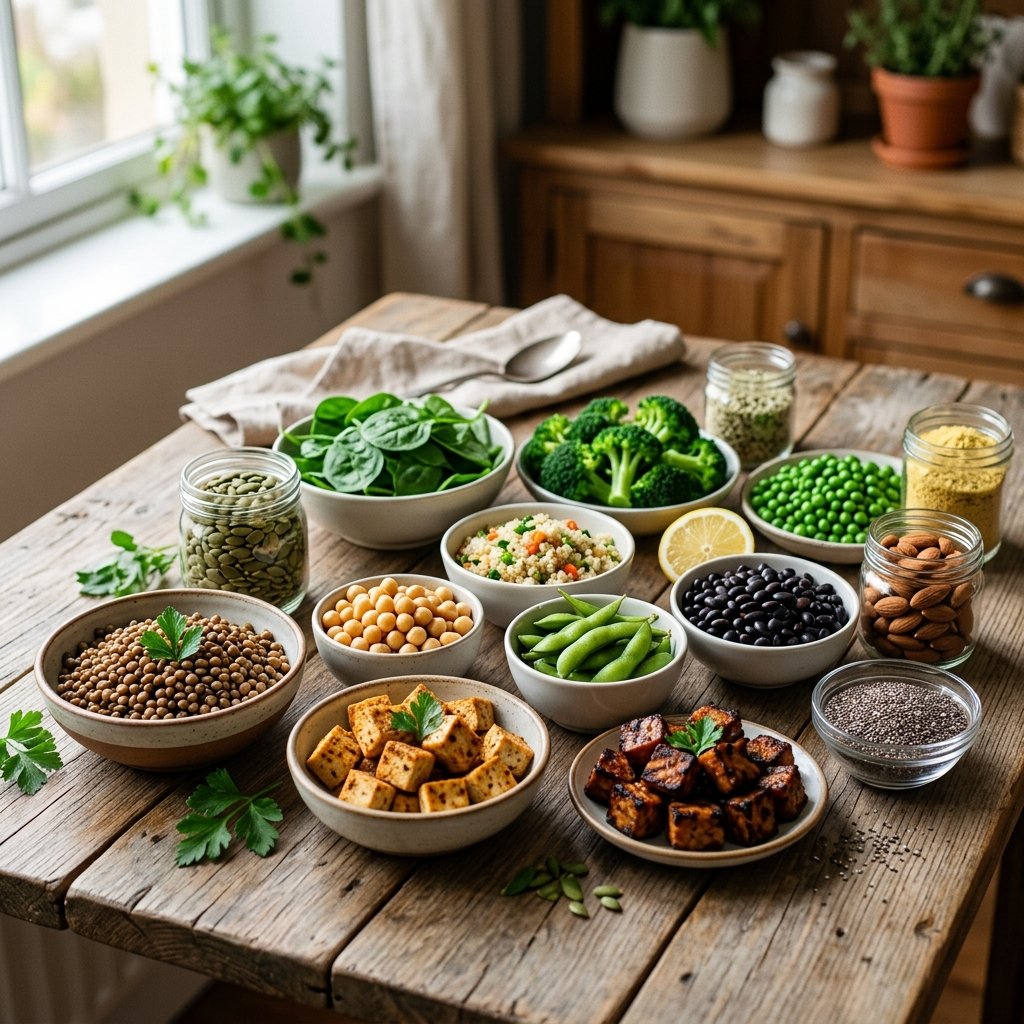
As you age, your body needs more protein to maintain muscle mass and strength. Protein helps repair muscle tissue and slows down the natural muscle loss that happens after age 30.
Understanding Sarcopenia
Sarcopenia is the medical term for age-related muscle loss. It typically starts around age 30 and speeds up after age 60.
You can lose 3% to 8% of your muscle mass each decade after 30. This loss affects your balance, strength, and ability to do everyday tasks like carrying groceries or climbing stairs.
Without enough protein, sarcopenia gets worse. Your muscles need protein to stay strong and healthy. When you don't eat enough, your body breaks down muscle tissue for energy.
Protein's Role in Muscle Repair
Your muscles break down and rebuild constantly throughout the day. Protein provides the amino acids your body needs for this repair process.
When you eat protein, your body breaks it down into amino acids. These amino acids travel to your muscles and help build new muscle tissue. This process is called muscle protein synthesis.
As you get older, your body becomes less efficient at using protein. You need more protein per meal to trigger the same muscle-building response as younger adults. Eating 25 to 30 grams of protein per meal helps maximize muscle repair.
Daily Protein Needs for Seniors
Most seniors need 1.0 to 1.2 grams of protein per kilogram of body weight each day. This is higher than the standard recommendation for younger adults.
For a 150-pound person, that equals 68 to 82 grams of protein daily. If you're more active or recovering from illness, you might need even more.
Spread your protein intake across all meals. Your body can only use about 25 to 30 grams of protein at once for muscle building. Eating protein at breakfast, lunch, and dinner works better than getting most of it in one meal.
Enhancing Plant-Based Protein Absorption
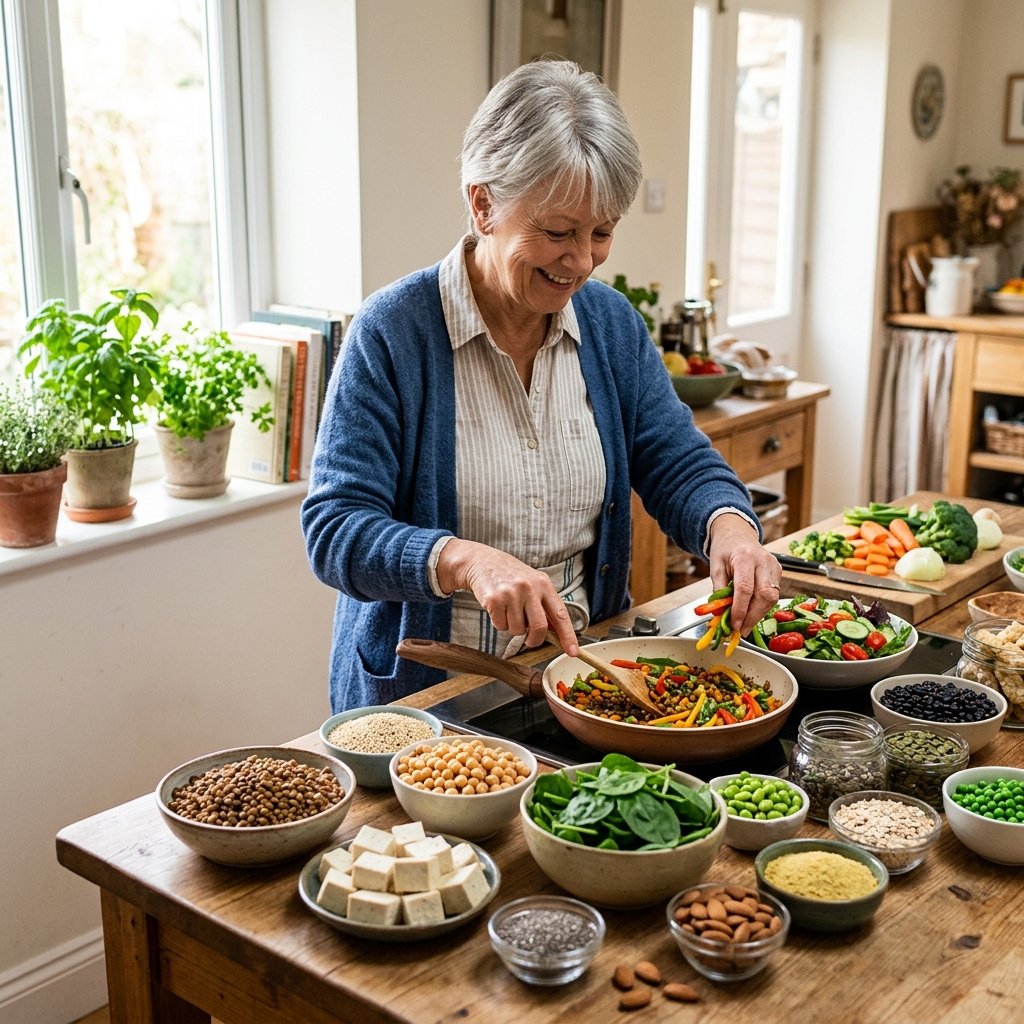
Getting enough protein is only part of the equation. Your body needs the right timing and food combinations to absorb and use plant-based proteins effectively.
Optimizing Meal Timing
Your body can only process a certain amount of protein at once, so spreading your intake throughout the day helps maximize absorption. Aim to eat protein-rich foods at each meal rather than loading up all at once.
Eating 20-30 grams of protein per meal works best for most seniors. This amount gives your muscles the building blocks they need without overwhelming your digestive system.
Best timing strategies:
- Eat protein within 2 hours after physical activity
- Include protein at breakfast to jumpstart muscle maintenance
- Space meals 3-4 hours apart for steady absorption
- Have a small protein snack before bed to support overnight muscle repair
Your body absorbs plant proteins more slowly than animal proteins, which actually provides a steady stream of amino acids to your muscles over time.
Pairing Plant Proteins for Complete Amino Acids
Plant foods often lack one or more essential amino acids your body can't make on its own. Combining different protein sources throughout the day ensures you get all nine essential amino acids.
You don't need to pair proteins in the same meal. Eating varied protein sources within 24 hours gives your body what it needs.
Effective protein combinations:
- Rice and beans
- Hummus and whole wheat pita
- Peanut butter on whole grain bread
- Lentil soup with quinoa
- Tofu stir-fry with brown rice
Grains typically lack lysine, while legumes are low in methionine. When you eat both types during the day, they complement each other perfectly. Adding seeds or nuts to grain dishes boosts the amino acid profile even more.