15 High-Protein Breakfasts With 30g+ Protein for Women Over 50 That Keep You Full Till Lunch (No Sad Egg Whites)

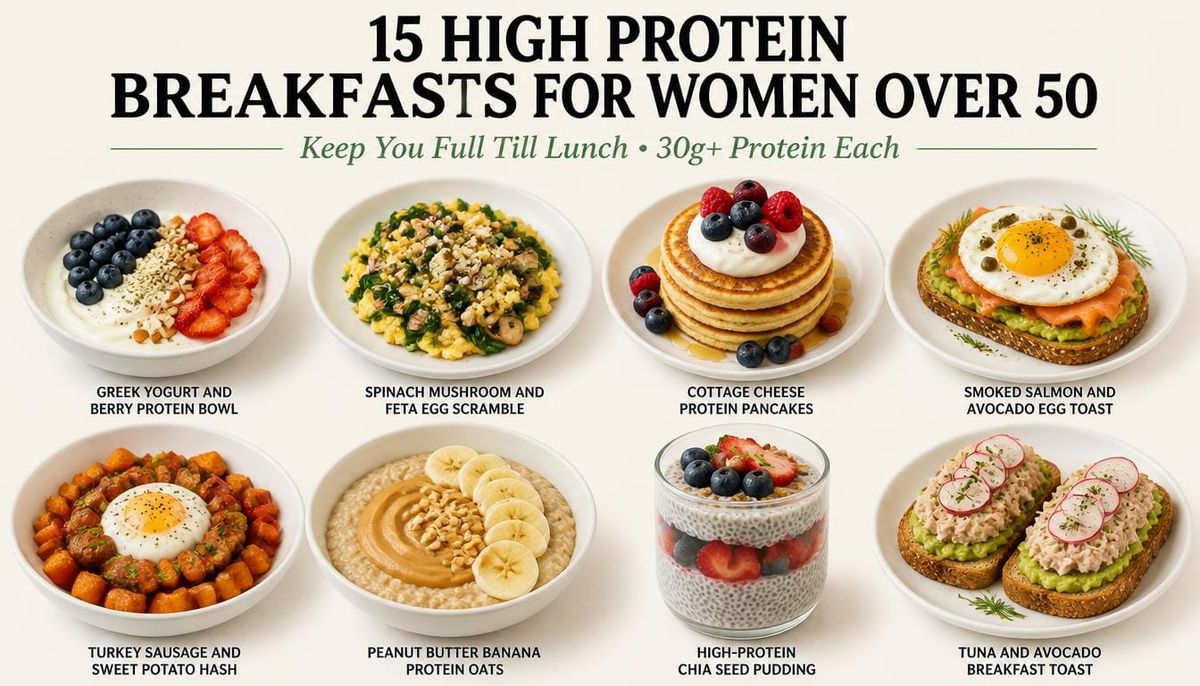
Once you hit 50, your body just wants more protein. Muscle mass drops off a bit, and getting enough protein at every meal helps you keep your strength, protect your bones, and actually stay full until lunch.
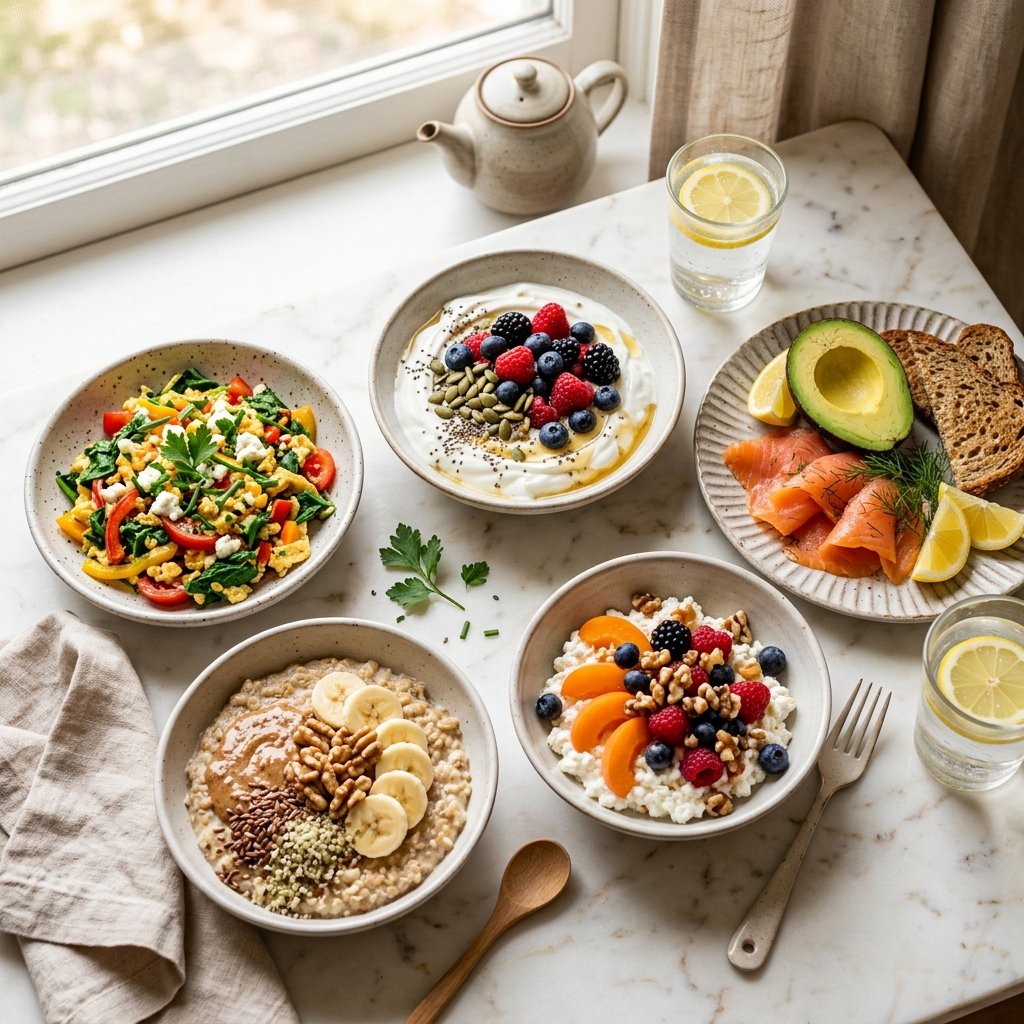
Breakfast is usually where protein goes missing. Cereal or toast might taste great, but honestly, you’ll probably be hungry again by 10 a.m.
Aiming for at least 30 grams of protein at breakfast helps your body hang onto muscle and keeps your energy steady. The recipes below make that way easier, whether you’re in a rush or you like to prep ahead.
Greek Yogurt and Berry Protein Bowl
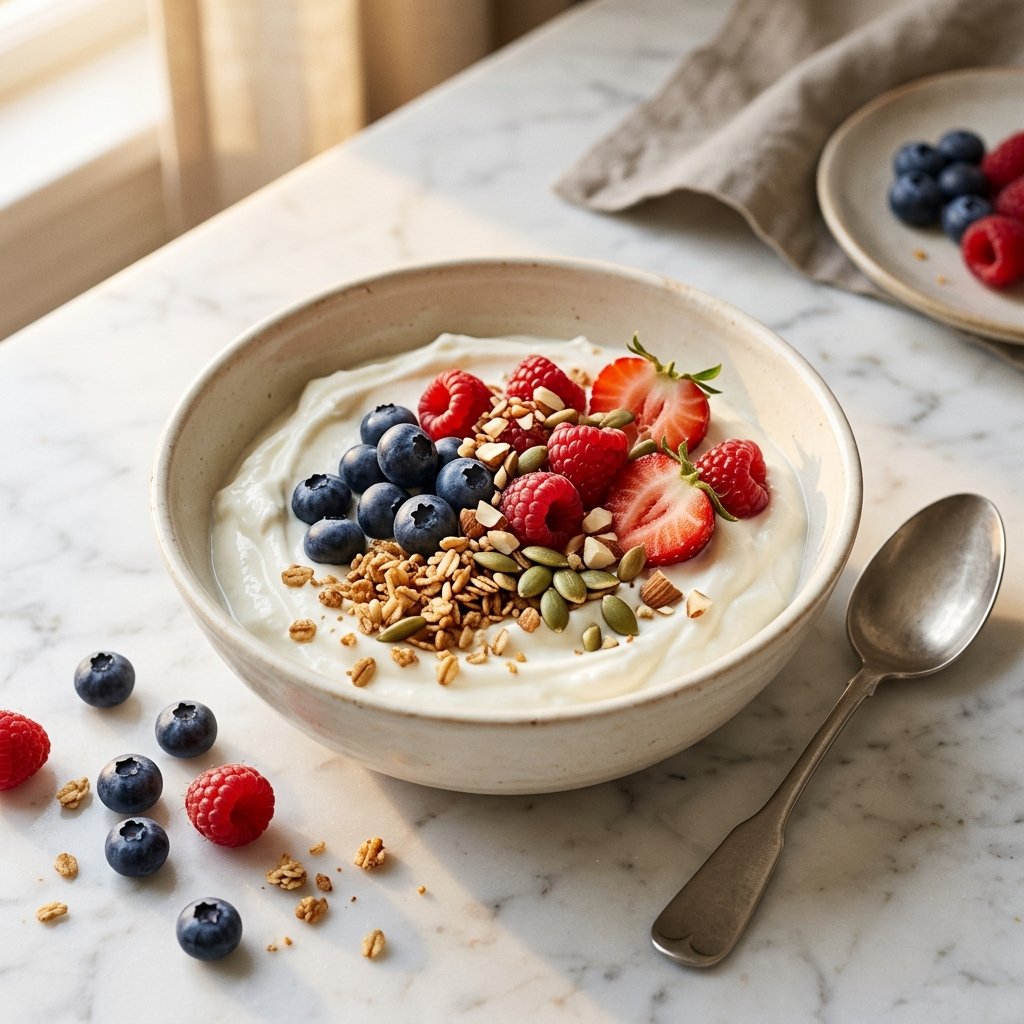
- Greek Yogurt and Berry Protein Bowl (410 calories | 34g protein per serving)
Plain Greek yogurt starts things off, and it’s got way more protein than regular yogurt. Add a scoop of protein powder and some hemp seeds, and you’re past 30 grams before you know it.
Berries bring fiber and vitamin C, and you can throw it all together in five minutes flat. Honestly, it’s a lifesaver on busy mornings when you don’t even want to look at your stove.
Ingredients
- 1 cup plain nonfat Greek yogurt
- 1/2 scoop vanilla protein powder (about 15g)
- 1/2 cup fresh or frozen blueberries
- 1/2 cup fresh strawberries, sliced
- 1 tablespoon hemp seeds
- 1 tablespoon chopped almonds
- 1 teaspoon honey or maple syrup
- 1/4 teaspoon cinnamon
- 2 tablespoons water or milk (as needed)
Instructions
- Scoop the Greek yogurt into a bowl.
- Add the protein powder and cinnamon, then stir until it’s smooth.
- If it’s too thick, splash in a little water or milk and mix again.
- Slice the strawberries. If you’re using frozen blueberries, let them thaw for a few minutes.
- Pile the berries on top of the yogurt.
- Sprinkle on hemp seeds and chopped almonds.
- Drizzle with honey and dig in.
You can swap almonds for walnuts if you want more omega-3s.
Spinach, Mushroom, and Feta Egg Scramble
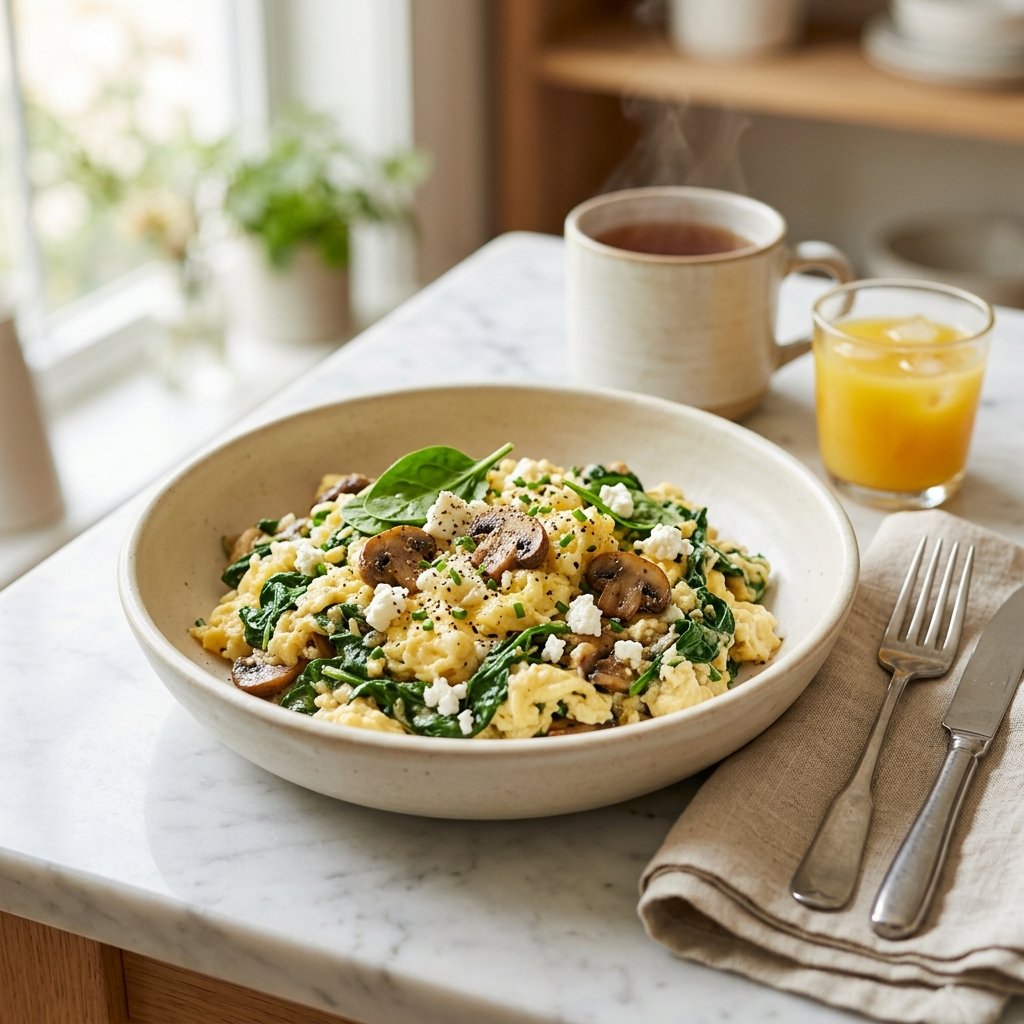
- Spinach, Mushroom, and Feta Egg Scramble (400 calories | 32g protein per serving)
Eggs and egg whites tag-team here for 32 grams of protein in just one skillet. Mushrooms add a savory bite, and spinach brings iron, folate, and vitamin K.
Feta’s salty enough that you don’t need much, so calories stay in check. It’s a warm, filling breakfast that actually helps you hang onto muscle as you age.
Plus, it cooks up in under 15 minutes, so you can make it even on a rushed morning.
Ingredients
- 3 large eggs
- 3 large egg whites (about 1/2 cup)
- 1 1/2 cups fresh baby spinach
- 1 cup sliced mushrooms
- 1/4 cup crumbled feta cheese
- 1 teaspoon olive oil
- 1 tablespoon water
- 1/8 teaspoon black pepper
- Pinch of salt (optional, since feta is salty)
Instructions
- Crack the eggs into a bowl, add egg whites, water, and pepper, and whisk until smooth and a bit foamy.
- Warm the olive oil in a nonstick skillet over medium heat for about a minute.
- Toss in the mushrooms and cook for 4 to 5 minutes, stirring sometimes, until they soften.
- Throw in the spinach and stir for a minute until it wilts.
- Lower the heat and pour in the egg mixture.
- Let the eggs sit for 20 to 30 seconds, then gently push them from the edges to the center with a spatula.
- Keep folding for 2 to 3 minutes until the eggs are soft and just set.
- Sprinkle feta on top, turn off the heat, and let it melt for 30 seconds before serving.
If you want a milder flavor, try goat cheese or part-skim mozzarella instead of feta.
Cottage Cheese Protein Pancakes
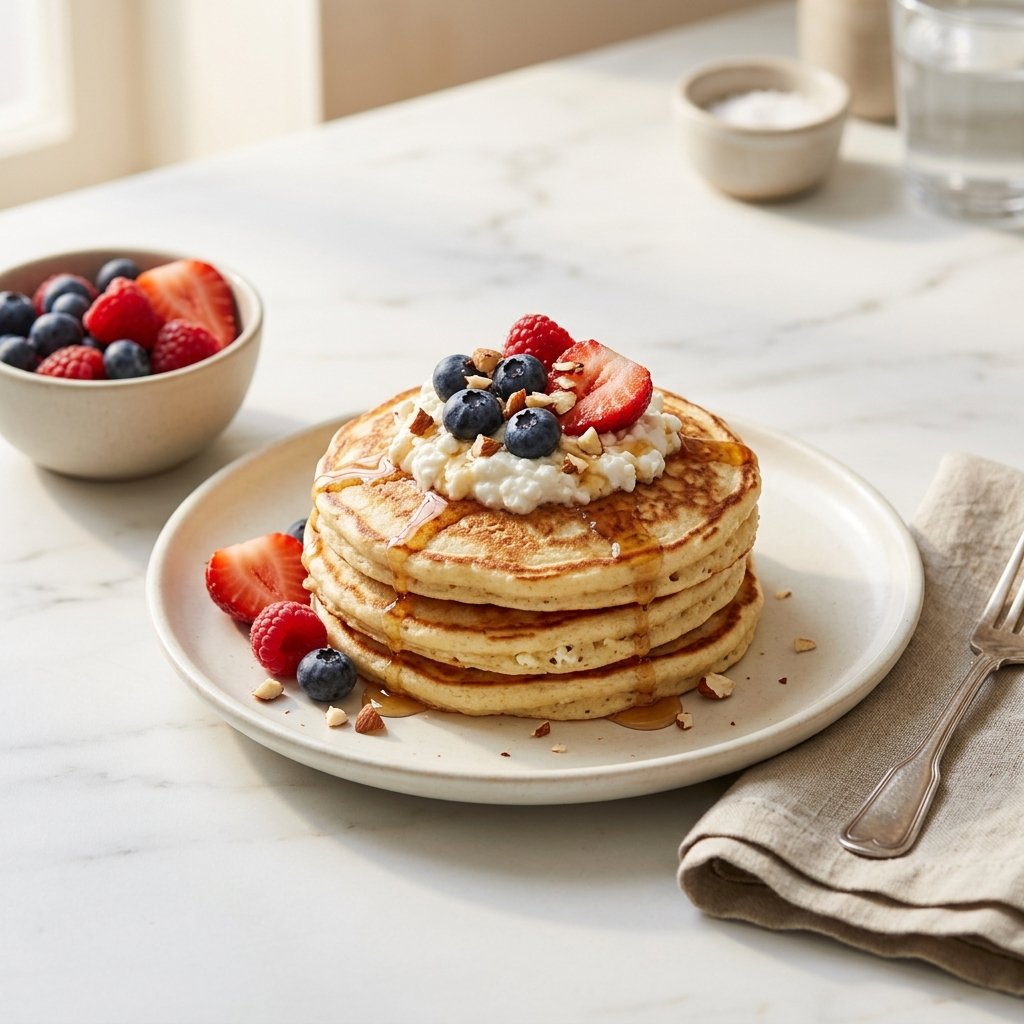
- Cottage Cheese Protein Pancakes (365 calories | 36g protein per serving)
These pancakes feel like a Sunday treat but you can totally make them on a weekday. Cottage cheese does the heavy lifting for protein and calcium, but the pancakes still taste sweet and mild.
Blend it with oats and eggs, and you get a soft, fluffy batter. The protein and fiber combo keeps you full, which is a big deal if you’re always hungry by 9 a.m.
Ingredients
- 1 cup low-fat cottage cheese
- 2 large eggs
- 1/2 cup rolled oats
- 1 scoop (about 30g) vanilla protein powder
- 1 teaspoon baking powder
- 1/2 teaspoon vanilla extract
- 1 pinch of salt
- 1 teaspoon butter or oil, for the pan
- 1/2 cup plain Greek yogurt, for topping
- 1/2 cup fresh berries, for topping
Instructions
- Toss cottage cheese, eggs, oats, protein powder, baking powder, vanilla, and salt into a blender.
- Blend about 30 seconds, until the batter’s smooth.
- Let it sit for 5 minutes so the oats soften up.
- Heat a nonstick skillet over medium-low and add butter or oil.
- Pour in 1/4 cup of batter for each pancake, leaving some space.
- Cook for 2 to 3 minutes, until bubbles form and the edges look set.
- Flip and cook another 1 to 2 minutes until golden.
- Repeat with the rest of the batter, adjusting the heat as needed.
- Divide pancakes onto two plates and top with Greek yogurt and berries.
If you want to skip the protein powder, just add two more tablespoons of oats and an extra spoonful of Greek yogurt on top.
Smoked Salmon and Avocado Egg Toast
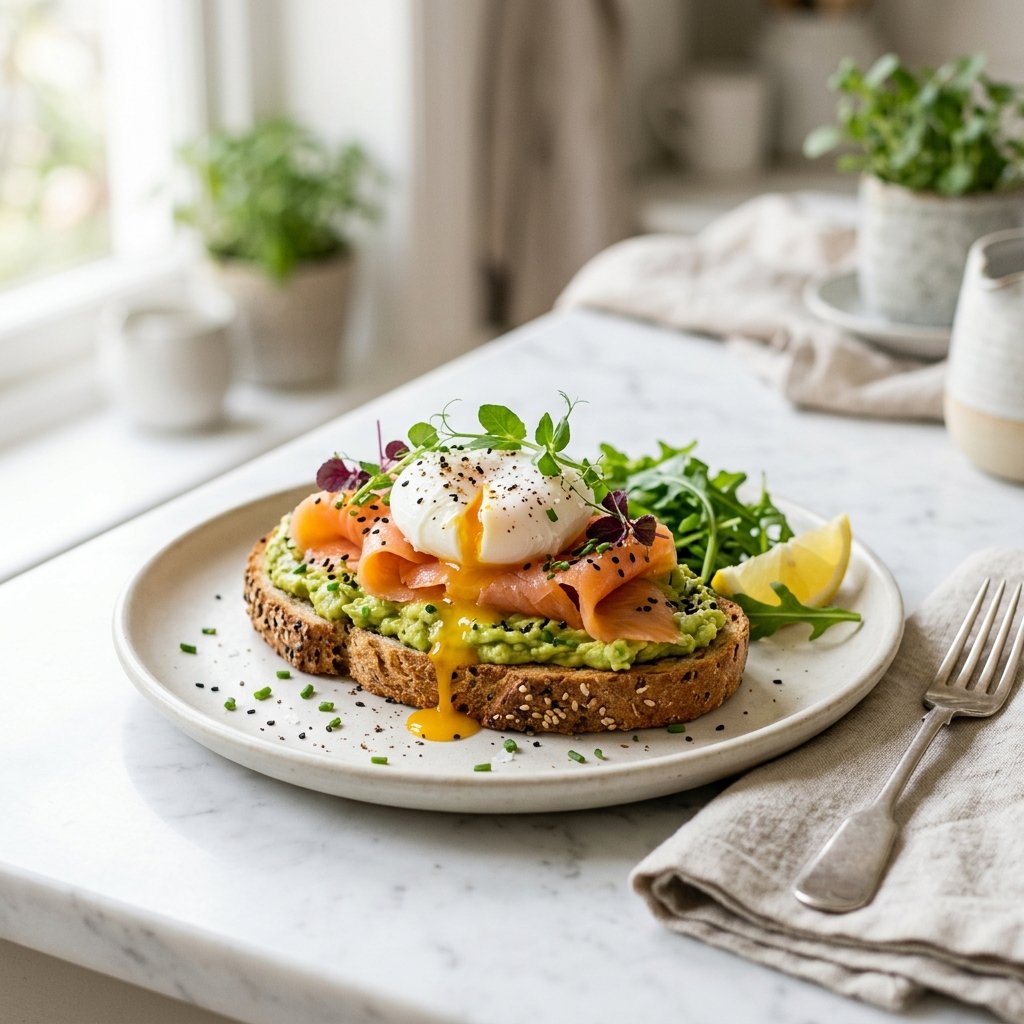
- Smoked Salmon and Avocado Egg Toast (475 calories | 33g protein per serving)
This breakfast gives you two protein sources in one go: smoked salmon and eggs. Salmon brings those good-for-you omega-3s, and eggs add vitamin D and choline.
Avocado brings fiber and healthy fat, so you’re not hungry again in an hour. You can put it together in 10 minutes, which is perfect if you don’t want to fuss with a big meal.
Ingredients
- 1 slice whole grain bread (about 1.5 oz)
- 3 oz smoked salmon
- 2 large eggs
- 1/4 medium avocado
- 1 teaspoon olive oil
- 1 teaspoon fresh lemon juice
- 1 tablespoon chopped fresh dill
- 1 teaspoon capers, drained
- Pinch of black pepper
- Pinch of salt
Instructions
- Toast the bread until golden, 2 to 3 minutes.
- Heat olive oil in a small nonstick pan over medium-low.
- Crack eggs into the pan and cook for 3 to 4 minutes for runny yolks, or a bit longer if you want them firm. Or just scramble if that’s your thing.
- Mash the avocado with lemon juice, salt, and pepper in a small bowl.
- Spread the avocado on the toast.
- Lay smoked salmon on top, folding the slices.
- Slide the eggs on top of the salmon.
- Finish with capers, dill, and a sprinkle of black pepper.
If you want less sodium, swap smoked salmon for canned tuna or cottage cheese.
Turkey Sausage and Sweet Potato Hash
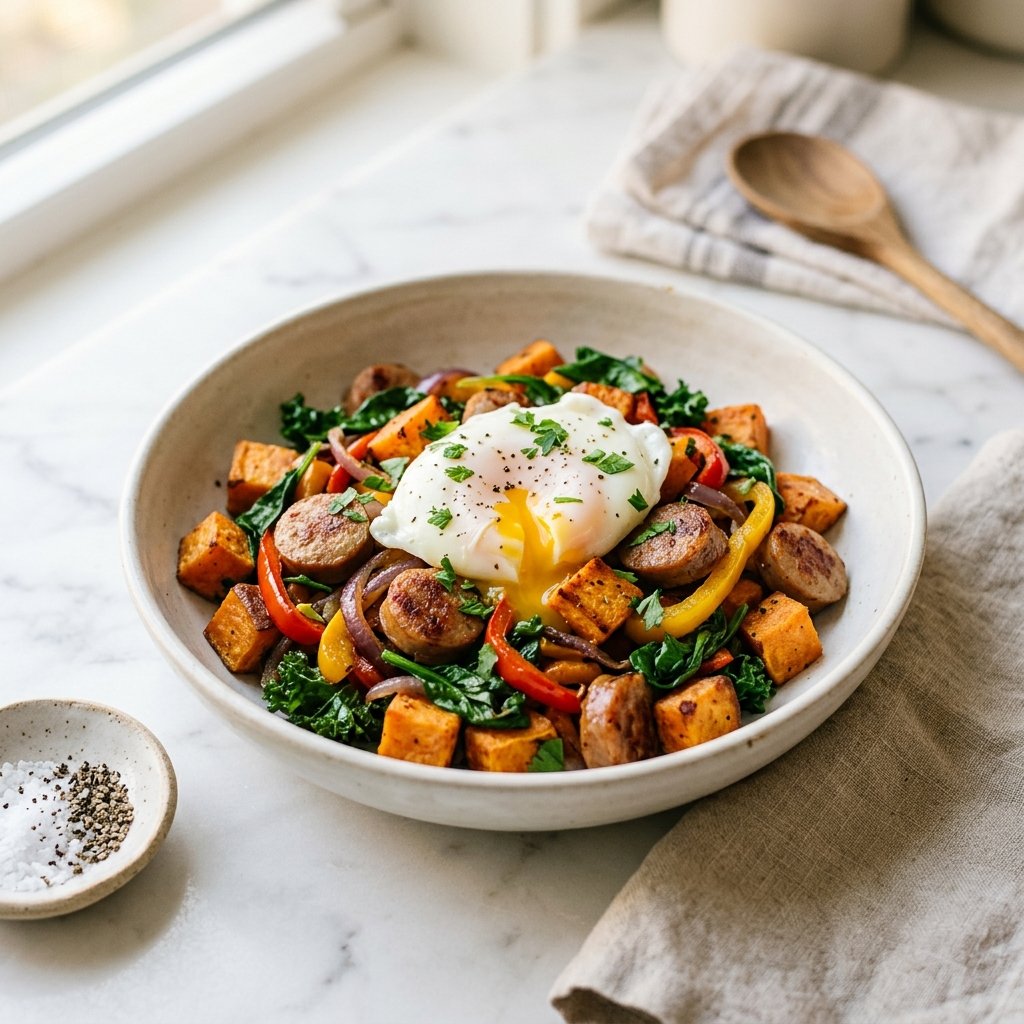
- Turkey Sausage and Sweet Potato Hash (430 calories | 34g protein per serving)
Lean turkey sausage and eggs make this a hearty, savory breakfast that actually keeps you full. Sweet potatoes bring slow-burning carbs and potassium to the mix.
You get a warm, filling meal—no sugar rush, just real food. It reheats well, so you can make a double batch and have breakfast ready for most of the week.
Ingredients
- 6 oz lean ground turkey sausage
- 1 medium sweet potato (about 8 oz), peeled and diced small
- 1/2 small onion, chopped
- 1/2 red bell pepper, chopped
- 2 large eggs
- 1 tablespoon olive oil
- 1/2 teaspoon smoked paprika
- 1/4 teaspoon garlic powder
- Salt and black pepper to taste
- 1 tablespoon chopped fresh parsley (optional)
Instructions
- Heat olive oil in a large skillet over medium.
- Add diced sweet potato and cook 8 to 10 minutes, stirring sometimes, until it softens and browns.
- Stir in onion and bell pepper. Cook another 4 minutes until soft.
- Push veggies to one side and add turkey sausage to the empty spot.
- Break sausage into pieces and cook 6 to 7 minutes until it’s browned.
- Mix everything together and season with smoked paprika, garlic powder, salt, and pepper.
- Make two small wells in the hash and crack an egg into each.
- Cover and cook 4 to 5 minutes, or until the eggs are done how you like.
- Sprinkle with parsley if you’re feeling fancy and serve from the skillet.
Try chicken sausage instead, or swap in butternut squash for a lower-carb version.
Peanut Butter Banana Protein Oats
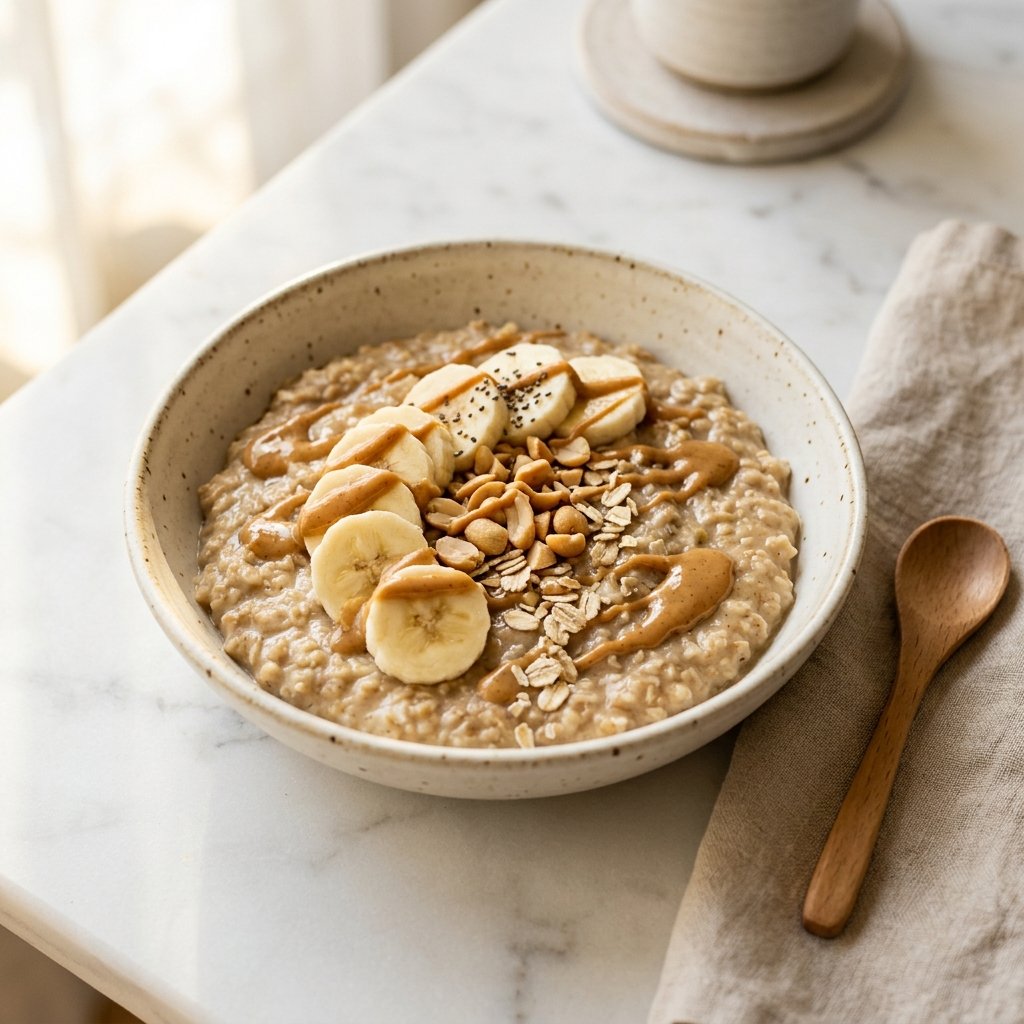
- Peanut Butter Banana Protein Oats (485 calories | 34g protein per serving)
This warm bowl gets its protein from vanilla protein powder, Greek yogurt, and natural peanut butter. Oats bring in fiber and slow carbs, so you’ll stay full all morning.
The banana gives natural sweetness and a potassium boost, so you can skip extra sugar. If you want something cozy and filling but don’t want to work for it, this is it.
Busy mornings or post-workout? This bowl’s got your back.
Ingredients
- 1/2 cup rolled oats
- 1 cup unsweetened almond milk
- 1 scoop vanilla protein powder (about 30g)
- 1 tablespoon natural peanut butter
- 1 medium banana, sliced
- 1/4 cup plain nonfat Greek yogurt
- 1/2 teaspoon cinnamon
- Pinch of salt
Instructions
- Toss oats, almond milk, cinnamon, and salt in a small pot over medium heat.
- Stir now and then for 5 to 7 minutes, until the oats soften and thicken.
- Take the pot off the heat and let it cool for about 2 minutes. This keeps the protein powder from clumping.
- Stir in the protein powder until it blends in. If it’s too thick, splash in a little more milk.
- Pour the oats into a bowl. Top with Greek yogurt, banana slices, and peanut butter.
- Swirl it together and dig in while it’s still warm.
Try swapping peanut butter for almond butter, or use half a banana and some berries if you want fewer carbs.
Chicken Sausage Breakfast Burrito
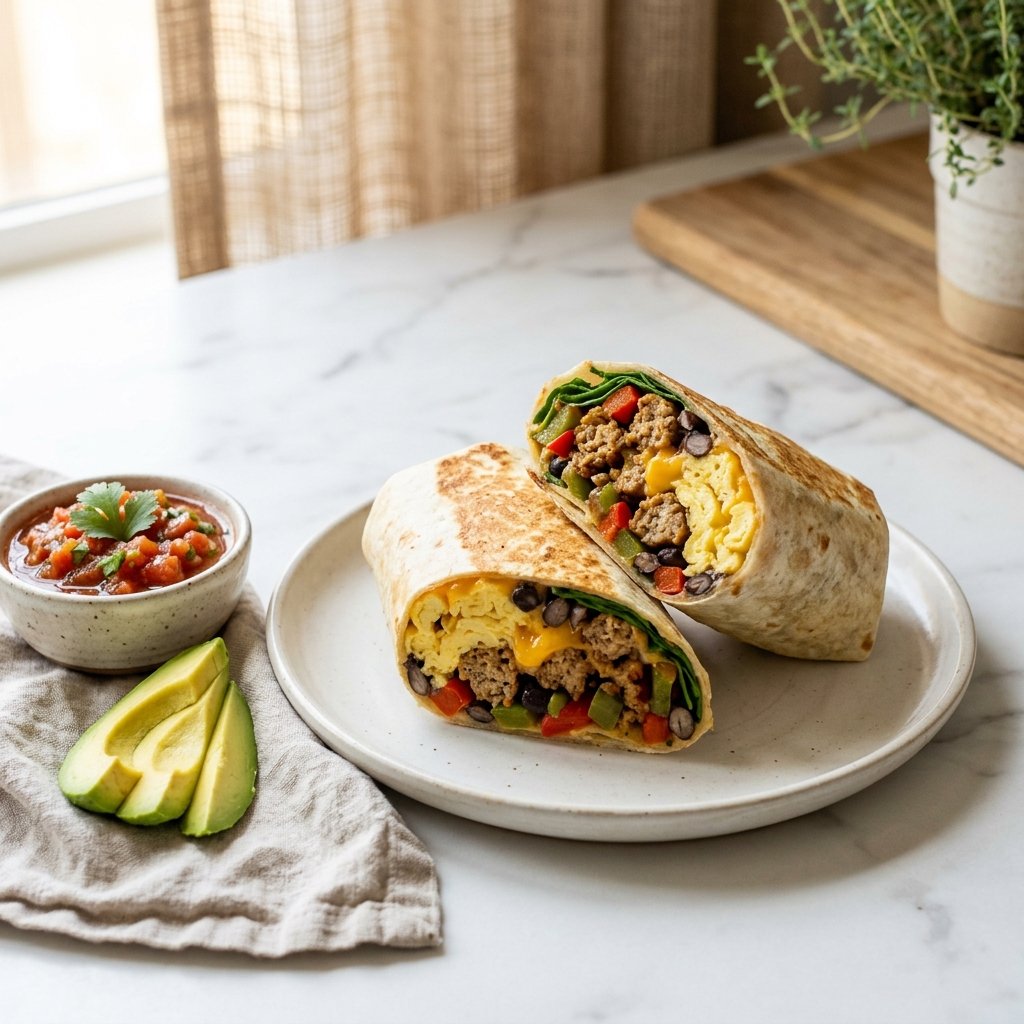
- Chicken Sausage Breakfast Burrito (475 calories | 34g protein per serving)
Chicken sausage, eggs, and egg whites all wrapped up in one tortilla—lots of protein, no drama. Chicken sausage is leaner than pork, but still packs plenty of flavor thanks to the herbs and spices.
Get your protein in early and you’ll stay full longer—pretty important as appetite and muscle needs change with age.
If you like to prep ahead, these burritos freeze well. Just reheat one on a hectic morning and you’re set.
Ingredients
- 2 links (about 3 oz total) cooked chicken sausage, sliced
- 1 large whole egg
- 1/2 cup liquid egg whites
- 1 large whole-wheat tortilla (about 10 inches)
- 1/4 cup shredded reduced-fat cheddar cheese
- 1/4 cup diced red bell pepper
- 2 tablespoons diced onion
- 1 teaspoon olive oil
- 2 tablespoons salsa
- Pinch of salt and black pepper
Instructions
- Heat olive oil in a nonstick skillet over medium for about a minute.
- Add bell pepper and onion. Stir now and then for 3 to 4 minutes, until they soften.
- Toss in sliced chicken sausage. Cook 2 to 3 more minutes, until it’s warmed and a bit browned.
- Whisk the egg and egg whites with salt and pepper in a small bowl.
- Pour the eggs into the skillet. Stir gently for 2 to 3 minutes until just set, then pull the pan off the heat.
- Warm the tortilla in a dry pan or microwave for about 15 seconds so it folds easily.
- Spoon the egg and sausage mixture down the center of the tortilla. Top with cheese and salsa.
- Fold in the sides, roll it up tight from the bottom, slice in half, and eat.
Add 1/4 cup black beans for more fiber and a protein bump.
High-Protein Chia Seed Pudding
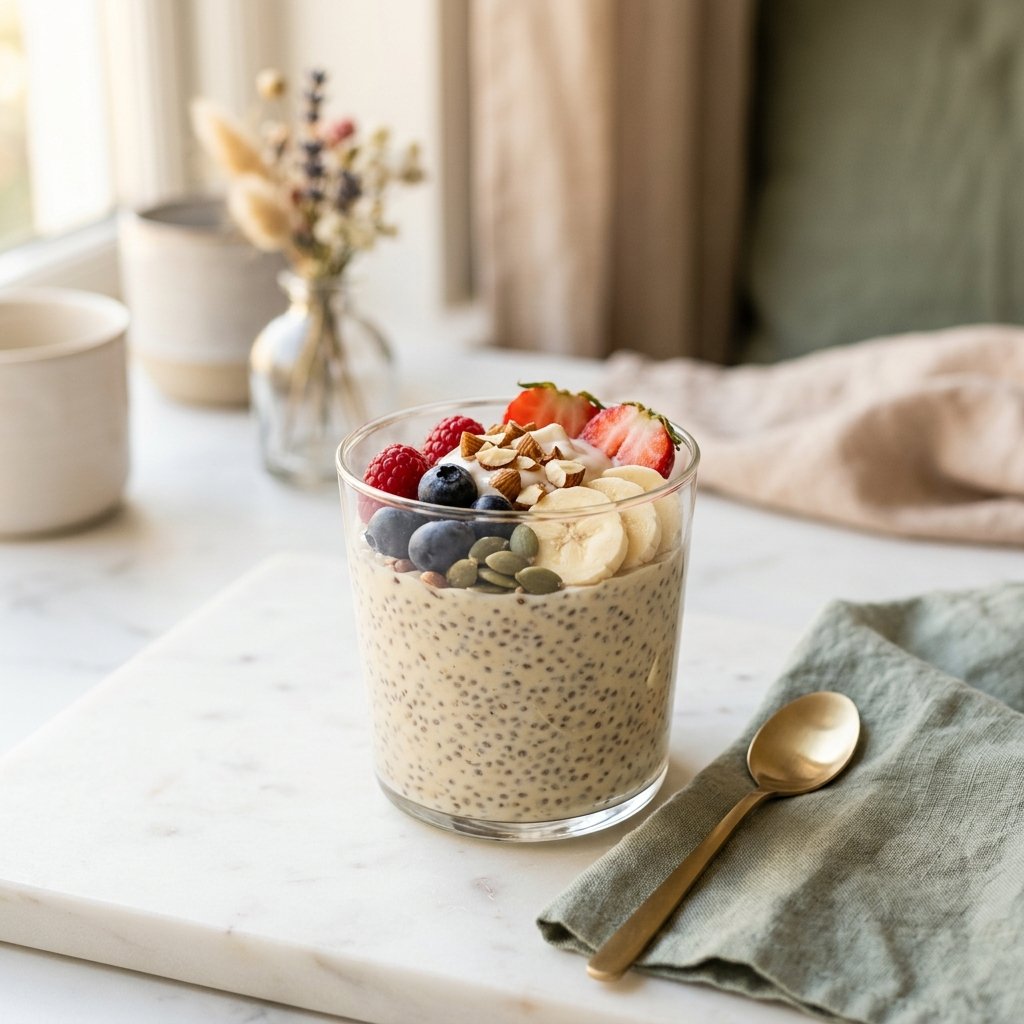
- High-Protein Chia Seed Pudding (370 calories | 34g protein per serving)
This pudding does the work while you sleep. Greek yogurt and protein powder push the protein over 30 grams, and chia seeds bring the fiber, calcium, and omega-3s.
You’ll stay full through a busy morning—no mid-morning snack needed.
If you’re into meal prep, make a few jars at once. The soft texture is easy on your stomach, especially if you’re not that hungry first thing.
Ingredients
- 3 tablespoons chia seeds
- 1 cup unsweetened almond milk
- 3/4 cup plain nonfat Greek yogurt
- 1 scoop vanilla protein powder (about 25g)
- 1 teaspoon honey or maple syrup
- 1/2 teaspoon vanilla extract
- 1/2 cup fresh berries
- 1 tablespoon chopped almonds
Instructions
- Whisk almond milk and protein powder together in a jar or bowl until smooth.
- Stir in Greek yogurt, honey, and vanilla until the mixture looks creamy.
- Add chia seeds and stir well for about 30 seconds so they don’t clump.
- Wait 5 minutes, then stir again to keep the seeds spread out.
- Cover and chill in the fridge for at least 4 hours, or overnight for the best texture.
- In the morning, stir it again and top with berries and almonds.
If you want even more protein, use dairy milk instead of almond milk—adds about 4 extra grams per serving.
Tofu Scramble with Black Beans
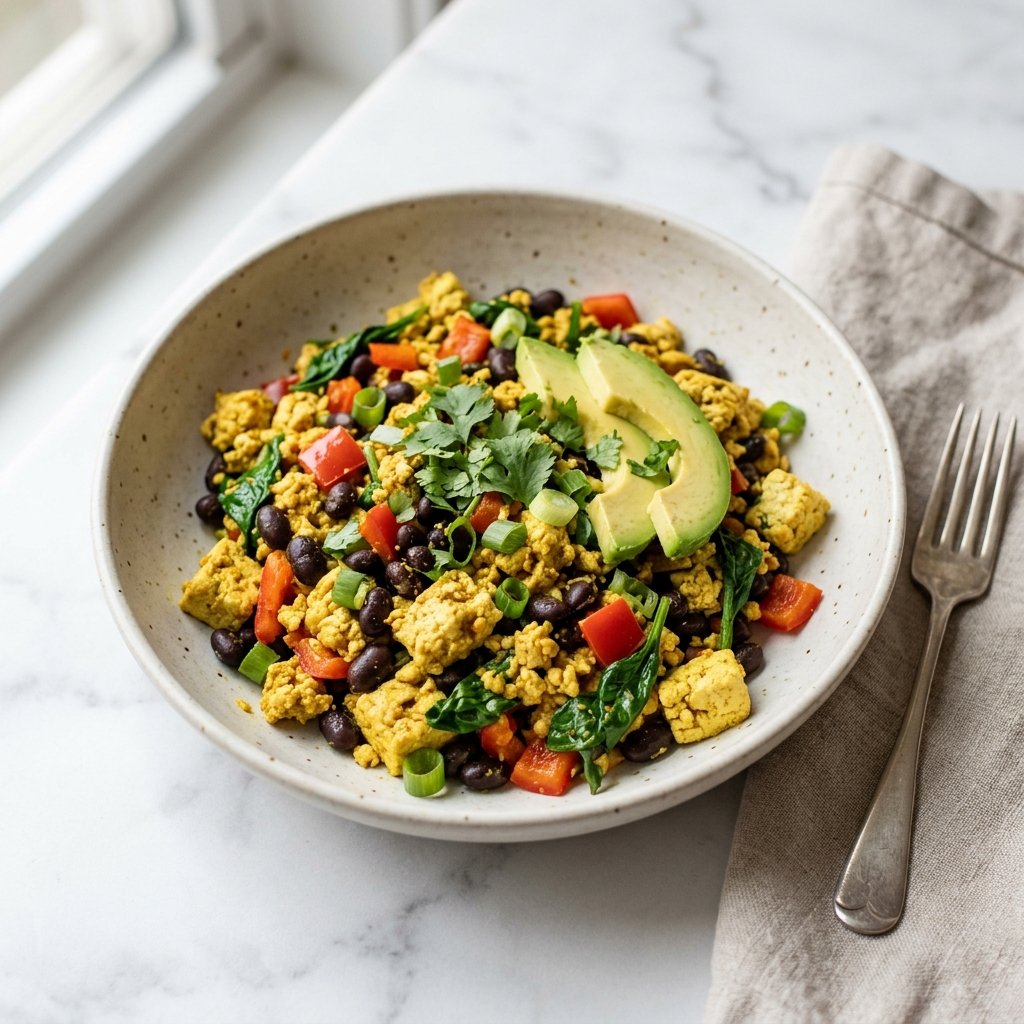
- Tofu Scramble with Black Beans (415 calories | 32g protein per serving)
Extra-firm tofu and black beans join forces here for a whopping 32 grams of plant protein in one skillet. Turmeric and nutritional yeast bring color and a savory, eggy flavor—no eggs required.
You’ll get about 11 grams of fiber too, which keeps you full.
This scramble reheats well for a couple days, so you can cook once and eat twice. If you’re cutting back on animal protein but still want a protein punch, this one’s for you.
Ingredients
- 8 oz extra-firm tofu, drained
- 1/2 cup canned black beans, rinsed
- 1 tsp olive oil
- 1/4 cup diced red onion
- 1/4 cup diced red bell pepper
- 1/4 tsp ground turmeric
- 1/4 tsp garlic powder
- 1/2 tsp cumin
- 2 Tbsp nutritional yeast
- 2 Tbsp water
- 1/4 tsp salt
- 1 Tbsp chopped fresh cilantro
- 2 Tbsp salsa, for serving
Instructions
- Wrap the tofu in a towel and press gently for about 5 minutes to get rid of extra water.
- Heat olive oil in a nonstick skillet over medium.
- Add onion and bell pepper. Stir now and then for 4 minutes.
- Crumble tofu into the pan with your hands, breaking it into pieces about the size of scrambled eggs.
- Sprinkle in turmeric, garlic powder, cumin, and salt. Stir for a minute to coat the tofu.
- Add nutritional yeast and water. Stir well and cook for 4 to 5 more minutes, until the tofu looks dry and golden.
- Stir in black beans and cook for 2 minutes, just until warmed through.
- Top with cilantro and salsa. Eat right away.
Want more protein? Sprinkle on cheese or hemp seeds.
Cottage Cheese and Peach Breakfast Bowl (355 calories | 33g protein per serving)
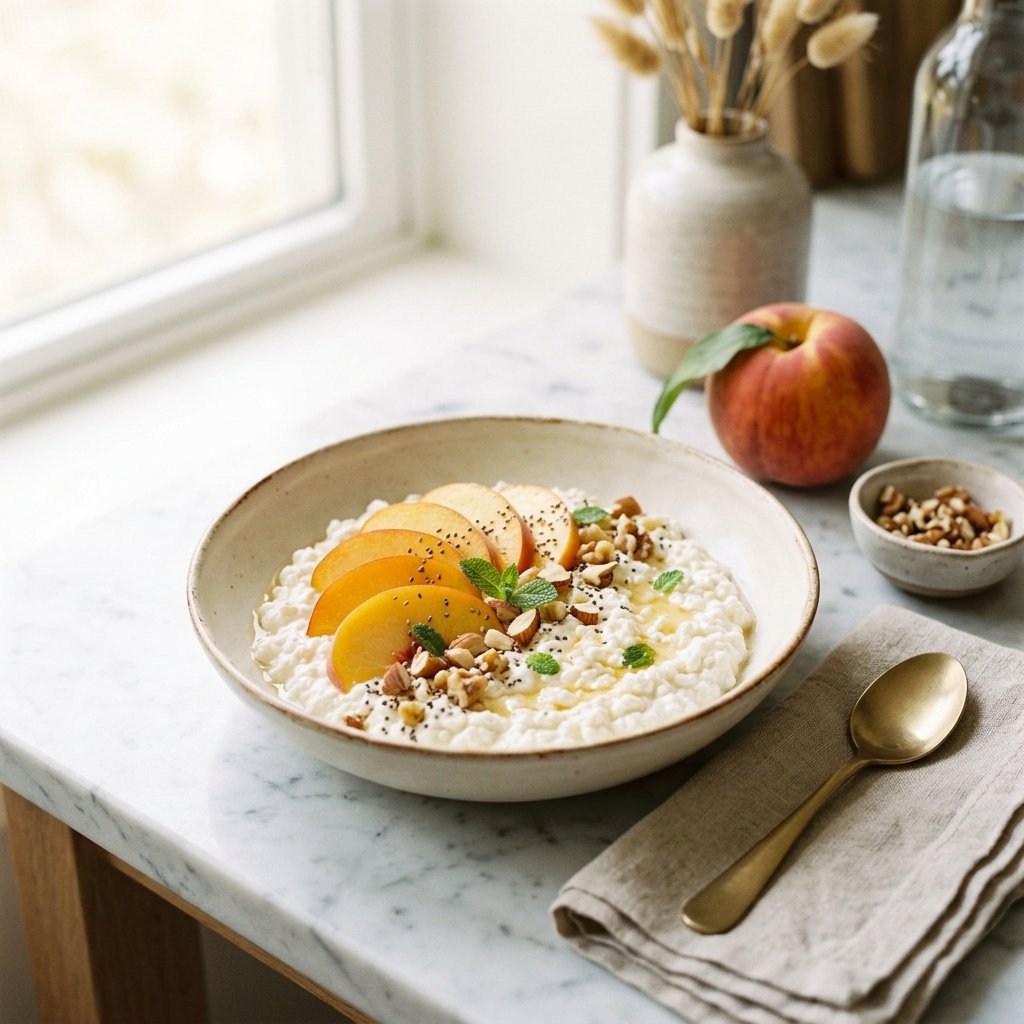
Cottage cheese is one of the easiest ways to hit a high protein number before 9 a.m. One cup gives you about 24 grams on its own, and a couple tablespoons of hemp seeds push the total past 30 grams.
The peach adds natural sweetness, fiber, and vitamin C—honestly, it tastes like dessert but eats like breakfast. Cottage cheese also brings calcium, which matters more as you get older.
No cooking needed. Just throw it together and go.
Ingredients
- 1 cup low-fat cottage cheese (2%)
- 1 medium ripe peach, sliced
- 2 tablespoons hemp hearts
- 1 tablespoon slivered almonds
- 1/2 teaspoon honey (optional)
- 1/8 teaspoon cinnamon
- Pinch of sea salt
Instructions
- Spoon cottage cheese into a wide bowl and spread it out.
- Wash the peach, cut it in half, remove the pit, and slice it thin.
- Arrange the peach slices over the cottage cheese.
- Sprinkle hemp hearts and slivered almonds on top.
- Add cinnamon, a pinch of salt, and a drizzle of honey if you want it sweeter.
- Eat right away, or cover and chill for up to 24 hours if you’re prepping ahead.
Swap the peach for frozen berries in winter—just thaw them for 10 minutes so they don’t water down the bowl.
Ham, Cheese, and Veggie Frittata
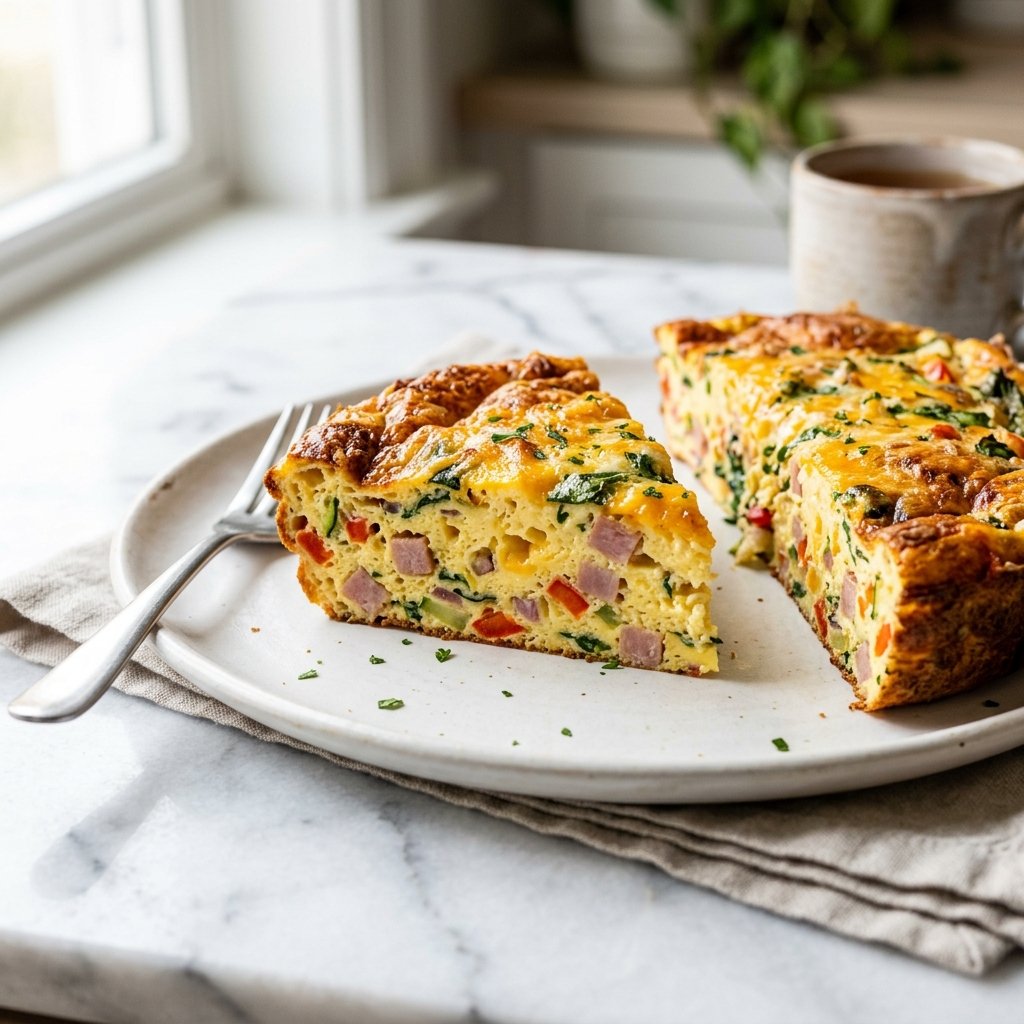
- Ham, Cheese, and Veggie Frittata (345 calories | 32g protein per serving)
Eggs, lean deli ham, and sharp cheddar give you 32 grams of protein in one slice. This frittata is a solid choice if you want a warm, savory breakfast that actually sticks with you.
Eggs also bring choline and vitamin D—both more important as you get older. Bake it once and you’ve got breakfast for days.
Ingredients
- 8 large eggs
- 1/2 cup low-fat milk
- 6 oz cooked lean ham, diced
- 3/4 cup shredded sharp cheddar cheese
- 1 cup baby spinach, chopped
- 1/2 cup red bell pepper, diced
- 1/4 cup red onion, diced
- 1 tbsp olive oil
- 1/4 tsp salt
- 1/4 tsp black pepper
Instructions
- Heat your oven to 375°F.
- Warm olive oil in a 10-inch oven-safe skillet over medium.
- Add onion and bell pepper. Cook for 4 to 5 minutes, until they soften.
- Stir in spinach and cook about a minute, just until wilted.
- Add diced ham and stir for another minute to warm it through.
- In a bowl, whisk eggs, milk, salt, and pepper until the mixture looks even.
- Pour the egg mixture over the ham and veggies in the skillet. Give the pan a gentle shake to spread everything out.
- Sprinkle cheddar cheese on top.
- Move the skillet to the oven and bake for 20 to 25 minutes, until the center is set.
- Let it rest for 5 minutes, then slice into 4 wedges and serve.
Swap the ham for cooked turkey sausage or drained white beans if you want a different flavor.
Protein-Packed Pumpkin Overnight Oats
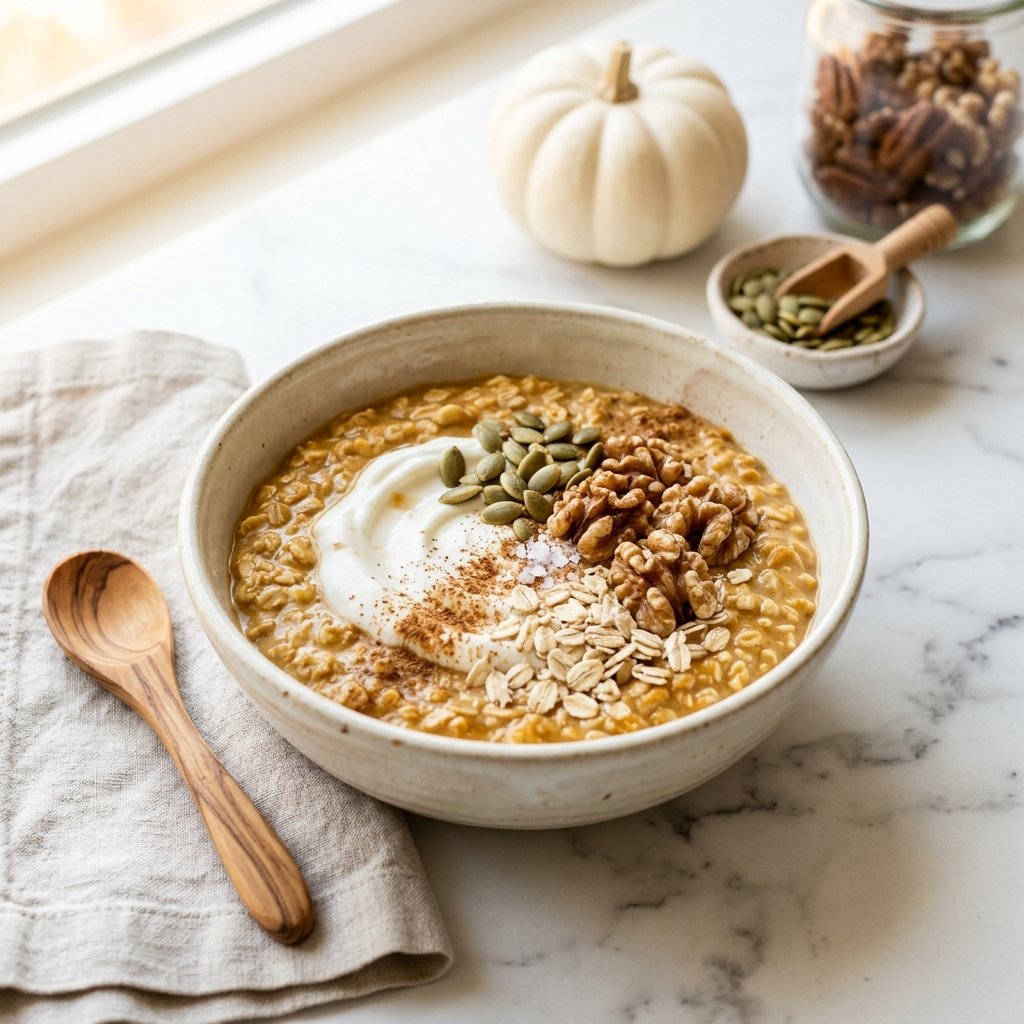
- Protein-Packed Pumpkin Overnight Oats (385 calories | 32g protein per serving)
Greek yogurt and vanilla protein powder do most of the heavy lifting here, packing in 32 grams of protein before you even grab a spoon. Pumpkin puree brings fiber, vitamin A, and a creamy texture without much sugar.
Oats and chia seeds help you stay full, which is honestly a lifesaver if you're someone who gets snacky before lunch. Since you make this the night before, it's perfect for busy mornings or if you like prepping a few jars at once.
Women over 50 usually need more protein at breakfast to help keep muscle, and this recipe makes that pretty easy.
Ingredients
- 1/2 cup old-fashioned rolled oats
- 3/4 cup plain nonfat Greek yogurt
- 1/3 cup canned pumpkin puree
- 1 scoop (about 25g) vanilla protein powder
- 1/2 cup unsweetened almond milk
- 1 tablespoon chia seeds
- 1 teaspoon pumpkin pie spice
- 1 teaspoon maple syrup
- 1 tablespoon chopped pecans
Instructions
- Stir oats, chia seeds, protein powder, and pumpkin pie spice together in a jar or bowl while they're still dry.
- Pour in the almond milk and mix until the powder is fully blended in.
- Add Greek yogurt, pumpkin puree, and maple syrup. Stir until the mixture looks smooth and orange.
- Cover and chill in the fridge for at least 6 hours, or overnight, so the oats soften up.
- In the morning, give it a stir and add a splash of milk if it's too thick.
- Top with chopped pecans right before you eat, so they stay crunchy.
You can swap pecans for pumpkin seeds if you want a bit more protein or need to skip nuts.
Egg White and Turkey Breakfast Sandwich
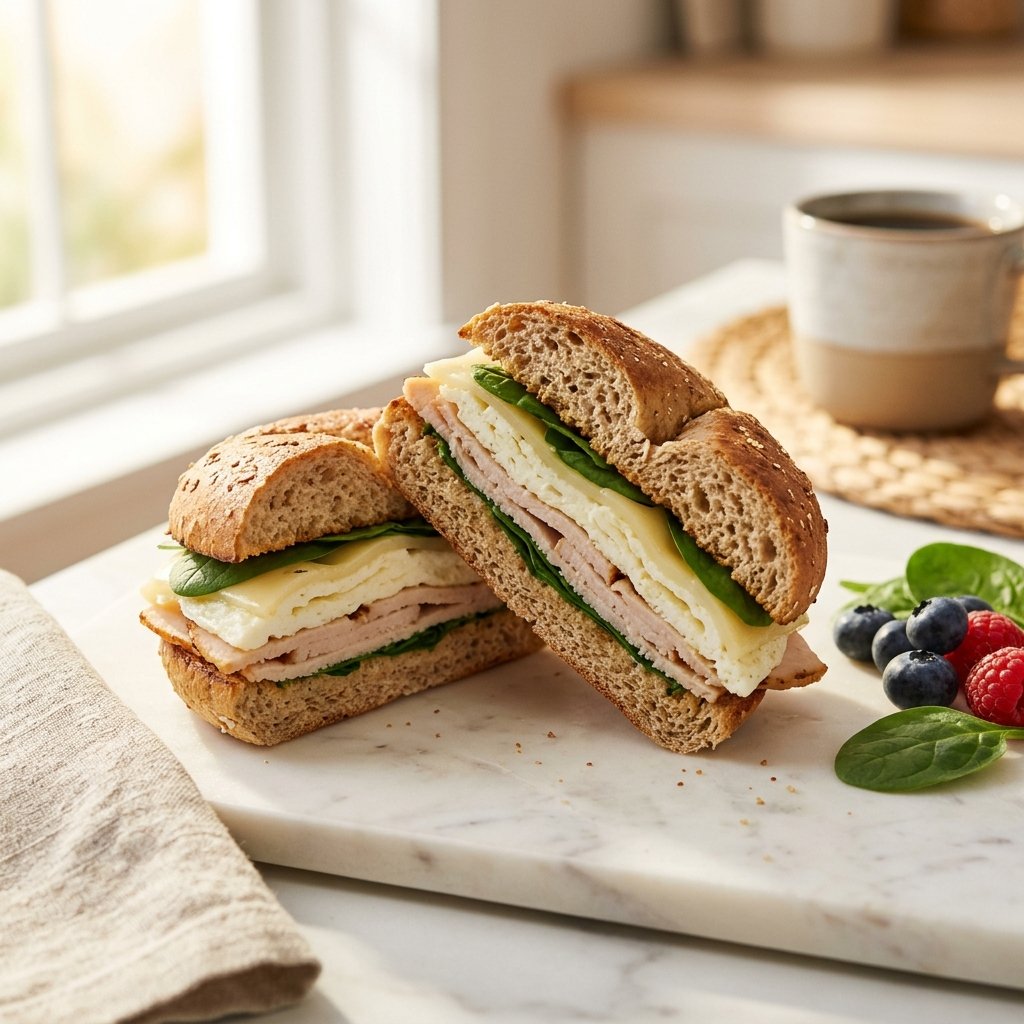
- Egg White and Turkey Breakfast Sandwich (390 calories | 34g protein per serving)
This sandwich delivers a ton of protein without much fat, thanks to egg whites and lean turkey breast. The whole grain English muffin adds fiber, which helps you stay full.
If you're in a rush, this is a solid pick since you can pull it together in about 10 minutes. Protein and calcium become more important as you get older, and the cheese here helps with both.
Honestly, you can just wrap it in foil and eat it on the go.
Ingredients
- 1 whole grain English muffin, split
- 3/4 cup liquid egg whites (about 5 egg whites)
- 3 ounces sliced deli turkey breast, low sodium
- 1 slice reduced-fat Swiss cheese
- 1/2 cup fresh spinach leaves
- 2 slices tomato
- 1 teaspoon olive oil
- Pinch of black pepper
Instructions
- Toast the English muffin halves until lightly golden.
- Heat olive oil in a small nonstick skillet over medium.
- Add spinach and cook for about a minute, just until it wilts. Push it to one side.
- Pour in the egg whites and let them set for 2 minutes without stirring.
- Fold the egg whites in half, then in half again to make a square that fits your muffin. Cook another minute.
- Warm turkey slices in the same pan for about 30 seconds per side.
- Layer turkey, egg whites, cheese, spinach, and tomato on the bottom muffin half.
- Add black pepper, top with the other muffin half, and press down gently.
Swap in pepper jack cheese and a spoonful of salsa if you like some heat in the morning.
Quinoa Breakfast Bowl with Greek Yogurt
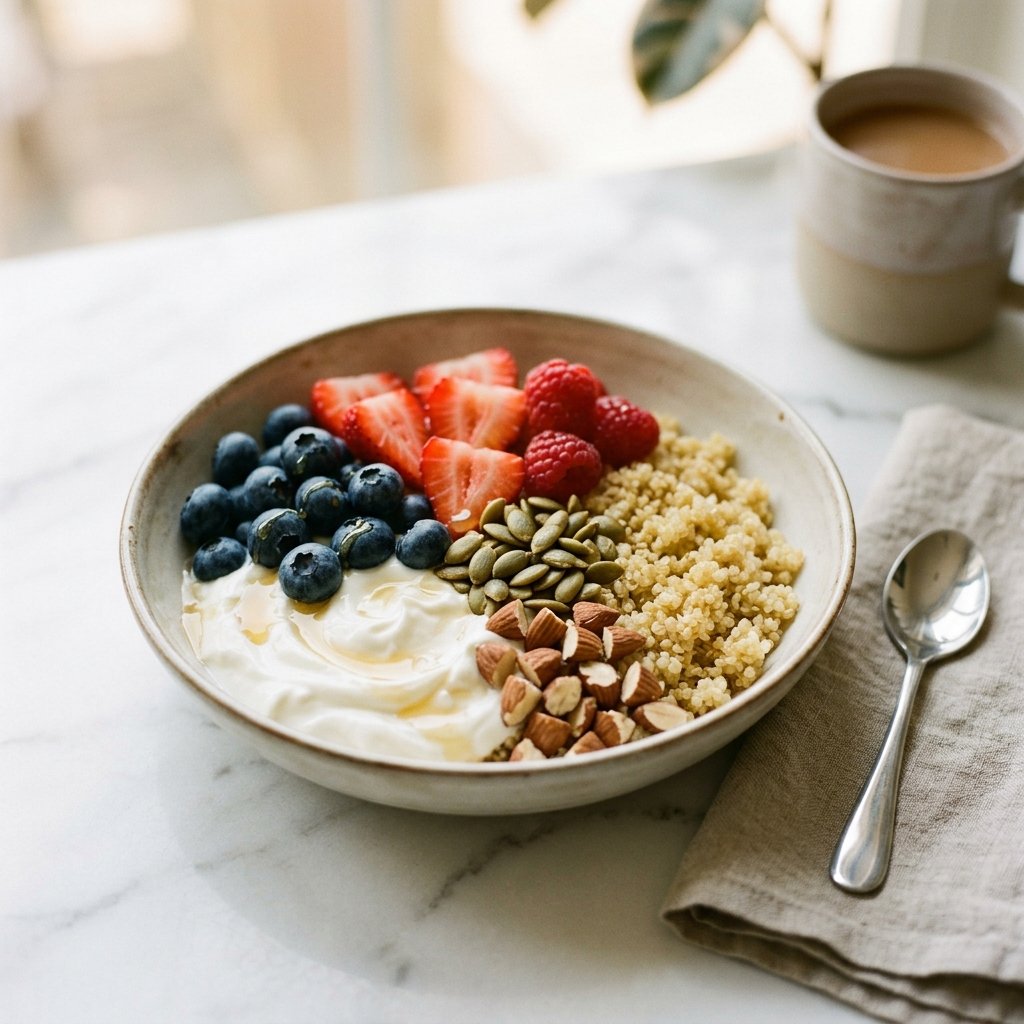
- Quinoa Breakfast Bowl with Greek Yogurt (450 calories | 32g protein per serving)
This bowl brings together two reliable protein sources: cooked quinoa and plain Greek yogurt. Quinoa covers all nine essential amino acids, which is handy if you want to protect muscle as you age.
The yogurt adds calcium and probiotics, while hemp seeds give a little extra protein and healthy fats. If you're into meal prep, you can cook a batch of quinoa on Sunday and throw together a bowl in just a few minutes each morning.
Ingredients
- 3/4 cup cooked quinoa, cooled
- 3/4 cup plain nonfat Greek yogurt
- 2 tablespoons hemp seeds
- 1/2 cup fresh blueberries
- 1 tablespoon sliced almonds
- 1 teaspoon honey or maple syrup
- 1/4 teaspoon ground cinnamon
Instructions
- Rinse 1/2 cup dry quinoa under cold water, then simmer with 1 cup water for about 15 minutes until the water is gone.
- Fluff the quinoa with a fork and let it cool for 10 minutes. Leftover quinoa from earlier in the week works too.
- Spoon 3/4 cup quinoa into a bowl and stir in the cinnamon.
- Add Greek yogurt on top—either mixed in or just on one side.
- Scatter blueberries, hemp seeds, and sliced almonds on top.
- Drizzle with honey and eat right away, or cover and chill overnight for a cold breakfast.
Try swapping the blueberries for chopped strawberries or diced pear if you want to mix things up.
Tuna and Avocado Breakfast Toast
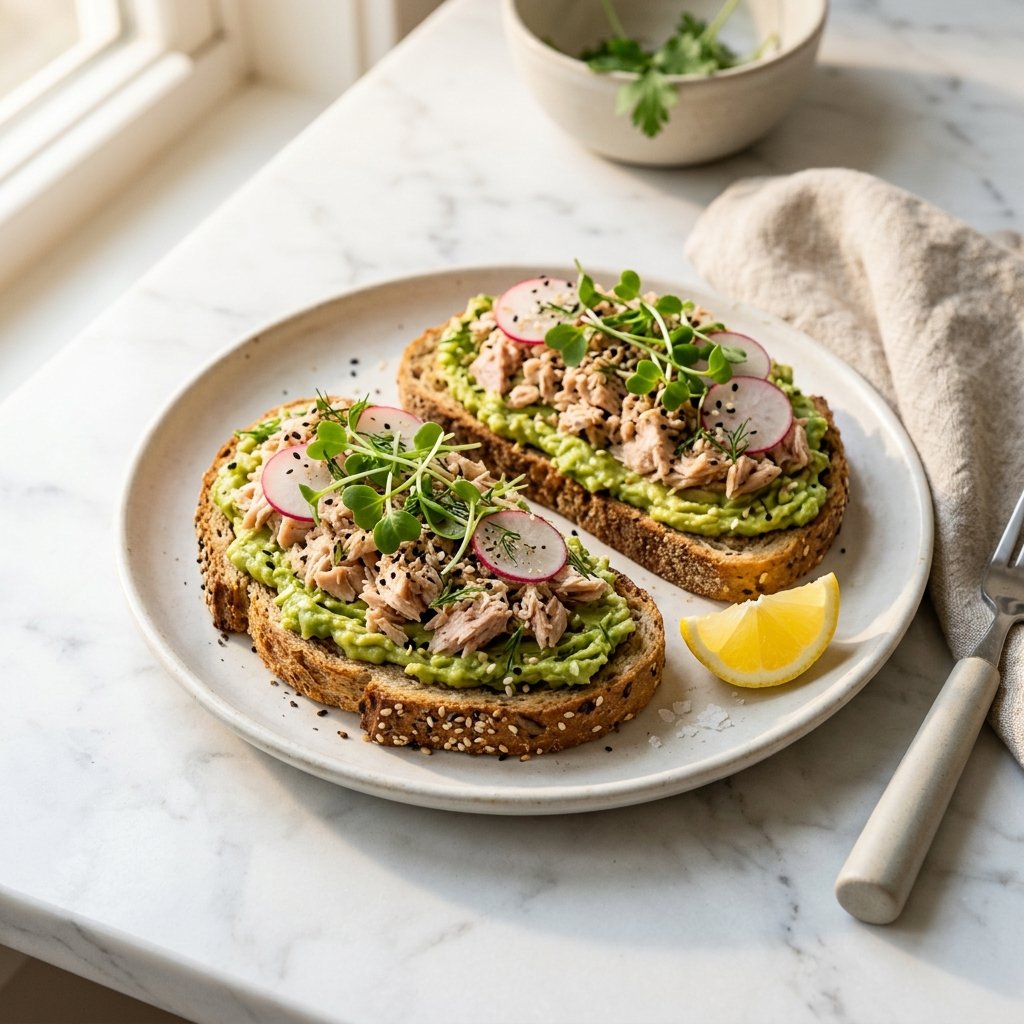
- Tuna and Avocado Breakfast Toast (425 calories | 34g protein per serving)
Canned tuna makes it ridiculously easy to hit a high protein number before 9 a.m. One 5-ounce can gives you about 30 grams of protein, and Greek yogurt bumps it up even more.
Avocado brings healthy fats and fiber, so you actually stay full. Tuna is also a solid source of vitamin D and B12, which a lot of women over 50 could use more of.
This one takes maybe five minutes and doesn't even require cooking.
Ingredients
- 1 can (5 oz) chunk light tuna in water, drained
- 2 slices whole grain bread
- 1/2 medium avocado
- 2 tablespoons plain nonfat Greek yogurt
- 1 teaspoon lemon juice
- 1 tablespoon finely chopped red onion
- 1/4 teaspoon black pepper
- 1/8 teaspoon salt
- Optional: 1 tablespoon chopped fresh parsley
Instructions
- Toast bread slices until golden, about 2–3 minutes in a toaster.
- While the bread toasts, drain the tuna and put it in a small bowl.
- Add Greek yogurt, lemon juice, red onion, salt, and pepper to the tuna and stir until combined.
- Scoop avocado into a separate bowl and mash with a fork until mostly smooth.
- Spread mashed avocado over both slices of toast.
- Pile tuna mixture on top of the avocado layer.
- Sprinkle with parsley if you want, then eat right away so the toast stays crisp.
Swap tuna for canned salmon if you want more omega-3s and a richer flavor.
Why Protein Matters After Age 50
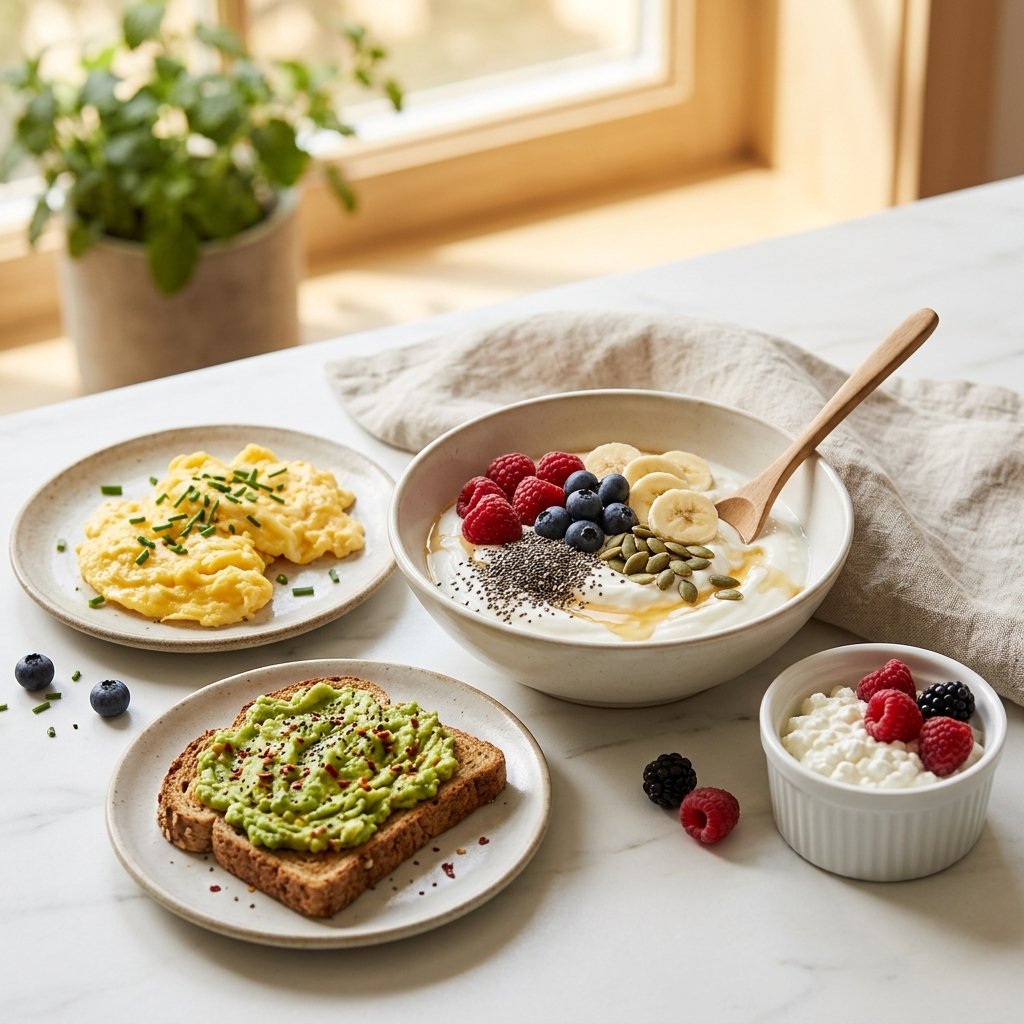
After 50, your body just doesn’t handle protein quite like it did in your 30s. Getting enough at breakfast helps you keep muscle, stay full until lunch, and hit your daily target without having to cram it all in at dinner.
Supporting Muscle Mass and Strength
Starting around age 30, most adults lose about 3–8% of their muscle mass each decade. That rate picks up after 50, especially after menopause when estrogen drops.
Protein gives your body the amino acids it needs to rebuild muscle tissue. Leucine is the key one, and you’ll find it in eggs, dairy, meat, fish, and soy.
Older adults need more protein per meal to trigger muscle building than younger adults. Research says 25–30 grams per meal works better than spreading smaller amounts throughout the day.
Muscle isn’t just about looking toned. It helps with balance, bone strength, and just carrying groceries or climbing stairs without getting winded.
Promoting Fullness and Steady Energy
Protein digests more slowly than carbs, which means you stay fuller longer and don’t have to deal with mid-morning snack cravings as much.
It also tweaks your hunger hormones—protein lowers ghrelin (the “eat now” hormone) and raises the ones that tell you you’re full.
A breakfast of toast and jam will spike your blood sugar and then drop it fast, leaving you tired by 10 a.m. Adding 30 grams of protein slows that spike and keeps your energy steadier.
This becomes more important after 50, when your metabolism slows and weight likes to settle around your middle.
Understanding Daily Protein Needs
The official minimum is 0.8 grams per kilogram of body weight per day. But a lot of researchers now suggest adults over 50 should aim higher—closer to 1.0–1.2 grams per kilogram.
Here’s what that looks like:
| Your Weight | Minimum (0.8 g/kg) | Suggested (1.0–1.2 g/kg) |
|---|---|---|
| 130 lb (59 kg) | 47 g | 59–71 g |
| 150 lb (68 kg) | 54 g | 68–82 g |
| 170 lb (77 kg) | 62 g | 77–93 g |
Try to spread protein evenly across three meals instead of saving most for dinner.
A 30-gram breakfast really helps you hit your total without much effort later. If you have kidney disease or another health condition, check with your doctor before bumping up your protein.
Making Breakfast Protein Work for Your Routine
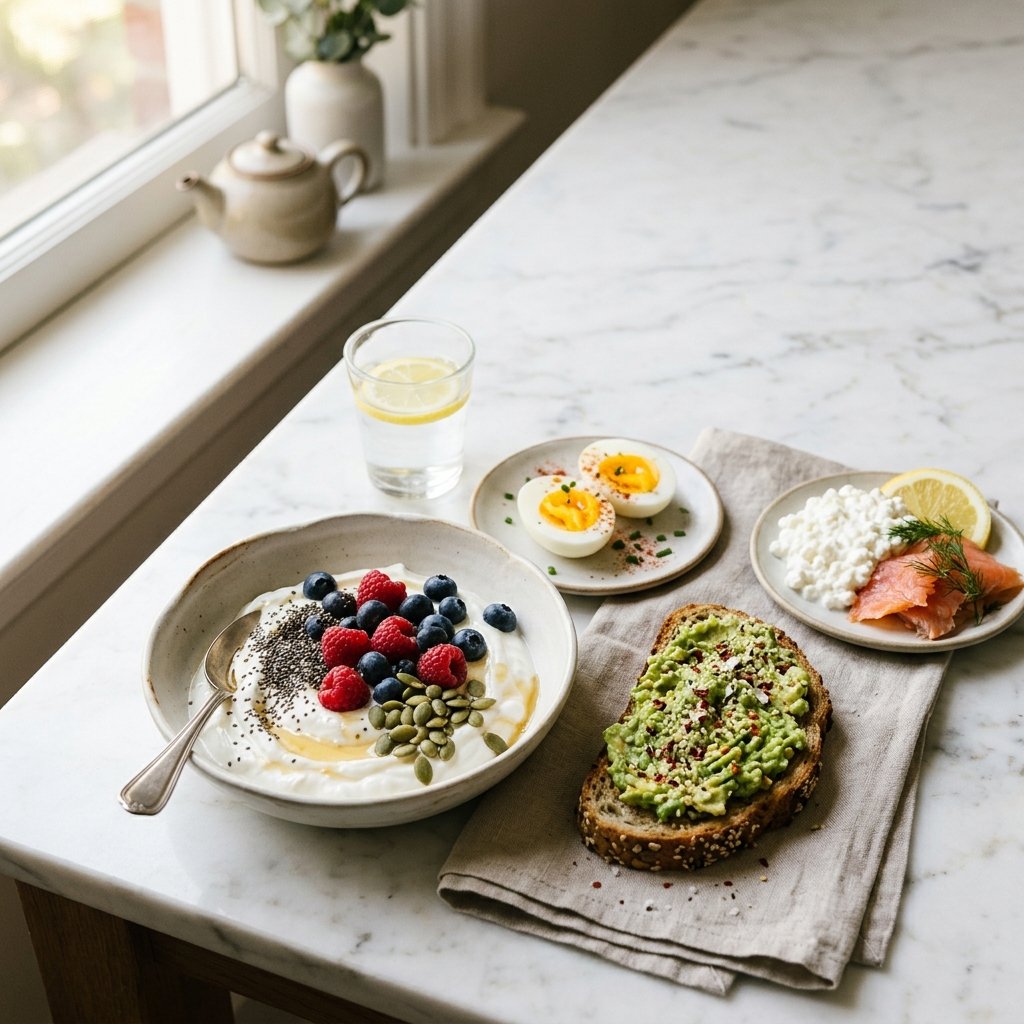
Getting 30 grams of protein at breakfast makes the biggest difference when you spread protein out over the day, pick foods that also give you calcium and vitamin D, and eat portions that fit your appetite and activity.
Spreading Protein Across Meals
Your body can only use so much protein at once for muscle repair. Research says 25 to 35 grams per meal works better than saving most of your protein for dinner.
A lot of women over 50 eat just 10 to 15 grams at breakfast, then load up with 60 grams at night. That pattern wastes some of the benefit.
Here’s a simple daily target:
| Meal | Protein goal |
|---|---|
| Breakfast | 30 g |
| Lunch | 30 g |
| Dinner | 30 g |
| Snack (optional) | 10–15 g |
A 150-pound woman needs about 82 to 109 grams of protein per day, based on 1.2 to 1.6 grams per kilogram of body weight. If you get 30 grams at breakfast, you’re already a third of the way there before mid-morning.
Choosing Foods That Support Bone Health
Bone loss speeds up after menopause, so it’s smart to pick protein sources that also bring calcium and vitamin D.
Good choices:
- Greek yogurt — about 200 mg calcium per cup
- Cottage cheese — around 140 mg calcium per cup
- Fortified milk or soy milk — roughly 300 mg calcium and 100 IU vitamin D per cup
- Eggs — about 44 IU vitamin D per yolk
- Canned salmon — calcium from the soft bones, plus vitamin D
Women over 50 need about 1,200 mg of calcium and 600 to 800 IU of vitamin D daily. Tossing in some spinach or kale with your eggs adds a little more calcium and vitamin K.
Adjusting Portions for Appetite and Activity
Not everyone wakes up craving a big meal at 7 a.m., and honestly, that's totally normal. If a full plate feels like overkill, try starting with a smaller solid meal and maybe add a protein shake or smoothie an hour later.
Sometimes, liquid protein just goes down easier when your appetite's still waking up.
Your activity level makes a difference here:
- Light activity: Stick close to 30 grams and keep portions reasonable.
- Strength training 2–4 times a week: Bump it up to 30–40 grams, ideally within a few hours after your workout.
- Very active or training for an event: You might need closer to 1.6 grams per kilogram of body weight daily.
Check in with yourself by mid-morning. Still hungry just an hour after eating? Instead of piling on more protein, maybe toss in some fiber or healthy fat next time.